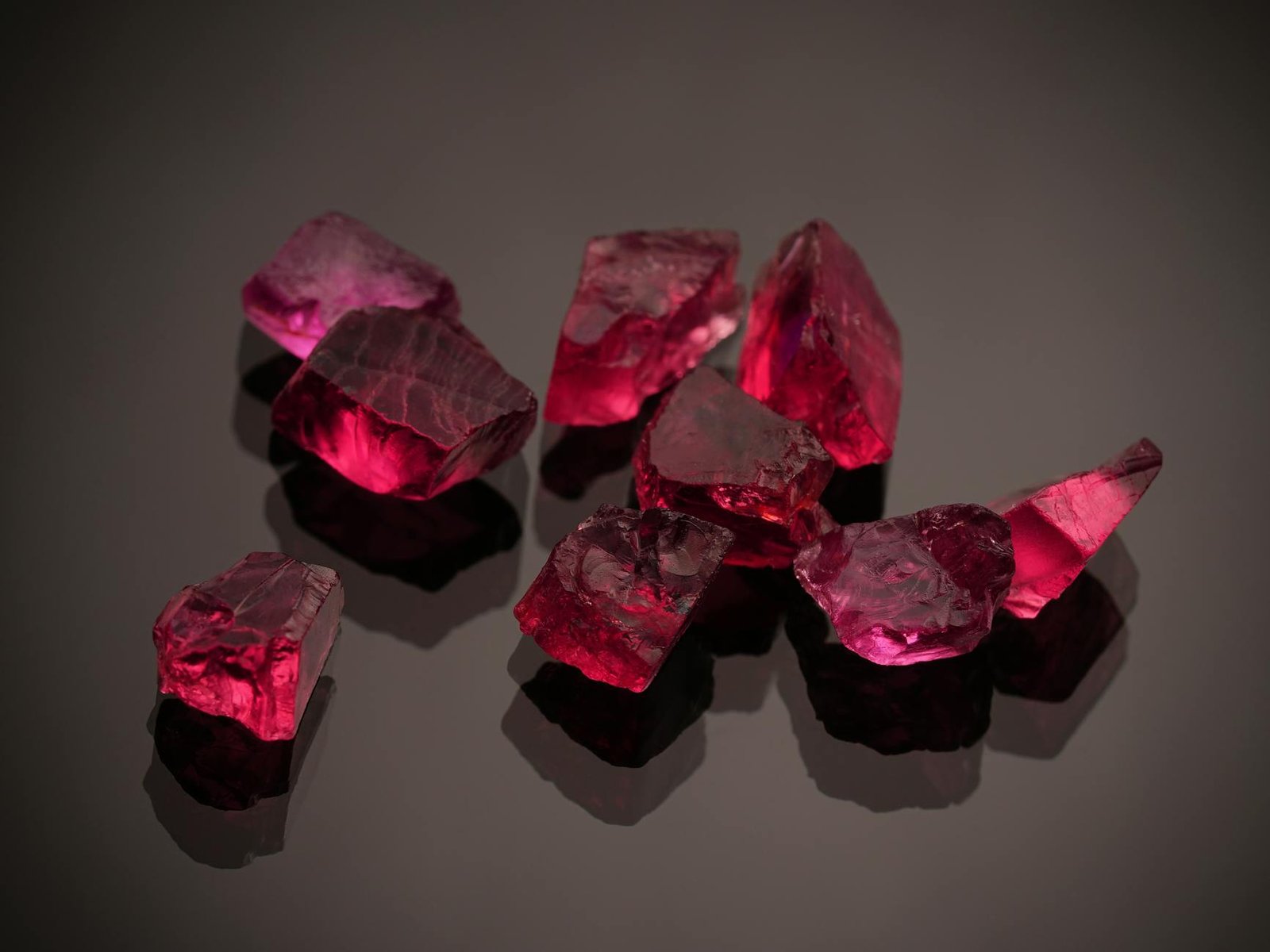
Few assets in the rare collectibles market have delivered the kind of quiet, consistent appreciation that investment-grade rubies have managed over the past two decades. While equities lurch through cycles and real estate bends under interest rate pressure, a fine unheated Burmese ruby — certified, well-cut, and held with patience — has carved a remarkably resilient trajectory. The ruby’s scarcity is structural, not cyclical. Myanmar’s Mogok Valley, which supplies the world’s most coveted stones, produces only a fraction of what global collector demand now requires.
Yet understanding whether rubies belong in your portfolio, and precisely when to enter or exit the market, demands more than admiring their colour. This article moves past the fundamentals and focuses sharply on ruby price trends, the realities of gemstone liquidity, and how to think about market timing as a serious investor. If you are still building your foundational knowledge, our broader piece on the best gemstones for investment covers how rubies compare against sapphires, emeralds, and other coloured stones across the full spectrum of investor considerations.
- Unheated Burmese rubies above three carats have seen price-per-carat appreciation outpace most comparable collectible asset classes since 2005, with top auction results routinely breaching USD 1 million per carat.
- Ruby liquidity is tiered: investment-grade stones with major-laboratory certification sell within weeks at premium auction houses, while commercial-quality or treated rubies can take months and typically yield lower margins.
- Market timing for rubies follows identifiable patterns tied to major auction seasons (May and November in Geneva and Hong Kong), geopolitical supply disruptions, and shifts in collector demographics across Asia.
- Treatment status is the single largest price variable — an unheated ruby can command a premium of 200% to 500% over an otherwise identical heated stone at the same auction.
- Singapore buyers benefit from a strategic geographic position between Burmese supply chains and rising Southeast Asian collector demand, making local acquisition a structurally sound entry point.
Understanding Ruby Price Trends Over Two Decades
The trajectory of top-quality ruby prices since the early 2000s reads less like a commodity chart and more like a luxury asset appreciation curve. Christie’s and Sotheby’s auction records consistently show that exceptional Burmese rubies have roughly doubled in value every eight to ten years, with certain landmark stones achieving far more dramatic gains. The 2015 sale of the Sunrise Ruby — a 25.59-carat Mogok stone — at USD 30.3 million, or approximately USD 1.18 million per carat, set a benchmark that reshaped collector expectations globally.
Below that rarefied tier, the market for three-to-ten-carat unheated rubies with strong pigeon-blood colour has also strengthened materially. Price-per-carat figures in this range climbed from roughly USD 20,000–40,000 in 2005 to USD 80,000–150,000 by the early 2020s for the finest examples. Treated stones of comparable colour and weight appreciate at a fraction of this pace, which explains why treatment disclosure and laboratory certification have become non-negotiable for serious collectors when they buy gemstone online or through auction.
Macro forces have reinforced these price gains. Sanctions against Myanmar following the 2021 military coup created measurable supply constraints on new Burmese rubies reaching Western markets. This tightened the pipeline of certified Mogok material, placing upward pressure on existing certified inventory. Investors who understood this dynamic and held certified unheated stones through the period benefited significantly. Price trends for rubies, in other words, cannot be read in isolation from geopolitical context — supply disruptions in Mogok translate directly into price movements for stones already in circulation.
The Burmese Premium and What Drives It
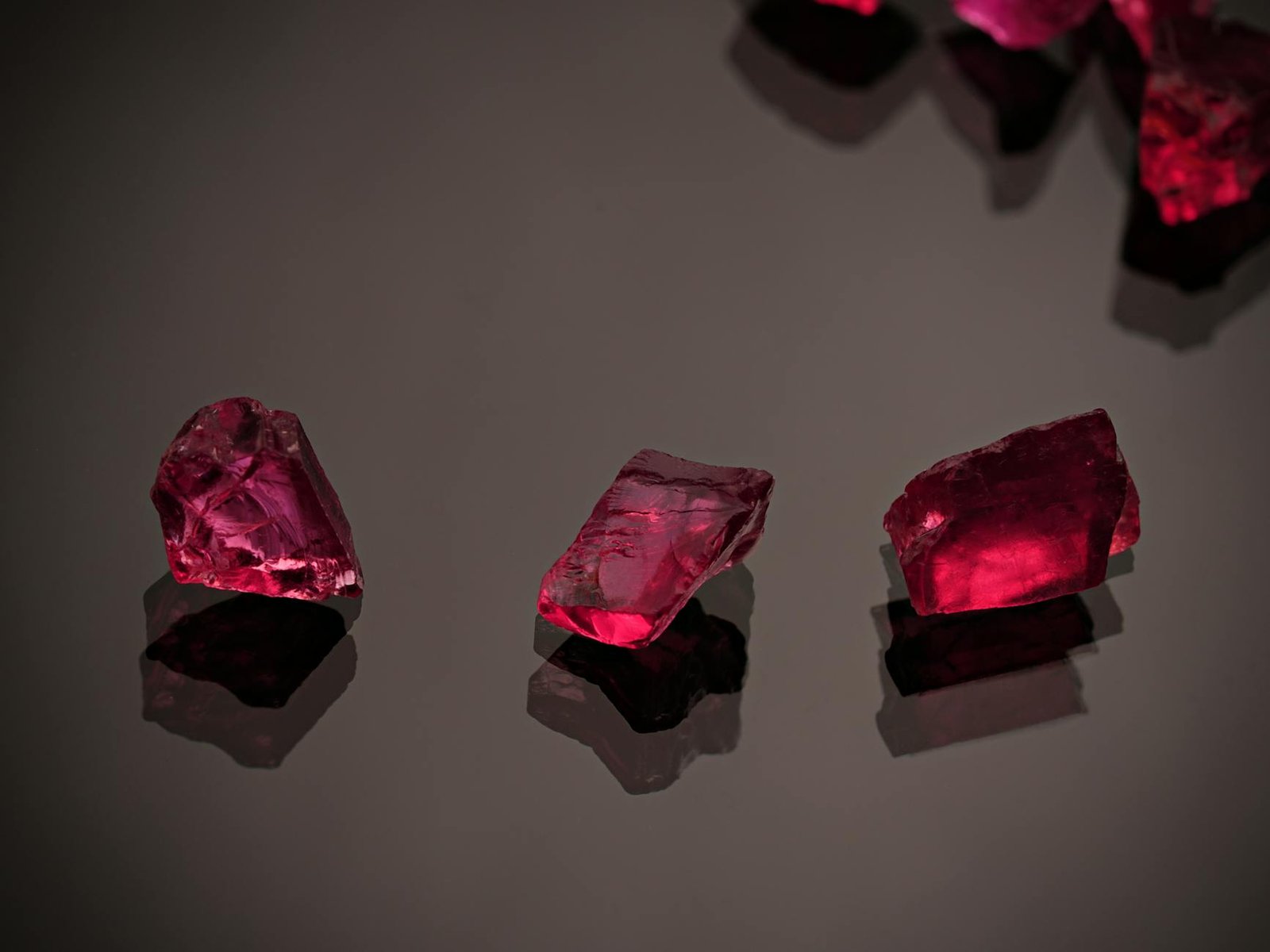
Not all rubies appreciate equally. Burmese ruby price appreciation consistently outstrips gains seen in material from Thailand, Mozambique, or Madagascar — and the reasons are specific and well-documented. Mogok stones carry a combination of characteristics that are difficult to replicate: the chromium fluorescence that produces that distinctive inner glow, the silk-like rutile inclusions that diffuse light beautifully, and a colour saturation profile that grading laboratories describe as pigeon-blood red. These factors, acting together, create a gemological fingerprint that seasoned collectors pay a substantial premium to own.
Mozambican rubies have entered the fine gem market with legitimate quality credentials and increasingly respectable auction results. Stones from Mozambique’s Montepuez deposit can exhibit vivid red saturation that rivals lesser Mogok material. However, the collector community continues to apply a meaningful origin premium to certified Burmese stones — typically 30% to 60% above comparable Mozambican material at equivalent quality tiers. For investment purposes, origin remains a primary value driver, and that premium has held stable over the past decade even as Mozambican supply has grown.
At Yala Gems, our gemologists assess investment-grade rubies against four compounding value factors: origin confirmation via Gübelin or GIA report, treatment status (no heat being optimal), weight above the three-carat threshold where price-per-carat premiums accelerate meaningfully, and colour saturation graded to pigeon-blood standard. A stone that satisfies all four criteria is not simply worth more — it occupies a different market tier entirely, with a narrower buyer pool but significantly stronger price support and exit potential.
Ruby Liquidity: What Investors Must Understand
Liquidity is the dimension most frequently underestimated by first-time precious gemstone investment buyers. Unlike equities or gold, you cannot liquidate a ruby at the press of a button. The exit pathway matters enormously, and it varies dramatically depending on the quality, certification, and weight of the stone you hold. Understanding this before you invest in rubies is essential, not optional.
Investment-grade rubies — unheated, Burmese-origin, above three carats, carrying a Gübelin or GIA report — are genuinely liquid within their market. Christie’s, Sotheby’s, and Bonhams run dedicated jewellery auctions in May and November in Geneva, with parallel auctions in Hong Kong targeting the Asian collector base. A correctly positioned stone at one of these houses typically sells within a single auction cycle. The process from consignment to settlement runs approximately three to five months, which is meaningful but manageable for an asset held as a medium-to-long-term store of value.
Below investment grade, the picture is more nuanced. Heated rubies with strong colour and reputable certification can find buyers through specialist dealers and secondary market platforms, but at price points that typically reflect a 40% to 70% discount compared to unheated equivalents. Stones under one carat, regardless of quality, tend to trade as jewellery rather than as investment assets, and their liquidity is tied to retail demand cycles rather than collector appetite. This distinction shapes the ruby gemstone value calculus considerably — quality concentration at the top of the market is not just an aesthetic preference, it is a liquidity strategy.
| Ruby Category | Typical Liquidity Window | Primary Exit Channel | Price Premium Over Heated |
|---|---|---|---|
| Unheated Burmese, 3 ct+, pigeon-blood, GIA/Gübelin certified | 1–2 auction cycles (3–6 months) | Major international auction houses | 200%–500% |
| Unheated Burmese, 1–3 ct, strong colour, certified | 2–4 months via specialist dealer | Specialist dealers, private treaty | 100%–200% |
| Heated Burmese, 1 ct+, fine colour, certified | 3–6 months | Dealers, online platforms, jewellery auctions | Baseline |
| Mozambican unheated, 2 ct+, vivid red, certified | 2–5 months | Specialist dealers, regional auction houses | 50%–80% over heated Mozambican |
| Commercial-grade, treated, under 1 ct | 6–18 months or longer | Retail channels, estate sales | N/A — jewellery retail pricing |
Market Timing: When to Buy and When to Hold
Timing the ruby market is neither guesswork nor an exercise in predicting macro cycles the way equity investors approach their portfolios. It is, instead, a discipline built around understanding when supply concentrates, when collector sentiment peaks, and when geopolitical shifts compress available inventory. For buyers who approach rubies as a natural gemstone investment with a five-to-fifteen-year horizon, timing the entry correctly can meaningfully influence returns.
The most consistent buying windows appear in the months preceding major auction seasons — typically February to April before the May Geneva sales, and July to September before the November Hong Kong and Geneva cycles. During these pre-auction periods, dealers are actively sourcing consignment material and some motivated sellers accept private treaty deals at marginally below anticipated auction estimates. Buyers with established relationships at reputable boutiques and dealers gain access to these off-market opportunities before stones reach the public auction floor.
Post-auction periods also merit attention. When a stone passes — fails to sell — at a major auction, it re-enters the private market, sometimes at a negotiated discount. Sophisticated buyers monitor these outcomes closely. A passed lot does not signal a flawed stone; it often reflects an overly ambitious reserve price, and the same stone can be acquired privately at a more attractive entry point shortly afterward. This kind of market awareness is part of what separates disciplined gemstone investors from impulsive collectors.
Holding discipline matters as much as entry timing. Rubies should generally be treated as illiquid assets for a minimum holding period of five years, with seven to twelve years being more representative of realised appreciation cycles in the secondary market. Attempting to sell within two to three years of purchase risks catching a market trough or absorbing transaction costs — auction house commissions typically run 12% to 25% on the buyer’s premium plus seller fees — that erode short-term gains. We encourage anyone evaluating their first ruby acquisition to speak with our gemologists about structuring a position suited to their specific investment horizon.
“A fine ruby does not reward impatience. It rewards knowledge, patience, and the discipline to buy correctly at the outset — because the stone’s rarity does the rest of the work.”
Singapore’s position as a regional hub for natural gemstone trade gives buyers here a structural advantage that is easy to overlook. The city-state sits at the intersection of Burmese and Sri Lankan supply pipelines and a rapidly expanding base of Southeast Asian high-net-worth collectors. When you buy gemstone online or in person through a certified gemstone Singapore retailer, you benefit from this geography — access to stones before they reach European or American auction circuits, and an emerging local secondary market that continues to mature. Yala Gems sources certified investment-grade rubies with this buyer advantage in mind.
Frequently Asked Questions
Final Thoughts
Ruby investment is not a passive exercise. It rewards buyers who understand price trends at the origin level, who respect the liquidity tiers that separate investment-grade material from decorative stones, and who approach market timing with the patience and preparation that fine gemstones genuinely deserve. The structural scarcity of unheated Burmese material, combined with growing collector demand across Asia and a maturing auction market for coloured stones, continues to support a constructive long-term outlook for top-quality rubies.
For broader context on how rubies sit within a diversified rare gemstone portfolio — and how they compare against sapphires, emeralds, and other high-value coloured stones — we recommend reading our pillar piece on the best gemstones for investment. The ruby-specific dynamics explored in this article represent one chapter in a larger, compelling story about coloured stones as a serious alternative asset class.
Ready to Explore Investment-Grade Rubies?
Our Singapore team sources certified natural gemstone rubies with full laboratory documentation. Speak with us to discover what is currently available and how to position your first or next acquisition with confidence.