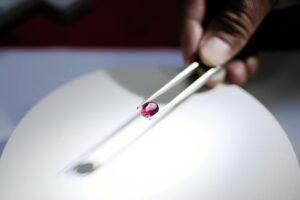

Among the major precious gemstones, emeralds occupy a quietly powerful position in the investment conversation — one that rewards buyers who understand the nuances and punishes those who don’t. The question buyers ask most often is simple: are emeralds a good investment? The honest answer is that they can be, emphatically so, but only when purchased with a clear understanding of how price per carat behaves across quality tiers, why origin commands a premium that can double or triple a stone’s value, and what certification actually means in practice. Without that foundation, even a visually stunning emerald can underperform as a store of value.
The investment case for natural emerald gemstones has strengthened materially over the past decade. Supply from Colombia — the world’s dominant source of premium emeralds — has tightened, while demand from high-net-worth collectors in Asia, the Middle East, and the United States has accelerated. For buyers in Singapore, where appetite for alternative luxury assets continues to grow, understanding the specific mechanics of emerald investment is no longer optional. This article goes beyond the broad strokes to examine exactly how prices are trending, which origins carry real premiums, what certification labs to trust, and how liquid your emerald actually is when the time comes to sell.
- Colombian emeralds command a documented origin premium of 30–100% over comparable Zambian or Brazilian stones, making provenance one of the most financially significant quality factors.
- Investment-grade natural emerald gemstones are broadly defined as stones above 2 carats with vivid-to-strong saturation, minimal treatment, and a certificate from a recognised laboratory such as GRS, Gübelin, or AGL.
- Price per carat for top-tier Colombian emeralds has risen sharply since 2018, with auction records consistently broken at major houses — a trend that validates long-term holding strategies.
- Liquidity for emeralds is lower than for diamonds but higher than for many rare collector gems; auction houses, specialist dealers, and estate buyers represent the most reliable exit channels.
- Certification language matters as much as the certificate itself — phrases like “minor” versus “significant” oil treatment carry direct price implications and must be understood before any purchase.
How Emerald Prices Per Carat Have Moved — and Where They Are Heading
Emerald pricing does not follow a single curve. It fractures across quality tiers in a way that makes broad averages almost meaningless for investment purposes. A 1-carat commercial-grade emerald and a 5-carat Colombian emerald with minor oil treatment occupy entirely different markets, respond to different demand signals, and attract different categories of buyer. Understanding which tier you are buying into is the first discipline of emerald investment.
At the commercial end — stones under 1 carat, significant treatment, undistinguished origin — prices have remained relatively flat, sitting broadly in the range of USD 200 to USD 800 per carat for retail. These stones do not appreciate meaningfully and should not be considered investment vehicles. The middle tier, encompassing 1–3 carat stones of moderate quality with minor treatment, has seen modest appreciation of roughly 5–8% annually over the past five years, driven partly by rising gold and diamond prices that push buyers toward coloured stone alternatives.
The tier that matters most to serious collectors is the fine-to-exceptional category: stones above 2 carats, vivid green saturation, excellent transparency, and either no treatment or minor oil only. Here, Colombian emerald investment returns have been remarkable. Top lots at Sotheby’s, Christie’s, and Bonhams from 2019 to 2024 have repeatedly set per-carat records, with exceptional Muzo and Chivor stones exceeding USD 80,000 per carat at auction. While auction premiums inflate these figures, they set a ceiling that influences private market transactions globally, including emerald price in Singapore.
The post-pandemic period introduced a specific dynamic worth understanding. During 2020 and 2021, high-net-worth buyers redirected discretionary capital into tangible assets, including coloured gemstones. Fine emeralds benefited from this shift, and prices at the top tier moved up sharply. By 2023 and 2024, growth had moderated but not reversed. Most credible dealers and auction specialists forecast continued appreciation at the fine end, supported by constrained Colombian supply and rising Asian collector demand.
When evaluating emerald investment returns, look beyond the per-carat price and examine the price-to-weight ratio across size breaks. Emeralds above 5 carats of fine quality are disproportionately rare — the per-carat price does not increase linearly but jumps significantly at the 3-carat, 5-carat, and 10-carat thresholds. A 6-carat fine Colombian stone is not simply “twice as valuable” as a 3-carat equivalent; it may be three to five times more valuable per carat, reflecting genuine rarity compression at larger sizes.
Origin Premiums: Why Colombian Emerald Investment Stands Apart

Of all the quality factors that affect natural gemstone value, origin is perhaps the most commercially potent for emeralds — and the most misunderstood by buyers new to the category. Colombian emerald investment carries a premium that exists for reasons that are both geological and historical, and that premium is formally recognised by every major gemological laboratory in the world.
Colombia’s Muzo, Chivor, and Coscuez mines produce emeralds with a chromium-dominant colouration that creates the pure, slightly warm green that the market has defined as the finest expression of the species. Zambian emeralds — particularly from the Kagem mine — are often of exceptional clarity and command their own respect, but their iron-influenced colour registers slightly cooler and bluer. The market assigns different values to these two profiles. At equivalent quality parameters, a Colombian stone typically trades at a 30–50% premium over a Zambian stone, and at the very top of the quality spectrum, that gap can widen to 100% or more.
Brazilian emeralds from Bahia and Minas Gerais generally trade below both Colombian and Zambian material at the fine level, largely due to colour consistency issues. Ethiopian emeralds have entered the market more recently and show promise in quality terms, but lack the collector heritage that drives premium pricing. For investors seeking maximum return potential, colombian emerald investment remains the most defensible position in the market.
It is essential to understand, however, that origin alone does not guarantee investment value. A poorly coloured, heavily included Colombian emerald is not automatically superior to a fine Zambian stone. The premium applies when Colombian origin is combined with fine-to-exceptional quality. A certificate confirming Colombian origin for a mediocre stone adds modest value at best. This is why buyers at Yala Gems are always advised to assess origin premium in the context of the complete quality picture, not in isolation.
Certification Requirements: What Investment-Grade Documentation Actually Means
No aspect of emerald investment is more practically important — or more frequently mishandled — than certification. A certificate from a recognised laboratory is not merely a credential. For investment-grade emeralds Singapore buyers intend to resell, it is the primary document that establishes value, and the language within it can move price by 20–40% on a single phrasing distinction.
The three laboratories whose certificates carry the greatest weight in the international fine gemstone market are Gübelin Gem Lab (Switzerland), the Gemmological Research Switzerland (GRS), and the American Gemological Laboratories (AGL). Certificates from the Gemological Institute of America (GIA) are also respected, particularly among buyers more familiar with the diamond trade. For the Singapore market specifically, GRS certificates are widely recognised and accepted by major auction houses operating in the region.
The single most important piece of language on any emerald certificate is the oil or resin treatment disclosure. Emeralds are almost universally treated with oil or resin to fill surface-reaching fractures — this is a standard, accepted practice in the trade. The degree of treatment is what determines price impact. Laboratories grade treatment on a scale that typically runs from “none” through “minor,” “moderate,” and “significant.” A “none” or “minor” designation commands a strong premium; “significant” treatment substantially reduces value and resale potential. For investment purposes, buyers should target “minor” or better, and “none” if budget allows.
Origin determination is the second critical function of a quality certificate. Only top-tier laboratories with access to reference collections and advanced spectroscopic equipment can reliably determine whether an emerald is Colombian, Zambian, Brazilian, or otherwise. Not all certificates include origin determination — buyers should explicitly verify that origin disclosure is part of the certification before treating a stone as investment grade. When you buy gemstone online or through a dealer, insisting on a full origin-determination certificate is non-negotiable for serious investment purchases.
A growing number of investment-grade natural gemstones are now submitted to multiple laboratories to obtain “cross-certified” documentation. For Colombian emeralds above 5 carats, having both a GRS and a Gübelin certificate is increasingly common in the top-tier market. While this adds cost, the double verification provides a powerful signal of authenticity and quality that can meaningfully accelerate resale and support higher pricing at auction.
Liquidity Considerations: How Easily Can You Actually Sell an Emerald?

Liquidity is the aspect of gemstone investment that receives the least attention in promotional materials and the most attention from experienced collectors. Unlike gold, which trades on a continuous global market with transparent pricing, or even diamonds, which benefit from a relatively standardised grading system and deep dealer networks, emeralds present meaningful liquidity challenges that buyers must factor into their investment calculus before purchase.
The exit channels for emeralds fall into three broad categories: auction houses, specialist dealers, and private collectors. Major international auction houses — Sotheby’s, Christie’s, Bonhams, and Phillips — represent the most transparent exit for fine stones, but they are best suited to exceptional material. Their buyer’s premiums and seller’s commissions can absorb 20–35% of the hammer price combined, which significantly affects net returns on all but the most appreciating stones. For stones above USD 50,000 in expected value, auction remains the most credible route.
Specialist coloured gemstone dealers — including boutiques that handle investment grade emeralds Singapore collectors consult — offer a faster and often more cost-effective exit for mid-range stones. A reputable dealer with established buy-back or trade-in policies provides genuine liquidity, though prices will reflect the dealer’s need to carry inventory and achieve their own margin. The quality of the relationship matters enormously here. Buying from a trusted source creates a natural first call for resale.
Private collector networks are the least accessible channel for new entrants but can yield the best prices for exceptional material. This path typically requires an established reputation in the collector community or the assistance of an intermediary. For buyers just entering the market, our pillar article on the best gemstones for investment provides useful context on how emeralds compare to rubies and sapphires across liquidity metrics.
As a general principle, buyers should plan a holding period of at least five to seven years for investment-grade emeralds to allow price appreciation to outpace transaction costs. Emeralds are not liquid instruments in the traditional financial sense — they are patient capital. The investors who have performed best with coloured gemstones are those who entered with long time horizons and exited when market conditions, not personal necessity, dictated the timing.
“The finest Colombian emeralds have consistently outperformed every asset class benchmark over a twenty-year holding period. They are not speculative — they are durable stores of chromatic and geological rarity.”
Comparing Emerald Investment Parameters at a Glance
The table below summarises the key investment parameters across emerald quality tiers and origins, providing a practical reference for buyers evaluating where to focus capital within the natural gemstone category.
| Category | Origin | Typical Per-Carat Range (USD) | Treatment Benchmark | Liquidity Rating | Investment Suitability |
|---|---|---|---|---|---|
| Exceptional Fine (>3ct) | Colombian (Muzo/Chivor) | 15,000–80,000+ | None to Minor | Moderate–High (auction) | Excellent |
| Fine (2–3ct) | Colombian | 5,000–15,000 | Minor | Moderate | Strong |
| Fine (2–5ct) | Zambian (Kagem) | 2,000–8,000 | Minor to Moderate | Moderate | Good |
| Commercial (1–2ct) | Brazilian / Ethiopian | 300–1,500 | Moderate to Significant | Low–Moderate | Limited |
| Commercial (<1ct) | Various | 100–500 | Significant | Low | Not Recommended |
Where and How to Buy Investment-Grade Emeralds in Singapore
Singapore has developed into a genuine hub for coloured gemstone acquisition in Southeast Asia, and for buyers asking where to buy emerald in Singapore with investment intent, the market offers real options — along with real pitfalls. The city’s position as a financial centre, combined with its proximity to South and Southeast Asian supply chains, has attracted credible dealers, reputable auction house representatives, and specialist boutiques serving high-net-worth collectors.
When evaluating where to buy gemstone in Singapore for investment purposes, the primary criterion is not price — it is provenance transparency and certification standards. Any dealer offering investment grade emeralds Singapore buyers can rely on should be able to provide, without hesitation, the original laboratory certificate, clear disclosure of treatment status, and a documented provenance chain. Dealers who are vague on these points should be avoided regardless of how attractive their pricing appears.
The option to buy gemstone online has expanded significantly, with reputable international dealers offering certified natural gemstone inventory via digital platforms. For Singapore buyers, this opens access to a much wider selection of investment-grade material than local inventory alone can provide. The key precaution when buying online is to verify that the certificate referenced in the listing matches the stone being purchased — request the report number and verify it independently with the issuing laboratory before any transaction is completed. You are always welcome to speak with our gemologists before committing to an online purchase of significant value.
Emerald price in Singapore varies across vendors, and comparison shopping is sensible — but buyers should be cautious about prioritising the lowest price. At the fine and exceptional tier, unusually low pricing almost always reflects an undisclosed quality issue: heavier treatment than disclosed, a questionable certificate, or a colour that photographs better than it appears in person. Trusted sources with transparent pricing and verifiable certification are invariably the better choice for capital that needs to hold its value.
Frequently Asked Questions
Final Thoughts
The investment case for emeralds is real, but it is precise. The buyers who have generated meaningful returns over time are those who focused on fine and exceptional quality, prioritised Colombian origin for its documented premium, insisted on rigorous certification with clear treatment disclosure, and entered with a patient, long-horizon mindset. Those who bought commercial-grade material, accepted inadequate documentation, or expected rapid liquidity have generally been disappointed.
For Singapore buyers, the market presents genuine opportunity. Emerald price in Singapore is competitive for certified material, access to reputable dealers is improving, and the appetite among Asian collectors for fine coloured natural gemstones continues to grow — a structural demand signal that supports the long-term thesis. The critical steps are education, selectivity, and partnership with trusted sources who can provide transparent documentation and honest counsel.
If you are building a position in coloured gemstone investment more broadly, we recommend reviewing our comprehensive pillar on the best gemstones for investment, which contextualises emeralds alongside rubies, sapphires, and other premium alternatives. And if you are ready to explore specific stones, our team at Yala Gems is here to guide you through the process with the rigour this category demands.
Ready to Invest in a Certified Natural Emerald?
Our gemologists can help you identify investment-grade stones with verified origin, trusted certification, and transparent pricing. Speak with our gemologists to begin your search.