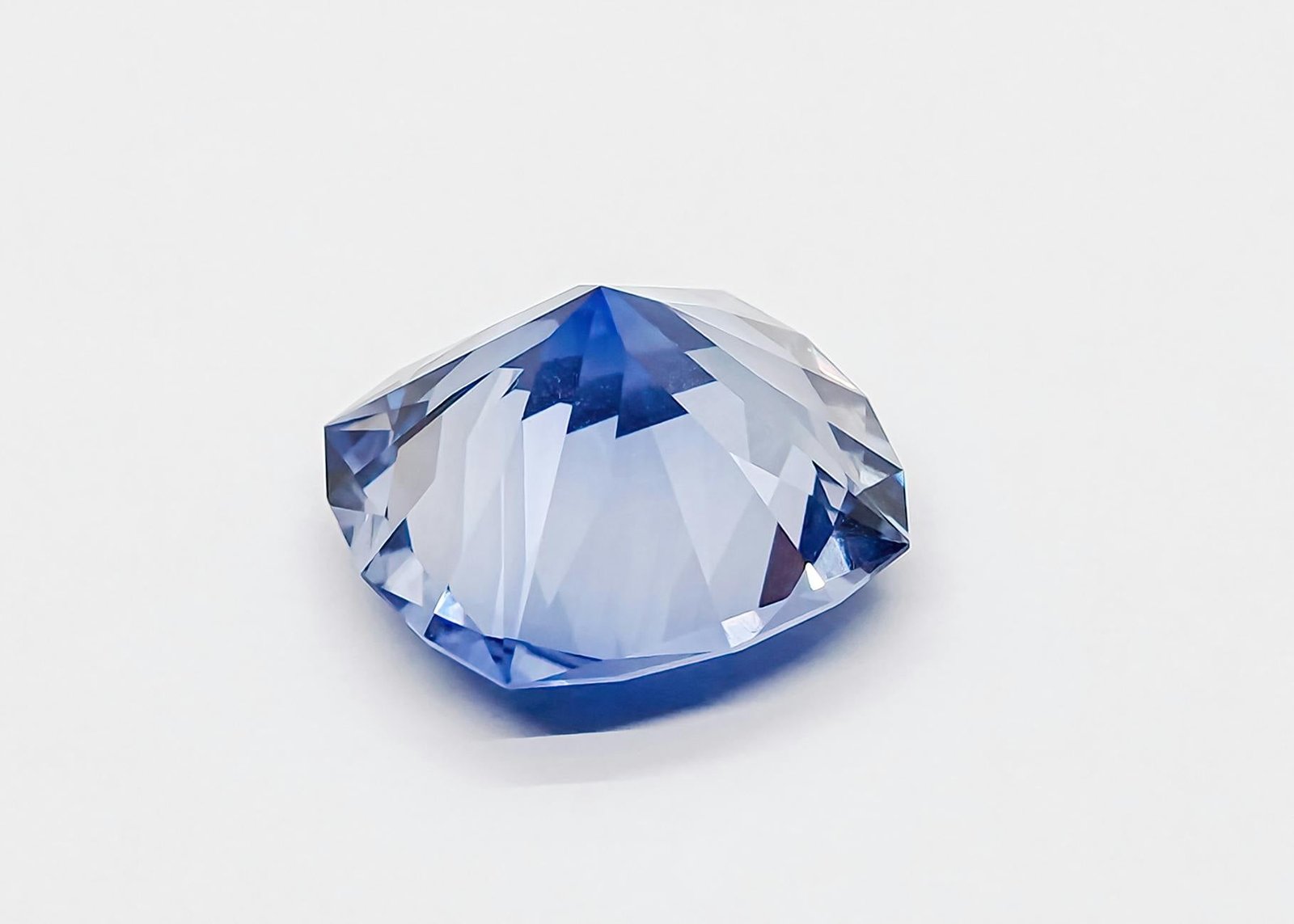
There is a blue that gemologists speak of in hushed, almost reverent tones — a Colour so saturated yet so weightlessly luminous that no photograph, no matter how precise, fully captures it. That blue belongs to the Kashmir sapphire, a Natural Gemstone mined from a remote Himalayan valley at altitudes exceeding 4,500 metres, in a deposit that has yielded virtually nothing of commercial significance since the early twentieth century. This geological silence is precisely what has transformed the Kashmir sapphire from a prized collector’s stone into one of the most credible hard-asset investments available to serious buyers today.
Understanding why Kashmir sapphires command such extraordinary premiums requires more than admiring their colour. It demands a granular look at how origin is verified, how rarity is measured against a market where supply is essentially frozen, and how per-carat pricing has moved — and continues to move — in ways that consistently outpace comparable Gemstones from other origins. Whether you are sourcing a Kashmir sapphire ring as a centrepiece jewel or building a Gemstone portfolio, the mechanics of value here are unlike anything else in the coloured stone market.
- Kashmir sapphires originate from a single, effectively exhausted deposit in the Zanskar range, making new supply structurally impossible at scale — a foundational rarity driver.
- Origin Certification from a recognised laboratory such as Gübelin, GRS, or SSEF is non-negotiable for investment-grade pricing; without it, the Kashmir premium collapses entirely.
- Kashmir sapphire price per carat for top-quality unheated stones routinely exceeds USD 40,000–80,000 per carat at major auction, with exceptional specimens surpassing USD 200,000 per carat.
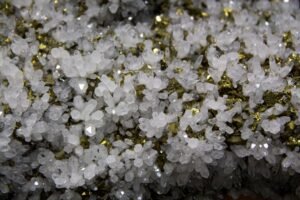
- The characteristic “velvety” appearance — produced by microscopic silk inclusions unique to the Kashmir deposit — is itself a grading criterion that distinguishes genuine stones from simulants and mis-certified material.
- No heat treatment is the baseline expectation for investment-grade Kashmir sapphires; any evidence of enhancement collapses the premium by 60–80 percent or more.
Why the Kashmir Origin Commands a Premium Above All Others
The Kashmir sapphire mines, located in the Padar region of the Zanskar range in Jammu and Kashmir, were discovered around 1881 following a landslide that exposed corundum-bearing pegmatite rock. Within roughly two decades, the richest pockets had been exhausted. Sporadic, small-scale attempts to resume mining through the twentieth and into the twenty-first century have produced negligible commercial output. The deposit is not merely depleted — it is, for all practical investment purposes, closed.
This geological reality creates a supply dynamic that no other sapphire origin can replicate. Ceylon sapphires from Sri Lanka, which we examine in depth in our Ceylon Sapphire buyer’s guide, continue to emerge from active alluvial deposits. Madagascar, Tanzania, and Australia all produce blue sapphires in meaningful quantities. Kashmir produces nothing new. Every Kashmir sapphire on the market today is, by definition, a finite antique of the earth — and the market prices it accordingly.
The origin premium is further reinforced by the colour itself. Gemmological literature consistently describes the finest Kashmir blue as a medium-to-medium-dark velvety blue, sometimes called “cornflower” though that term is now considered imprecise. The blue carries a slight violet undertone, and critically, it appears to glow from within even under subdued lighting. This optical quality is partly chromatic and partly structural, arising from the way light interacts with Kashmir sapphire inclusions — specifically, the fine rutile silk needles that scatter light internally without diminishing transparency.
The “velvety” quality in a Kashmir sapphire is not an absence of clarity — it is a distinct optical phenomenon produced by clouds of sub-microscopic fluid inclusions and fine silk that diffuse light in a way that softens the colour without clouding it. Laboratory graders at Gübelin and GRS specifically assess this quality when issuing origin determinations. A stone can carry VS clarity characteristics and still exhibit the signature Kashmir glow; the two are not in conflict. This is why Kashmir sapphire inclusions are studied rather than penalised in the way inclusions might be in diamonds.
Rarity Benchmarks: How Origin Is Verified and Why It Matters for Price
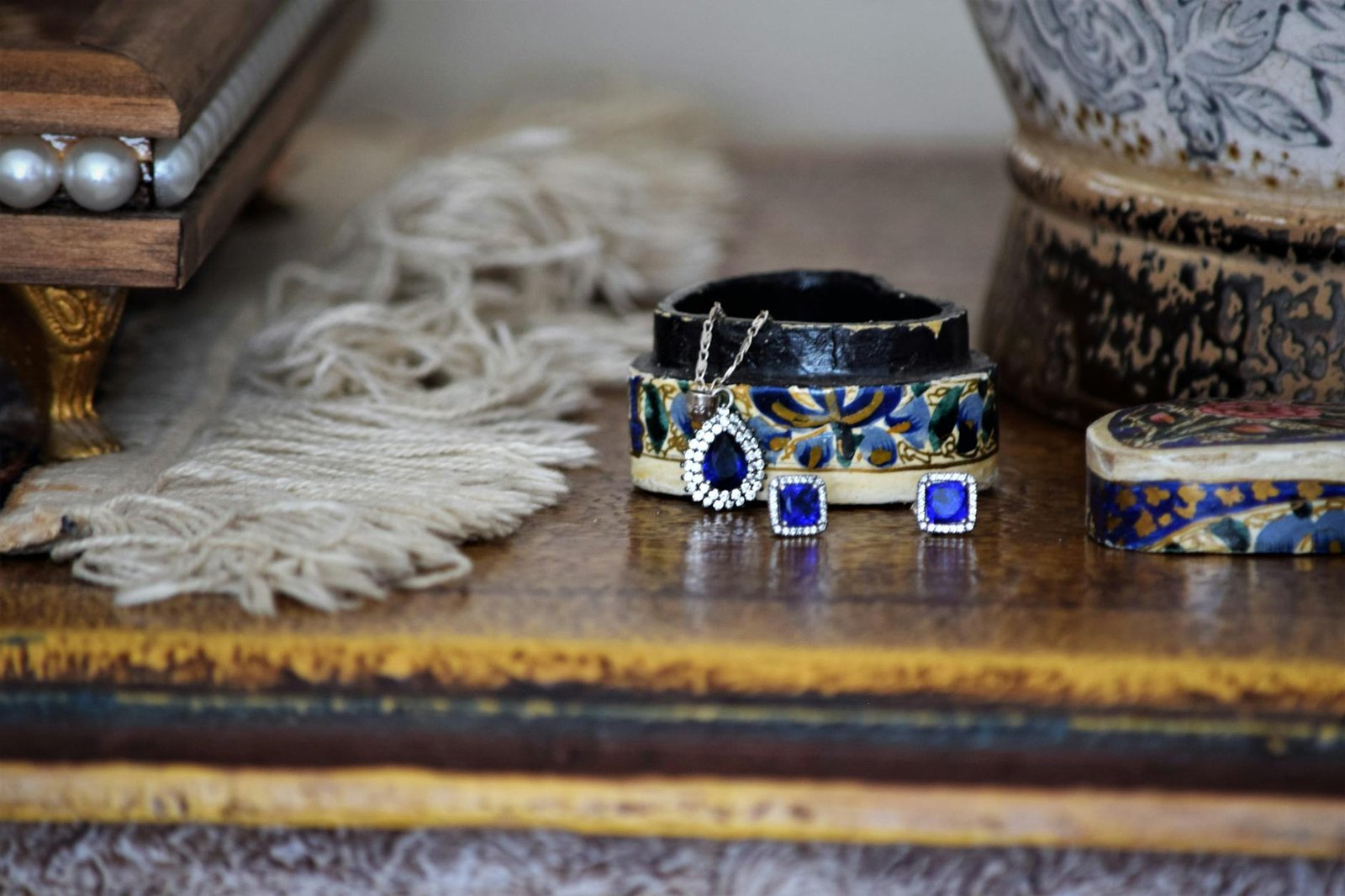
The single greatest risk in the Kashmir sapphire market is misrepresentation. Because the origin premium is so substantial — often three to five times the equivalent price of a Ceylon or Madagascar stone of comparable colour and size — the incentive to falsely label or mis-certify material is significant. For any buyer considering a Kashmir sapphire for sale in Singapore or internationally, laboratory certification is the non-negotiable foundation of due diligence.
The three laboratories whose Kashmir origin determinations carry the highest market authority are Gübelin Gem Lab (Switzerland), SSEF Swiss Gemmological Institute, and Gem Research Swisslab (GRS). Each uses a combination of spectroscopic analysis, chemical fingerprinting, and inclusion landscape examination to determine whether a stone’s geological signature is consistent with the Padar deposit. The Gübelin “Provenance Proof” programme adds blockchain-anchored documentation for an additional layer of traceability. AGL (American Gemological Laboratories) reports are also respected in North American auction markets.
Critically, origin determination is a statement of probability, not absolute certainty. Reputable laboratories use language such as “consistent with Kashmir origin” rather than a categorical declaration. For investment buyers, a report that stops short of this language — or that uses hedged terminology from a lesser-known laboratory — should be treated with caution. At Yala Gems, every Kashmir sapphire we present to clients carries documentation from one of these three primary Swiss laboratories as a baseline requirement.
“A Kashmir sapphire without a credible origin report is simply a blue sapphire. The certificate is not paperwork — it is the asset itself.”
Size thresholds also govern rarity benchmarks in ways that directly affect pricing. Stones below one carat, while still genuinely rare, are relatively more accessible. The market step-changes sharply at two carats, again at three carats, and becomes exponentially rarefied above five carats. Clean, well-proportioned Kashmir sapphires above ten carats represent museum-calibre material and are priced accordingly. When you encounter a Kashmir blue sapphire price per carat quoted for a large stone, that figure compounds rapidly — a ten-carat Kashmir sapphire priced at USD 60,000 per carat carries a USD 600,000 ticket before any jewellery mounting.
Investment-Grade Pricing: What the Auction Record Shows
The price history of Kashmir sapphires at major auction houses — Christie’s, Sotheby’s, and Bonhams — provides the most transparent benchmark data available to investors. This market has been consistently upward-trending over the past two decades, with occasional corrections that have historically reversed within eighteen to thirty-six months.
| Quality Tier | Carat Range | Price Per Carat (USD) | Key Value Driver |
|---|---|---|---|
| Entry Investment Grade | 1–2 ct | 8,000–20,000 | Certified origin, no heat, good colour |
| Mid-Tier Collector Grade | 2–5 ct | 20,000–55,000 | Strong velvety blue, clean face-up, cert from top lab |
| Premium Auction Grade | 5–10 ct | 55,000–120,000 | Exceptional colour saturation, minimal inclusions visible |
| Exceptional / Record Grade | 10 ct+ | 120,000–250,000+ | Provenance, historical significance, benchmark colour |
These figures represent the secondary auction market. Private treaty sales — which account for a significant share of high-value natural gemstone transactions — sometimes achieve premiums above public auction results, particularly where provenance documentation is exceptional or where a stone carries historical collection attribution. The Kashmir blue sapphire price per carat is also sensitive to overall sapphire market sentiment, which tends to track demand from South and East Asian collectors as well as European and American institutional buyers.
For Singapore-based buyers looking to buy gemstone online or in person, it is important to understand that quoted retail prices often sit at a premium to raw auction benchmarks, reflecting sourcing costs, certification, and the assurance of working through a vetted retailer. That premium is not waste — it is the cost of verified quality and recourse. We encourage prospective buyers to speak with our gemologists for a current market view before committing to any significant purchase.
Kashmir vs Ceylon Sapphire: Understanding the Pricing Gap
The question of Kashmir sapphire vs Ceylon sapphire is one of the most commonly asked by educated buyers approaching a purchase decision. Both origins produce blue sapphires of extraordinary quality. Both command significant premiums over Madagascar or Thai material. The pricing gap between them, however, is substantial and structurally rooted.
Ceylon sapphires — particularly unheated stones with strong cornflower or royal blue colour from Ratnapura or Elahera — can achieve USD 5,000–20,000 per carat at auction for premium specimens. For equivalent colour and clarity, a Kashmir stone will typically price at a multiple of two to five times that figure. The difference is not purely about colour — in a blind test, trained gemologists sometimes find certain Ceylon stones visually comparable to Kashmir material. The premium is about origin scarcity, provenance certainty, and the collector market’s deeply ingrained conviction that Kashmir represents the pinnacle of sapphire provenance.
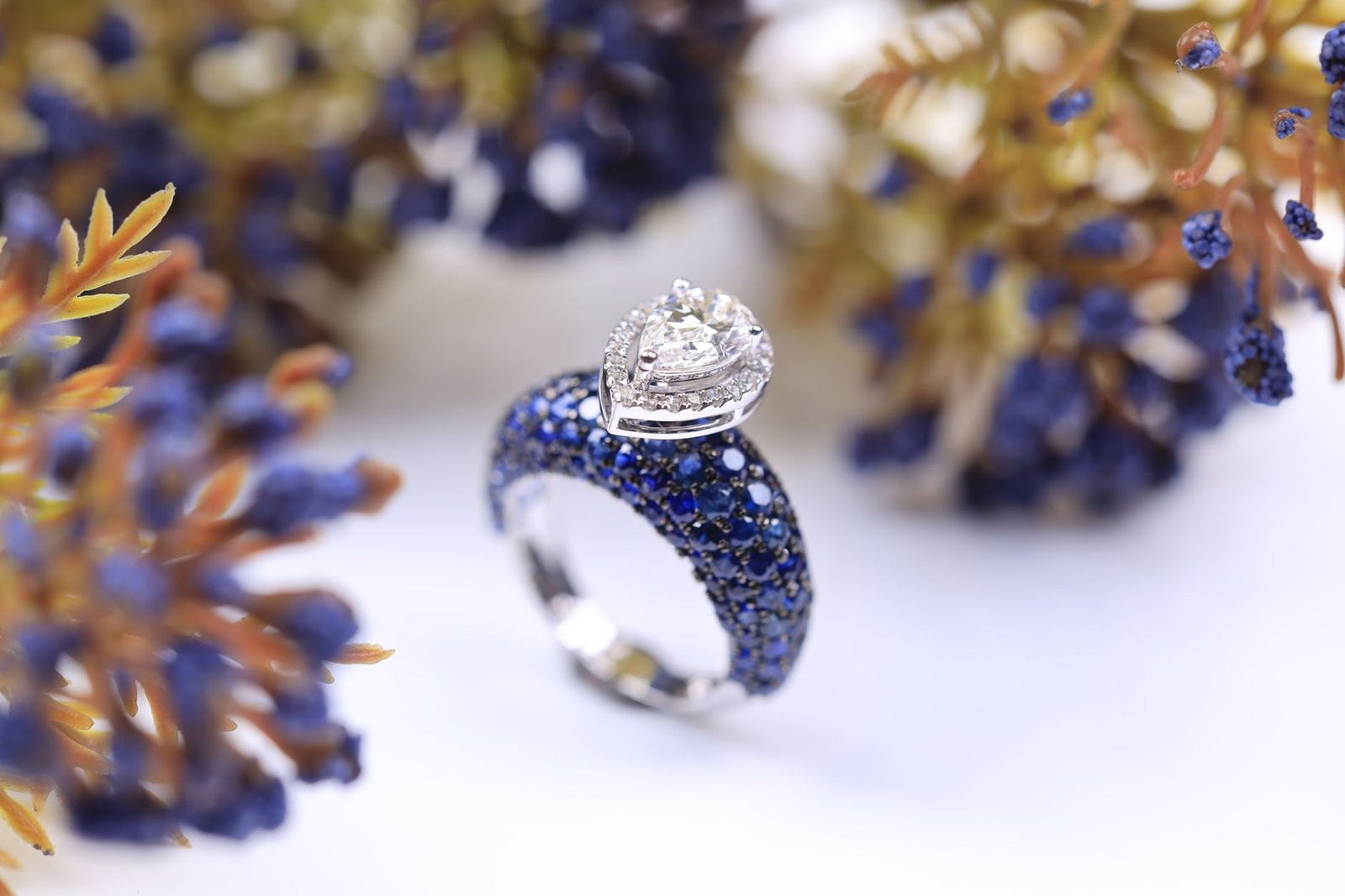
For buyers considering Kashmir sapphire jewellery as an investment vehicle rather than purely for wear, this distinction is significant. A Kashmir sapphire ring set in platinum with a top laboratory certificate will hold and appreciate value in a way that most other coloured gemstone jewellery cannot reliably match. The liquidity of Kashmir material at reputable auction houses is meaningfully higher than any other blue sapphire origin — a practical consideration for investors thinking about eventual resale.
One subtlety that separates sophisticated Kashmir sapphire buyers from first-time purchasers is the understanding that heat treatment status and origin are two separate assessments on a laboratory report. A heated Kashmir sapphire is still a Kashmir sapphire — but its investment value is dramatically lower than an unheated stone of identical origin. When reviewing a certificate, confirm that the thermal enhancement field reads “no indications of heating” and that the origin field references the Padar or Kashmir deposit specifically. Both criteria must be satisfied for investment-grade classification.
It is also worth contextualising the Kashmir premium within the broader natural gemstone investment landscape. At our Singapore boutique, we position Kashmir sapphires alongside unheated Burmese rubies and Colombian emeralds as the three most credible coloured stone investments available — each underpinned by closed or constrained supply, strong auction liquidity, and institutional collector demand. For buyers in the gemstone Singapore market who are approaching coloured stones for the first time, Kashmir sapphires represent perhaps the most legible investment proposition: finite supply, documented demand, and a price record that speaks for itself.
Frequently Asked Questions
Final Thoughts
The Kashmir sapphire occupies a position in the coloured gemstone hierarchy that is, by now, structurally permanent. Its mine is silent. Its supply is frozen. Its colour standard has defined the category for over a century. For buyers and investors who understand that rarity must be verifiable to be monetisable, the combination of Swiss laboratory certification, unheated status, and documented Kashmir origin creates an asset whose investment logic is as compelling as its beauty.
If you are building familiarity with the sapphire market more broadly, our Ceylon Sapphire buyer’s guide provides an essential foundation — covering grading, pricing, and how to evaluate the stone that most closely rivals Kashmir at a meaningfully different price point. Understanding both origins will make you a significantly more informed buyer of any natural gemstone at the upper end of the market.
The Kashmir sapphire is not a purchase made lightly. It rewards patience, rigorous due diligence, and the guidance of specialists who know exactly what they are looking at. That is precisely the kind of counsel we provide at Yala Gems — and why discerning collectors in Singapore and beyond trust us when the stakes are highest.
Deepen Your Gemstone Knowledge
Explore origin guides, investment insights, and expert commentary across our full knowledge library.