There are gemstones that are merely beautiful, and then there are gemstones that carry an entire geography within them. Ceylon sapphire belongs unequivocally to the second category. Formed deep beneath the ancient island of Sri Lanka over hundreds of millions of years, these extraordinary natural sapphires emerge with a colour saturation and luminous clarity that gemologists describe, almost universally, as the global benchmark for the species. The finest specimens exhibit a velvety cornflower blue — neither too dark, never washed out — that has captivated royalty, collectors, and newly betrothed couples for centuries.
The name itself carries extraordinary weight. “Ceylon” is the colonial-era designation for Sri Lanka, and while the island was renamed in 1972, the gemological world has retained the term precisely because it signals a specific, irreplaceable provenance. A Ceylon blue sapphire is not simply a sapphire from a particular location; it is a stone shaped by a unique geological composition, mined under strict regulatory oversight, and evaluated against the most exacting colour standards the trade recognises. When you encounter that prefix in a laboratory report, you are reading a statement of origin that can meaningfully shift value — sometimes dramatically.
Whether you are exploring a Ceylon sapphire engagement ring for its romantic symbolism, evaluating Ceylon sapphire price per carat as a disciplined collector, or searching for a trusted Ceylon sapphire jeweller in Singapore, the journey begins with knowledge. This guide was written to give you exactly that: authoritative, unvarnished, and richly detailed.
- Ceylon sapphire refers specifically to natural sapphire originating from Sri Lanka, with “Ceylon” denoting a provenance that commands a significant price premium in global markets.
- Ceylon blue sapphire and Ceylon yellow sapphire are both produced in Sri Lanka, with blue representing the most sought-after variety and yellow gaining rapid traction among collectors.
- Ceylon sapphire price per carat ranges from approximately USD 200 for commercial-grade stones to over USD 10,000 per carat for fine, unheated, certified specimens above three carats.
- A Ceylon sapphire engagement ring is among the most symbolically resonant and gemologically distinguished choices available, offering durability, rarity, and deeply personal colour.
- All natural sapphires should be accompanied by a reputable laboratory certificate — such as GIA, Gübelin, or SSEF — confirming origin, treatment status, and quality grading.
- Singapore is one of Asia’s premier destinations for acquiring certified natural gemstones, with boutiques like Yala Gems offering curated Ceylon sapphire selections alongside expert gemological guidance.
The Island That Shaped the Stone: Origin and Provenance
Sri Lanka’s gemological story begins in the Precambrian period, when extraordinary tectonic pressures and mineral-rich metamorphic rocks created conditions ideal for corundum crystallisation. The Ratnapura district — whose very name translates to “City of Gems” — remains the heartland of Ceylon sapphire production, though Elahera, Balangoda, and Kataragama also yield important stones. What distinguishes Sri Lankan deposits is the geological phenomenon of gem gravels, known locally as illam, in which sapphires accumulate within ancient riverbeds and alluvial sediment. Miners work in conditions that have changed relatively little over millennia, sifting these gravels by hand with a patience that feels almost devotional.
The resulting stones share a characteristic that seasoned gemologists identify with remarkable consistency: a fine-grained, silky transparency underpinned by exceptionally low iron content. This chemistry is the direct reason Ceylon blue sapphires display such vivid, open colour rather than the steely, over-saturated hues associated with Thai or Australian material. Ceylon yellow sapphire, meanwhile, owes its warm golden tones to traces of iron in a different valence state — a subtler colouration, but one that has attracted serious collector attention in recent years. Both varieties are expressions of the same extraordinary geology.
From a market perspective, origin disclosure matters profoundly. A natural sapphire with a confirmed Ceylon origin commands a premium of anywhere from thirty to over one hundred percent compared to a stone of equivalent quality from a less storied source. This is not sentiment alone — it reflects the global trade’s long-established valuation hierarchy, reinforced consistently by major auction results at Christie’s, Sotheby’s, and Bonhams.
The question “What is the difference between Ceylon sapphire and Sri Lanka sapphire?” surfaces frequently in gemological consultations. The answer is straightforward: they are the same stone. Ceylon was the colonial name for Sri Lanka, and the term persists in gemology purely as a provenance designation. When a laboratory certificate states “Ceylon origin,” it means the stone originated from what is today Sri Lanka. Both terms are correct; “Ceylon” simply carries additional historical and commercial weight within the trade. At Yala Gems, every Ceylon sapphire we present is supported by documentation that uses this precise language.
Reading a Ceylon Sapphire: The Four Dimensions of Quality

Evaluating any natural sapphire — and Ceylon sapphires in particular — requires fluency with the same four-pillar framework applied to all coloured gemstones: colour, clarity, cut, and carat weight. Of these, colour is sovereign. The most prized Ceylon blue sapphires display what the trade calls “cornflower blue” or “royal blue” — a medium to medium-dark hue with strong saturation and exceptional brilliance. Stones that veer toward violet or exhibit greyish undertones are considered lower in quality. Lightness is forgivable at smaller sizes; at three carats and above, a washed-out stone loses considerable value.
Clarity standards for natural sapphire are deliberately more relaxed than for diamond, since inclusions in coloured stones are understood to be part of their natural character. That said, eye-clean Ceylon sapphires — those showing no visible inclusions to the unaided eye — are substantially rarer and priced accordingly. The presence of silk, fine rutile needle inclusions common in Sri Lankan stones, can actually be a quality indicator when present in modest amounts, as it both confirms natural origin and creates the optical phenomenon of asterism in star sapphires.
Cut is the dimension most frequently underestimated by buyers. A well-proportioned Ceylon blue sapphire gemstone ring will exhibit dynamic light return and an even colour distribution across the face-up position. Poorly cut stones often show windowing — a transparent, colourless zone at the centre — or extinction, where light dies in dark patches. Ask to view any stone under varied lighting before committing to a purchase.
Ceylon Sapphire Price Per Carat: What Collectors and Investors Need to Know
Understanding Ceylon blue sapphire price per carat requires accepting that “sapphire” is not one uniform commodity but a spectrum of qualities with dramatically different valuations. At the commercial end, heated Ceylon sapphires in the one-to-two carat range with good colour and minor inclusions typically trade between USD 200 and USD 800 per carat in the retail market. Fine, eye-clean heated stones between two and five carats with strong saturation climb to USD 1,500–4,000 per carat. The tier that commands the most attention among serious collectors is unheated Ceylon sapphire: certified, eye-clean, five-plus carats with natural origin confirmed by a top-tier laboratory. These stones can achieve USD 8,000–15,000 per carat, with exceptional examples surpassing USD 50,000 per carat at auction.
The heat treatment question is pivotal. Heating sapphires to high temperatures improves their colour and clarity, and approximately eighty to ninety percent of commercially available sapphires have been treated. There is nothing inherently deceptive about this practice when disclosed — and it absolutely must be disclosed. Unheated Ceylon sapphires, however, represent a rarer and more collectible category. Their colour is considered purer, their formation more singular, and their value trajectory steeper over time. When you buy Ceylon blue sapphire in the unheated category, you are acquiring something genuinely finite.
“A fine unheated Ceylon sapphire is geology’s most accomplished act of self-restraint — every element of colour, saturation, and light balanced by nothing more than time and the earth itself.”
| Grade Category | Treatment Status | Carat Range | Estimated Retail Price (USD/ct) | Recommended Certification |
|---|---|---|---|---|
| Commercial | Heated | 0.5 – 2 ct | 200 – 800 | GIA, AGL |
| Fine | Heated | 2 – 5 ct | 1,500 – 4,000 | GIA, Gübelin, SSEF |
| Collector-Grade | Unheated | 2 – 5 ct | 3,500 – 9,000 | Gübelin, SSEF, GIA |
| Investment-Grade | Unheated | 5 ct + | 8,000 – 50,000+ | Gübelin + SSEF dual cert |
| Ceylon Yellow Sapphire | Heated or Unheated | 1 – 5 ct | 400 – 3,000 | GIA, Gübelin |
The Ceylon sapphire engagement ring: Romance, Meaning, and Enduring Style
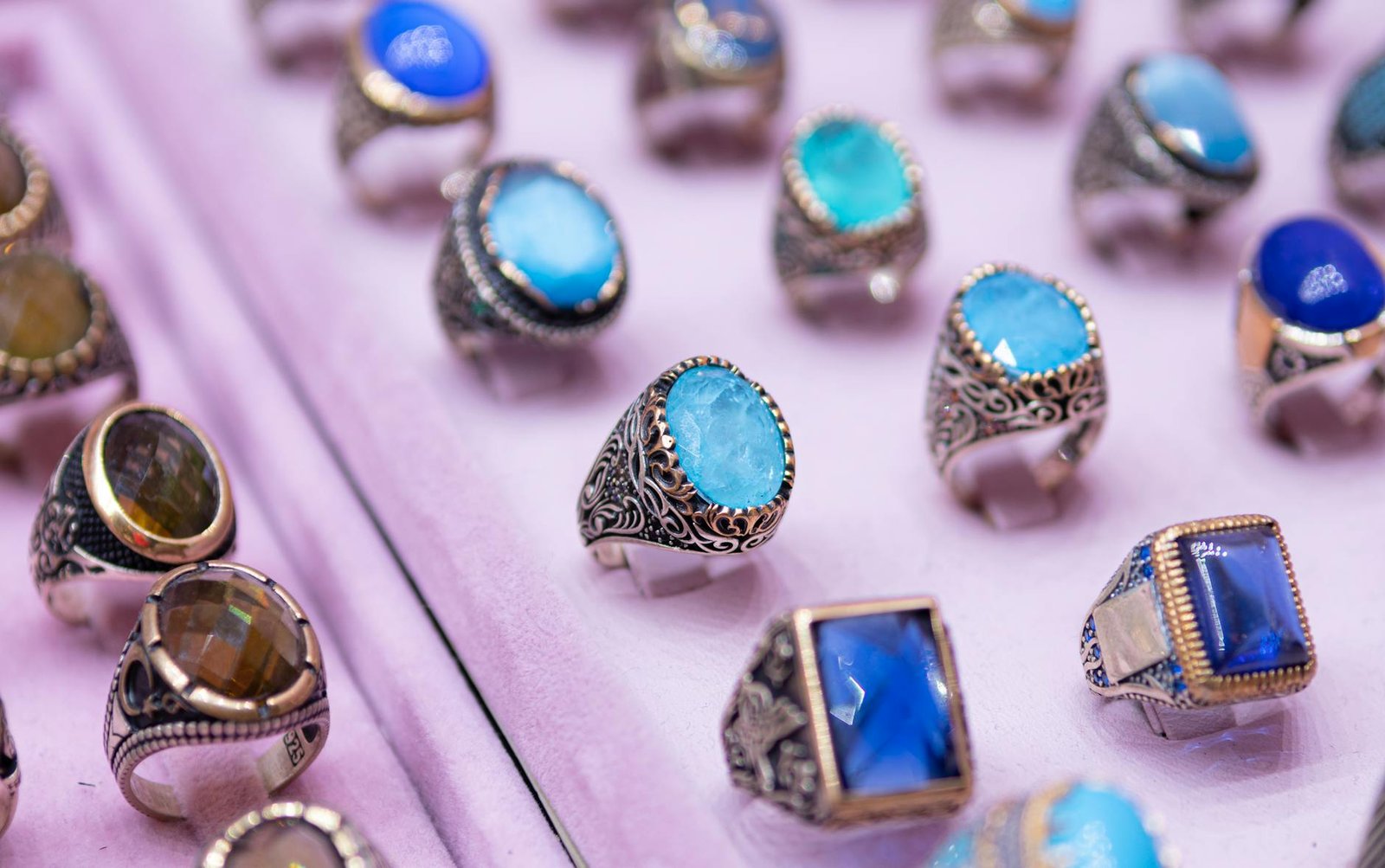
The story that most people know begins with a sapphire that Princess Diana chose over diamond in 1981 — an eighteen-carat oval Ceylon blue sapphire and diamond ring that is now worn by Catherine, Princess of Wales. That single choice elevated the Ceylon sapphire engagement ring from a distinguished alternative to a widely aspirational symbol. What endures beyond the celebrity narrative, however, is the pure gemological logic of the choice: sapphire rates nine on the Mohs hardness scale, making it the second hardest natural gemstone after diamond and an ideal stone for everyday wear.
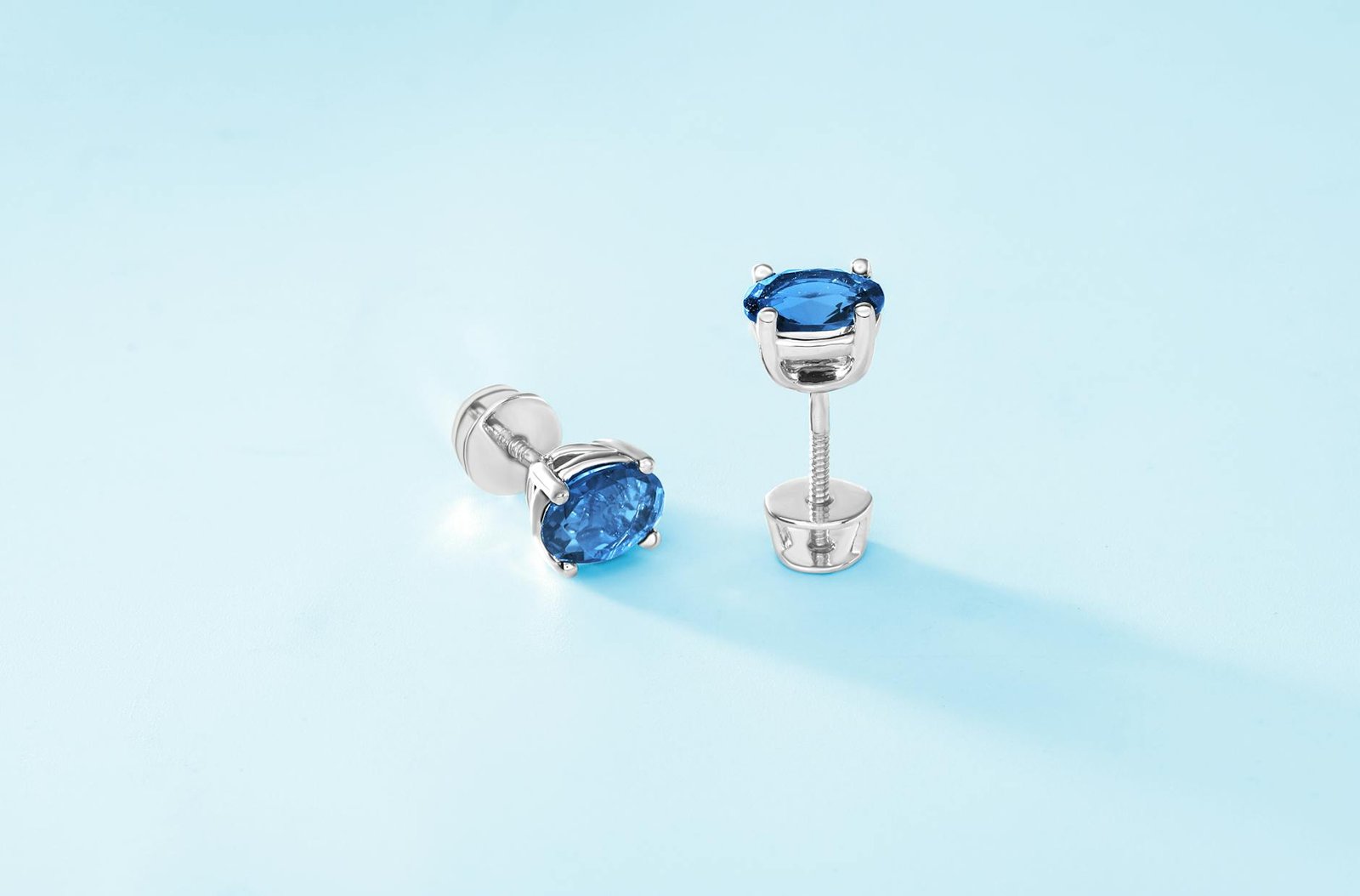
A Ceylon sapphire and diamond ring pairing is considered one of the most elegant in all of fine jewellery. The icy brilliance of white diamonds amplifies the cool luminosity of a fine blue sapphire, creating a contrast that reads as both timeless and sophisticated. For those seeking something warmer, Ceylon yellow sapphire set alongside champagne diamonds or rose gold offers a contemporary pairing with extraordinary richness. These combinations are not simply aesthetic decisions — they speak to the buyer’s personal colour language, and our gemologists at speak with our gemologists page are always available to guide you through that process.
When selecting a Ceylon sapphire engagement ring, consider the setting thoughtfully. A bezel setting offers maximum protection for an active lifestyle; a prong setting maximises light entry and brilliance. Cushion, oval, and round brilliant cuts remain perennial favourites for blue sapphire, while pear and emerald cuts are gaining traction among discerning buyers who want something less conventional. Every element of the ring — the metal, the setting style, the cut — should be chosen to honour the stone at its centre.
Ceylon yellow sapphire has emerged as one of the most quietly significant growth categories in the natural gemstone market. Historically associated with Vedic astrological practice, where it is known as Pukhraj and worn for prosperity and wisdom, Ceylon yellow sapphire has crossed into mainstream collector and bridal markets with considerable momentum. Stones of fine golden yellow hue with strong saturation are now achieving prices that rival lesser blue sapphires of equivalent weight. For buyers seeking a distinctive alternative to the classic blue Ceylon sapphire ring, yellow sapphire from Sri Lanka offers rarity, tradition, and remarkable colour personality in a single stone.
Singapore as a Premier Destination for natural gemstones
Singapore occupies a unique position in the fine jewellery world. As a global trading hub situated at the crossroads of South and Southeast Asia, the city-state benefits from extraordinary access to gemstone supply chains that originate in Sri Lanka, Myanmar, Mozambique, and Colombia. Regulatory frameworks are rigorous, consumer protections are strong, and the concentration of gemological expertise within a compact urban geography means that buyers can access world-class knowledge without travelling to traditional Western jewellery capitals.
For anyone searching for a Ceylon sapphire Singapore retailer, the quality of the purchasing experience will vary considerably. The markers of a trustworthy gemstone Singapore specialist are consistent: transparent disclosure of treatment status, third-party laboratory certification from recognised bodies, clear return and exchange policies, and gemologists who welcome detailed questions rather than deflecting them. A reputable boutique will never resist showing you a stone’s certificate before purchase, and will always explain what the document means in plain language.
At Yala Gems, our curated selection of Ceylon sapphires is sourced with direct supply chain relationships and supported by internationally recognised laboratory documentation on every significant stone. We serve both walk-in clients and online buyers across Singapore and the broader region, offering the same standard of gemological care regardless of the channel through which you choose to engage.
How to Buy Ceylon Sapphire Online Safely and Confidently
The ability to buy gemstone online has transformed access for buyers outside major jewellery centres, but it has also introduced meaningful risk if approached without proper diligence. The first and non-negotiable requirement is laboratory certification. No natural sapphire above one carat should be purchased without a current report from GIA, Gübelin, SSEF, or AGL confirming origin, treatment status, and quality parameters. If a seller cannot provide this documentation, treat that as a definitive disqualifier regardless of how attractive the price appears.
When you buy Ceylon blue sapphire online, examine the accompanying photography carefully. Request images under multiple light sources — daylight equivalent, incandescent, and fluorescent — since blue sapphires can shift dramatically between these conditions. Reputable sellers will also provide video footage of a stone in motion, which reveals far more about cut quality and light performance than static images. Ask explicitly about return windows, and confirm the return policy in writing before completing any transaction.
Pricing context matters enormously when evaluating online listings. Cross-reference any stone against current market data, and be appropriately sceptical of prices that sit notably below comparable certified stones on established platforms. natural sapphires with confirmed Ceylon origin and no heat treatment cannot be priced like commercial heated material — if the price suggests otherwise, the documentation almost certainly does not support the claim. To buy Ceylon sapphire ring settings and loose stones with complete confidence, speak with our gemologists before making your final decision — it is a consultation that costs nothing and protects everything.
Frequently Asked Questions
Final Thoughts
Ceylon sapphire endures not because of fashion or trend, but because of something more fundamental: it represents one of the earth’s most accomplished expressions of colour, formed over geological time in a place that has been synonymous with extraordinary gemstones since antiquity. Whether you are drawn to the iconic cornflower blue of a Ceylon sapphire engagement ring, the warm brilliance of a Ceylon yellow sapphire, or the quiet authority of an unheated collector stone, the experience of acquiring one should be as considered and exceptional as the stone itself.
The knowledge you bring to this purchase is your greatest asset. Understand price per carat benchmarks, insist on credible laboratory documentation, and engage with specialists who will treat your questions as an opportunity to educate rather than an obstacle to close a sale. The finest natural sapphires reward exactly this kind of careful attention — and they will repay it in beauty and value for a very long time.
When you are ready to buy Ceylon sapphire ring selections, explore loose certified stones, or simply deepen your understanding of what makes Sri Lankan material so singular, the team at Yala Gems is here to walk that journey with you. Our commitment is to gemstones that are authentic, certified, and genuinely extraordinary — nothing less.
Ready to Find Your Perfect Ceylon Sapphire?
Explore our curated knowledge guides, buying advice, and gemstone education resources — then speak with our specialists when you are ready to make your selection.