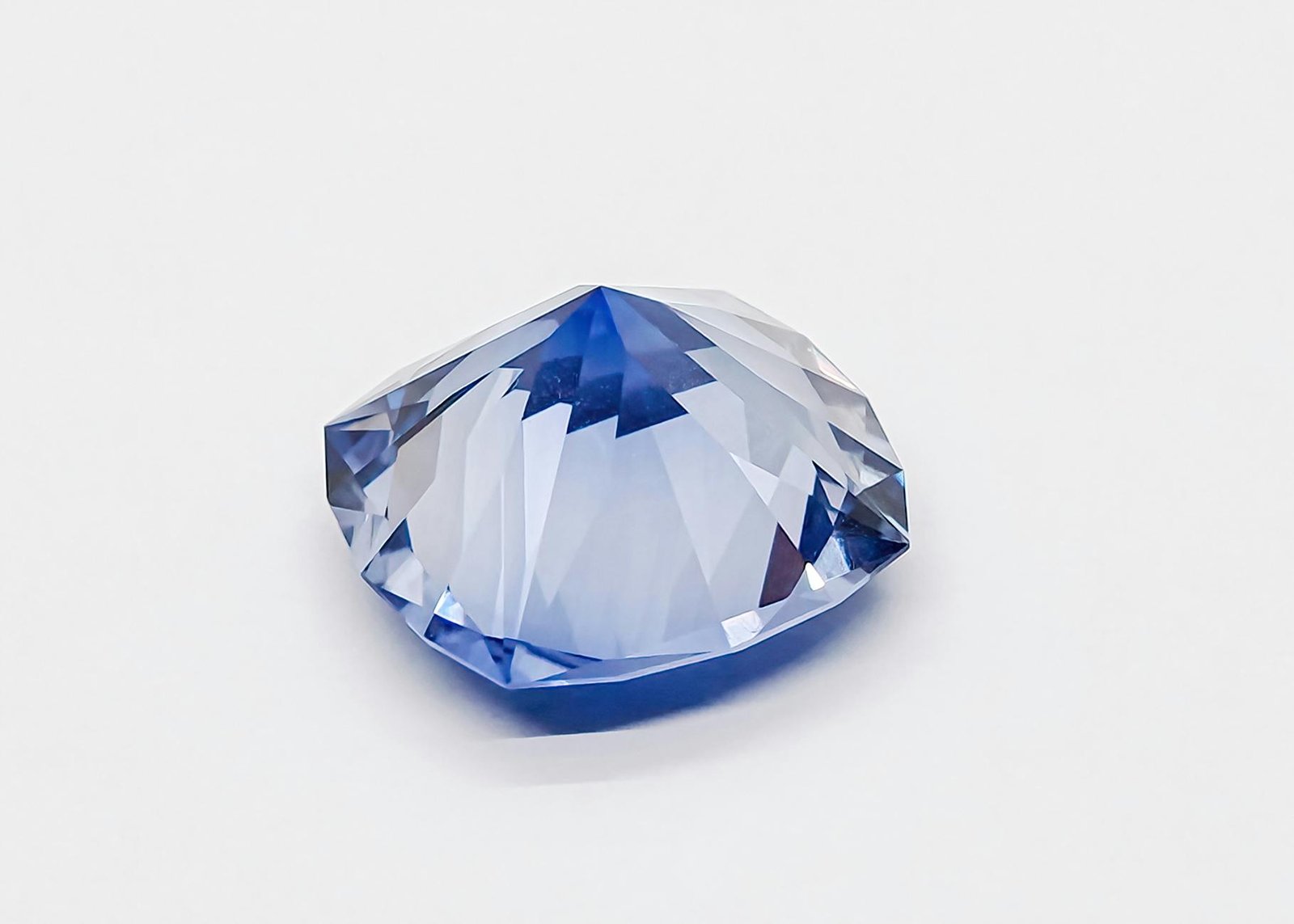
Among the rarest phenomena in the natural gemstone world, a sapphire that shifts colour under different light sources occupies a category entirely its own. Colour change sapphire is not a marketing convenience or a trade nickname — it describes a corundum stone with a genuine, scientifically verifiable optical response, one that transitions from blue or violet in daylight to a distinctly different purple, pink, or reddish hue under incandescent light. The shift is caused by trace vanadium and chromium within the crystal lattice, and the intensity of that shift determines almost everything about the stone’s rarity and its price per carat.
What makes grading colour change sapphire so demanding is that no single measurement captures the full picture. A gemologist must evaluate the stone’s colour in at least two distinct light environments, assess the percentage of shift, judge the saturation and tone of each colour independently, and only then arrive at a value estimate. Buyers who approach this category without that framework often overpay for weak changers or, conversely, miss exceptional stones because they lack the vocabulary to recognise what they are seeing. This guide addresses that gap with specificity — covering what drives rarity, how professional grading works, and what buyers should expect to pay at every quality tier.
- The strength and cleanliness of the colour shift — not the base colour alone — is the single most important factor in grading and pricing colour change sapphire.
- Stones showing a strong, complete shift from blue-violet to purple-red command the highest premiums, with top specimens exceeding USD 3,000 per carat at auction.
- Origin plays a measurable role in value: East African material (Tanzania and Madagascar) and Sri Lankan colour change sapphires are priced differently, and certifying laboratories note origin where verifiable.
- Unlike alexandrite, colour change sapphire is not protected by scarcity of mineralogy — it is rare because the precise chromophore balance required for a strong shift occurs in very few deposits worldwide.
- Buyers seeking a natural colour change sapphire for an engagement ring or investment piece should prioritise a laboratory certificate that explicitly documents the colour change phenomenon, not merely the stone’s base colour.
What Makes Colour Change Sapphire Genuinely Rare
Sapphire itself is not rare. blue sapphire is mined commercially across Sri Lanka, Thailand, Australia, and East Africa, and the global supply is substantial. Colour change sapphire is a different matter entirely. The optical effect depends on a precise ratio of vanadium to chromium within the corundum crystal — a balance that nature achieves inconsistently and unpredictably. Chromium absorbs green wavelengths and transmits red; vanadium interacts with blue light. When both elements are present in the right proportion, the stone appears blue under blue-rich daylight and shifts toward purple or red under the red-rich warmth of incandescent light.
The challenge is that this ratio must fall within a narrow window. Too much chromium and the stone reads as a pink sapphire with a faint shift that gemologists classify as negligible. Too little and the daylight colour dominates with only a subtle, commercially insignificant change. Strong changers — those showing a definitive, unambiguous shift across 60 percent or more of their apparent colour — are estimated to represent fewer than one percent of all sapphires reaching the market in any given year. That scarcity is intrinsic, not manufactured.
Geographic concentration adds another layer of rarity. The finest colour change sapphires on record originate from a handful of sources: the Umba Valley in Tanzania, the Ilakaka region of Madagascar, and certain highland deposits in Sri Lanka. A small volume of material from India and Burma also enters the trade, though consistency from those sources is limited. When a natural gemstone combines rare optical behaviour with a confirmed geographic origin — particularly Sri Lanka, which has centuries of reputation behind its corundum — the rarity premium becomes significant and well-justified.
At Yala Gems, we assess colour change sapphires under a minimum of three light sources before any evaluation is finalised: northern daylight equivalent (D65 standard), fluorescent white light, and incandescent candescent at approximately 2,700K. A stone that changes convincingly under all three conditions — rather than only under the most flattering of the three — is the one worth investing in. Many stones that perform dramatically on a dealer’s incandescent lamp reveal a much weaker shift in natural Singapore daylight.
How Colour Change Sapphire Is Graded — The Criteria That Matter

No international standard currently mandates a single grading nomenclature for colour change sapphire, which is precisely why buyers must understand the criteria themselves rather than relying on a certificate alone. The Gemological Institute of America (GIA) and the Gübelin Gem Lab both document colour change in their reports, but they describe it qualitatively rather than assigning a numerical grade. AGL (American Gemological Laboratories) uses a descriptive range — from “negligible” through “weak,” “moderate,” “strong,” to “very strong” — and that framework is the most widely referenced in the trade.
The first criterion is shift percentage. This refers to the proportion of the stone’s apparent colour that changes between light sources, not the number of degrees on a colour wheel. A stone that reads 70 percent blue in daylight and shifts to 70 percent purple under incandescent has a strong, clearly legible shift. A stone that reads 80 percent blue in daylight and only edges toward a slightly warmer violet is a weak changer, regardless of how beautiful either individual colour may be.
The second criterion is colour quality in both states. A strong shift from a washed-out, grey-toned blue to a brownish purple represents far less value than the same shift intensity between a vivid blue-violet and a saturated reddish-purple. Both colours must hold their saturation and avoid grey or brown modifying tones. Gemologists evaluate hue, tone, and saturation in each light environment independently.
Clarity is the third pillar. Colour change sapphire generally forms with the same inclusion types as other corundum: silk (rutile needles), fingerprints, needles, and occasionally zoning. Eye-clean stones are preferable and carry a price premium, though minor inclusions below the surface that do not affect the shift phenomenon are generally accepted in stones above three carats, where clean material becomes exponentially rarer. Cut is the fourth variable: a skilled lapidary must orient the rough to maximise the colour change window, which often means accepting a slightly deeper pavilion or a less fashionable shape. Buyers should not penalise a well-cut colour changer for being a touch deeper than a standard commercial blue sapphire.
Colour Change Sapphire Price Per Carat — What to Expect at Each Quality Tier
Pricing colour change sapphire is less standardised than pricing blue sapphire or ruby, and any figure quoted without reference to shift strength, clarity, and origin is nearly meaningless. The table below reflects current market ranges drawn from auction results, dealer inventory, and the stones that pass through our own evaluation process at Yala Gems as a specialist boutique gemstone singapore buyers rely on for natural colour change material.
| Quality Tier | Shift Strength | Clarity | Origin | Price Per Carat (USD, approximate) |
|---|---|---|---|---|
| Commercial | Weak to moderate | Visible inclusions | East Africa (unspecified) | USD 150 – 500 |
| Fine | Moderate to strong | Eye-clean or near | Madagascar or Tanzania | USD 500 – 1,500 |
| Premium | Strong | Eye-clean | Sri Lanka or Tanzania | USD 1,500 – 3,000 |
| Collector / Investment | Very strong, complete shift | Eye-clean, no treatments | Sri Lanka, certified | USD 3,000 – 8,000+ |
The colour change sapphire price per carat jumps sharply once a stone crosses from moderate into strong shift territory — a threshold that acts almost like a price cliff in the trade. A three-carat stone with a moderate shift might be priced at USD 1,200 per carat total, while a comparably sized stone with a strong shift and Sri Lankan origin could reach USD 4,500 per carat. The blue colour change sapphire price per carat follows similar scaling: those showing a cleaner, more vivid blue in daylight — rather than a grey or inky tone — command a meaningful additional premium over stones where the daylight colour is muddied.
Weight milestones apply here as they do across all coloured gemstones. Clean, strong-shifting colour change sapphires above three carats are scarce enough that per-carat prices rise non-linearly beyond that threshold. Stones above five carats with documented origin and a very strong shift are genuinely rare, and auction records support prices above USD 6,000 per carat for exceptional specimens. Buyers who want to buy gemstone online should treat any listing for a “strong” changer above three carats at below USD 1,000 per carat with considerable scepticism unless the shift is documented photographically across multiple light sources.
colour change sapphire vs alexandrite — Understanding the Value Relationship
Buyers frequently encounter colour change sapphire while researching alexandrite, and the comparison is a natural one: both are natural gemstones with a genuine colour change phenomenon, both are rare, and both attract serious collectors. The distinction in value, however, is significant and worth understanding precisely. Our pillar guide on alexandrite covers the chrysoberyl variety in depth — here, the comparison is made specifically from a pricing and rarity perspective.
Fine alexandrite from Brazilian or Russian sources routinely trades above USD 15,000 per carat and can reach six figures for exceptional material. This pricing reflects both the mineralogical rarity of gem-quality chrysoberyl showing a complete colour change and the prestige of specific origins. Colour change sapphire, even at its finest, sits below that level — typically in the USD 3,000 to 8,000 range for collector-grade specimens. This is not a weakness; it is an opportunity. A buyer who appreciates the colour change phenomenon and wants a natural gemstone with genuine rarity and documented provenance can access that experience at a more attainable price point through colour change sapphire.
There is one important caveat. Weak or moderate colour change sapphires should not be positioned as alexandrite alternatives, because the experiential difference is substantial. A weak changer does not deliver the dramatic transformation that makes these stones compelling. If the shift is not strong, buyers are better served by a beautiful single-colour sapphire. The comparison with alexandrite is only meaningful — and only flattering to the sapphire — when the colour change is strong or very strong.
“A colour change sapphire that shifts convincingly, cleanly, and completely is not a lesser alexandrite. It is its own category of wonder — one that corundum achieves through a different mineralogical mechanism and with a visual personality entirely its own.”
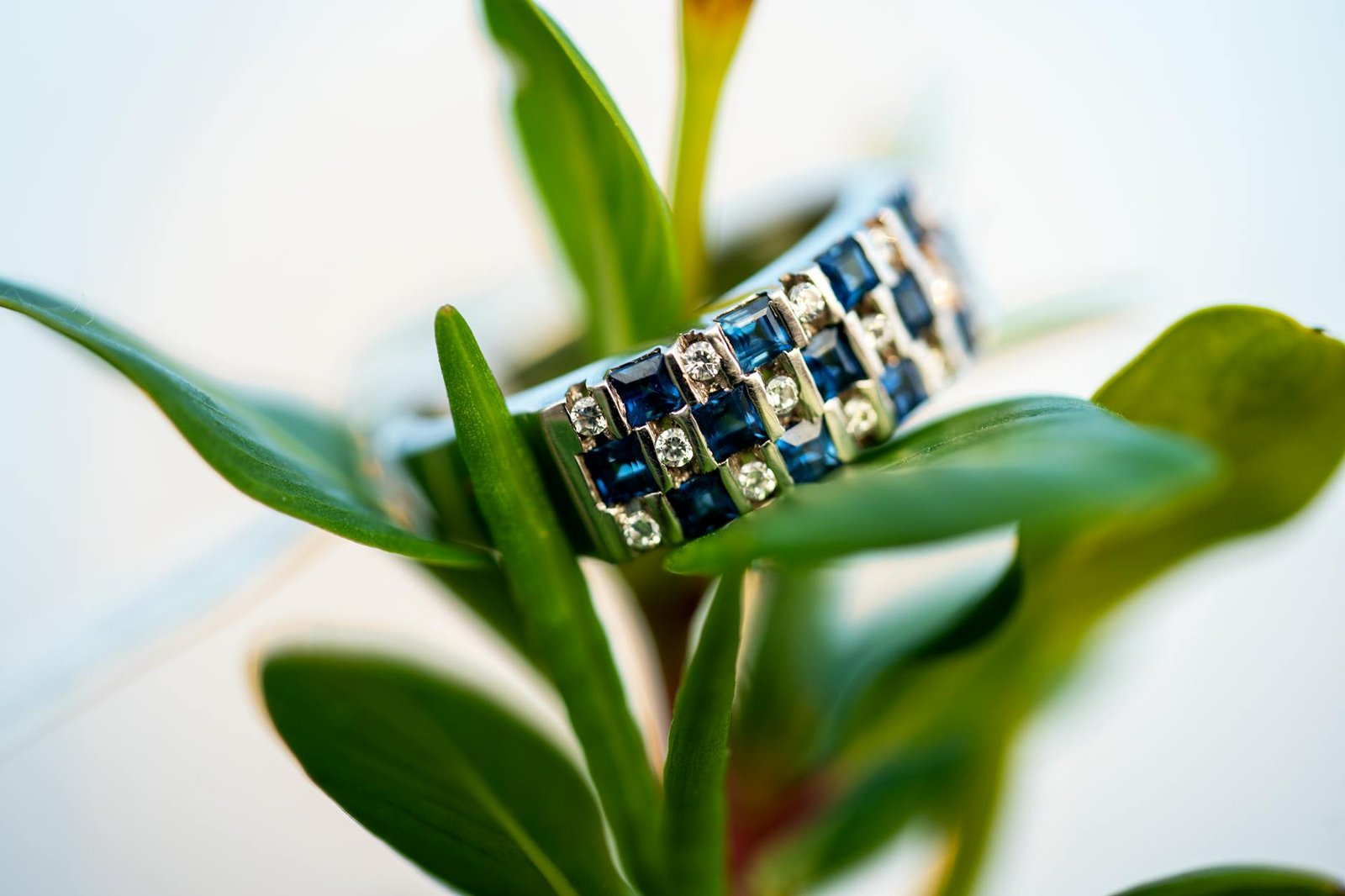
When evaluating a colour change sapphire for engagement ring use — one of the most common enquiries we receive from Singapore clients — shift strength should be treated as a non-negotiable minimum standard. An engagement ring is worn across every light environment: office fluorescents, restaurant candlelight, outdoor Singapore sun. A strong changer will perform beautifully in all of these. A weak changer will read as an unremarkable violet-blue stone in most settings, with only an occasional hint of something different. For this reason, we encourage clients who want to speak with our gemologists before purchase to bring the stone into direct sunlight before making any final decision.
Certification, Treatment Disclosure, and What to Demand Before Buying
A colour change sapphire without a laboratory certificate is a risk that no informed buyer should accept at the fine or premium tier. The certificate serves three functions: it confirms the stone is natural corundum rather than synthetic, it documents any treatments (most commonly heat treatment, which is widespread in the sapphire trade and does not destroy value but must be disclosed), and it explicitly notes the colour change phenomenon. That last point is critical — a certificate that grades the stone’s blue daylight colour without acknowledging the shift is incomplete for valuation purposes.
Reputable issuing laboratories for colour change sapphire include GIA, Gübelin, SSEF (the Swiss Gemmological Institute), and AGL. Lotus Gemology, based in Bangkok, is increasingly respected for its detailed colour notation and is particularly relevant for East African material. When you buy gemstone online or through any trade channel, insist on one of these certificates rather than accepting a lesser-known report. The cost of independent certification — typically USD 100 to 300 for a coloured stone report — is immaterial relative to the protection it provides at even the entry level of this category.
Heat treatment is common in the sapphire trade and does not stigmatise colour change material the way it might affect, say, a Burmese ruby at the top tier. However, unheated colour change sapphires with strong shifts and documented origin carry a meaningful premium — typically 30 to 50 percent above a comparable heated stone. If you are building a collection with long-term natural gemstone value in mind, unheated stones with SSEF or Gübelin “no indications of heating” notation are the tier to target. To speak with our gemologists about sourcing unheated material specifically, we recommend scheduling a consultation before any purchase at the premium or collector tier.
Frequently Asked Questions
Final Thoughts
Colour change sapphire rewards buyers who take the time to understand it on its own terms rather than as a proxy for some other gem. Its rarity is real, rooted in mineralogy rather than marketing, and its grading complexity means that informed buyers have a genuine advantage over those who rely solely on price lists or surface-level descriptions. Shift strength, colour quality in both lighting states, origin, and treatment disclosure form the four pillars of any serious evaluation — and a laboratory certificate that explicitly documents the colour change is non-negotiable at the fine tier and above.
If you are drawn to colour-change phenomena more broadly, our dedicated guide to alexandrite provides the full context for understanding how colour change sapphire sits within the wider world of phenomenal gems — and why collectors increasingly pursue both categories as complementary acquisitions rather than competing ones. The choice between them is rarely about which is superior; it is about what each stone does to the light, and what that moment of transformation means to the person wearing it.
Explore Colour Change Sapphire at Yala Gems
Our specialists source certified natural colour change sapphires for collectors, investors, and bespoke jewellery commissions across Singapore and beyond. Whether you want to buy gemstone online or visit us in person, we are here to guide every step of your acquisition.