There is a quiet paradox at the heart of every fine emerald: the very thing that might cause a lesser gemstone to be rejected is, in an emerald, the signature of its authenticity. Those feathery wisps, healed fractures, and microscopic crystal guests suspended within the stone are not flaws to be lamented — they are the autobiography of something genuinely rare, written in the language of geology across millions of years. To hold a natural emerald up to the light and see its interior landscape shimmer is to witness one of nature’s most intimate revelations.
Emerald inclusions have fascinated gemologists, collectors, and lovers of fine jewellery for centuries. French traders who first encountered these internal features gave them a name that has endured through the ages: le jardin — the garden. That single word reframes everything. A gemstone ring set with a natural emerald does not carry imperfections; it carries a garden, a living ecosystem frozen in crystalline form. Understanding this distinction is the first step toward appreciating emeralds on their own extraordinary terms.
At Yala Gems, our Singapore boutique specialises in curating natural gemstones whose internal character tells a story of provenance, rarity, and uncompromising beauty. Whether you are exploring a Colombian treasure for the first time or refining your knowledge before an important purchase, this guide will illuminate everything you need to know about emerald inclusions — from their scientific formation to their profound influence on value, grading, and investment potential.
- Emerald inclusions, known as jardin, are a natural consequence of the gem’s formation and are expected — even welcomed — by expert collectors and gemologists worldwide.
- The type, location, and density of inclusions directly influence an emerald’s clarity grade, transparency, and market value.
- Colombian emerald inclusions are distinctive and can be used to confirm geographic origin, one of the most significant value drivers in the trade.
- Synthetic emerald inclusions differ fundamentally from those found in natural stones, making inclusion analysis one of the most reliable authentication tools available.
- No universal emerald inclusions chart exists like diamond grading scales — emerald clarity is evaluated holistically, making expert guidance essential.
- Buyers seeking a certified emerald gemstone with inclusions grading in Singapore benefit from working with specialist jewellers who can interpret laboratory reports with nuance.
What Are Emerald Inclusions — and Why Are They Called Jardin?
Emerald inclusions types are numerous, and each variety carries specific diagnostic and aesthetic significance. The term jardin — French for garden — was coined because the internal landscape of a natural emerald, when viewed under magnification, can resemble tangled vines, mossy undergrowth, or fine botanical tracery. It is one of gemology’s most evocative pieces of vocabulary, and it endures precisely because no other word captures the phenomenon so perfectly.
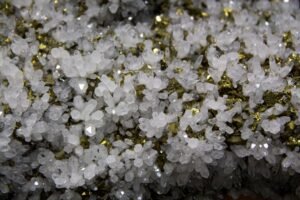
The most common emerald inclusions types include three-phase inclusions (containing liquid, gas, and a solid mineral simultaneously), two-phase inclusions, healed fractures known as fingerprints, needle-like crystals of actinolite, pyrite crystals, mica flakes, and chromite grains. Three-phase inclusions are particularly diagnostic of natural Colombian and Brazilian origin and are virtually never found in synthetic or simulant stones. Identifying them requires a trained eye and quality magnification, but their presence is unmistakable once you know what you are looking for.
It is also important to understand that almost every natural emerald will contain inclusions visible to the naked eye. The GIA classifies emeralds as a Type III gemstone — a category that acknowledges inclusions as an inherent, expected characteristic of the species, not an anomaly. This is in direct contrast to a natural sapphire or diamond, where eye-clean stones are more routinely encountered. An emerald with minor inclusions that does not compromise transparency is not a compromised stone; it is simply an honest one.
Three-phase inclusions — those rare cavities containing a trapped liquid, a gas bubble, and a solid crystal simultaneously — are among the most definitive indicators of a natural emerald of Colombian or Brazilian origin. Synthetic emerald inclusions never exhibit this characteristic, making their presence under magnification one of the first things our gemologists look for when authenticating a stone. If you are uncertain about a purchase, always speak with our gemologists before committing.
Colombian emerald inclusions and the Language of Origin

Among all emerald sources, Colombian emeralds occupy a position of singular prestige. The mines of Muzo, Chivor, and Coscuez have produced stones of extraordinary colour saturation — that celebrated velvety, slightly bluish green that connoisseurs describe simply as “Colombian green.” Colombian emerald inclusions are not only an accepted feature of these stones; they are frequently the means by which gemological laboratories confirm their geographic origin.
Stones from Muzo tend to display three-phase inclusions alongside calcite crystals and albite feldspar. Chivor material often contains pyrite crystals alongside two-phase inclusions. This mineralogical fingerprinting is so reliable that major laboratories including GIA, Gübelin, and SSEF issue country-of-origin reports based substantially on inclusion analysis. Owning a Colombian emerald with a credible origin report is not simply a matter of status — it is a form of documented provenance that meaningfully protects and enhances long-term investment value.
When you buy Colombian emerald low inclusions specimens in Singapore, the expectation of some internal character should never be a deterrent. A Colombian stone with a clean, open appearance and a confirmed origin report is genuinely exceptional. However, a stone with moderate jardin but vivid, saturated colour and strong transparency may command a higher price than a paler, more included alternative. Colour, origin, and treatment status all interact with clarity in complex ways that resist simple formulas.
“An emerald without its jardin is like a garden without rain — technically possible, but stripped of the very thing that made it alive.”
natural vs synthetic emerald inclusions: How to Tell the Difference
One of the most practically important questions a buyer can ask is how to identify synthetic emerald inclusions versus those found in natural stones. Synthetic emeralds — created through hydrothermal or flux-growth processes in laboratory conditions — are chemically identical to natural emeralds, but their internal features reveal an entirely different history of formation.
Flux-grown synthetic emeralds typically contain characteristic wispy, veil-like inclusions that resemble platinum or gold particles, phenakite crystals, and flux remnants that appear as irregular, partially healed cavities. Hydrothermal synthetics may show chevron growth patterns or irregular two-phase inclusions, but they will never display the three-phase inclusions that are the hallmark of Colombian natural material. For natural emerald inclusions identification, these diagnostic differences are decisive under a quality loupe or microscope.
The practical implication is clear: never purchase a high-value emerald without a current laboratory certificate from a recognised institution. An emerald inclusions chart produced by a laboratory report does more than grade clarity — it documents whether the stone is natural, whether it has received oil or resin treatment, and in many cases whether its origin can be confirmed. This documentation is not bureaucracy; it is the foundation of informed, confident ownership. Anyone looking to buy gemstone online should treat the absence of a credible certificate as a significant red flag.
| Feature | Natural Emerald Inclusions | Synthetic Emerald Inclusions |
|---|---|---|
| Three-phase inclusions | Present (especially Colombian) | Absent |
| Fingerprint inclusions | Common, irregular | Rare or absent |
| Flux remnants / veils | Absent | Present in flux-grown stones |
| Pyrite crystals | Present (Chivor, Colombia) | Absent |
| Chevron growth zoning | Absent | Present in hydrothermal synthetics |
| Origin confirmation possible | Yes, via lab report | N/A — synthetic origin confirmed instead |
| Price per carat (fine quality) | Significantly higher | Considerably lower |
Emerald Inclusions Grading, Pricing, and Investment Value

Unlike diamonds, where the GIA’s four Cs provide a precise, universally accepted grading framework, emerald inclusions grading is a more holistic and interpretive discipline. The GIA does assess emerald clarity, but the evaluation weighs the effect of inclusions on transparency and light performance rather than simply cataloguing their presence. An emerald graded “moderately included” may still be a spectacular, highly desirable stone if its colour is exceptional and its inclusions do not interrupt the visual flow of light through the gem.
Emerald quality inclusions Singapore buyers ask about most often relate to the concept of “eye-clean” — the point at which inclusions become invisible to the unaided eye at a standard viewing distance. In an emerald, a truly eye-clean natural stone commands a dramatic premium, sometimes approaching or exceeding the per-carat prices of fine natural sapphire for equivalent weight. Even stones described as having minor inclusions that remain below the surface and away from the table facet can be graded and priced generously, particularly when combined with strong colour saturation and good transparency.
For investors and serious collectors, certified emerald gemstone with inclusions grading provides the documentation required to support resale, insurance valuation, and estate planning. The combination of a GIA or Gübelin report confirming natural origin, minimal treatment, and high clarity is the closest analogue to a blue-chip equity in the gemstone market. These are stones that appreciate with time, not simply in sentiment but in demonstrable market value.
When evaluating emerald with minor inclusions price in Singapore, context is everything. A 2-carat Colombian emerald with minor jardin, vivid saturated colour, and a Gübelin origin report may command a higher price per carat than a larger stone with fewer inclusions but weaker colour. At Yala Gems, our gemologists always assess inclusions in relation to overall beauty and documented provenance — never in isolation. The goal is to help you invest in a stone whose entire profile, not just one variable, justifies its price.
Buying Natural Emeralds in Singapore: What to Know
Singapore has earned its position as Southeast Asia’s most sophisticated destination for fine gemstones. The city-state’s demanding, internationally travelled clientele has cultivated a retail environment where provenance, certification, and transparency are not optional extras — they are baseline expectations. For anyone seeking to buy natural emerald Singapore inclusions notwithstanding, the market here offers both remarkable selection and the rigorous standards that serious buyers require.
Emerald gemstone inclusions grading Singapore buyers should seek is not merely a number on a certificate — it is an informed conversation with a specialist who can explain what those inclusions mean for the stone’s beauty, durability, and long-term value. Fractures that reach the surface, for example, create structural vulnerabilities that affect everyday wear differently from enclosed inclusions. An expert jeweller will walk you through these distinctions without prompting, because transparency builds trust and trust builds relationships that last decades.
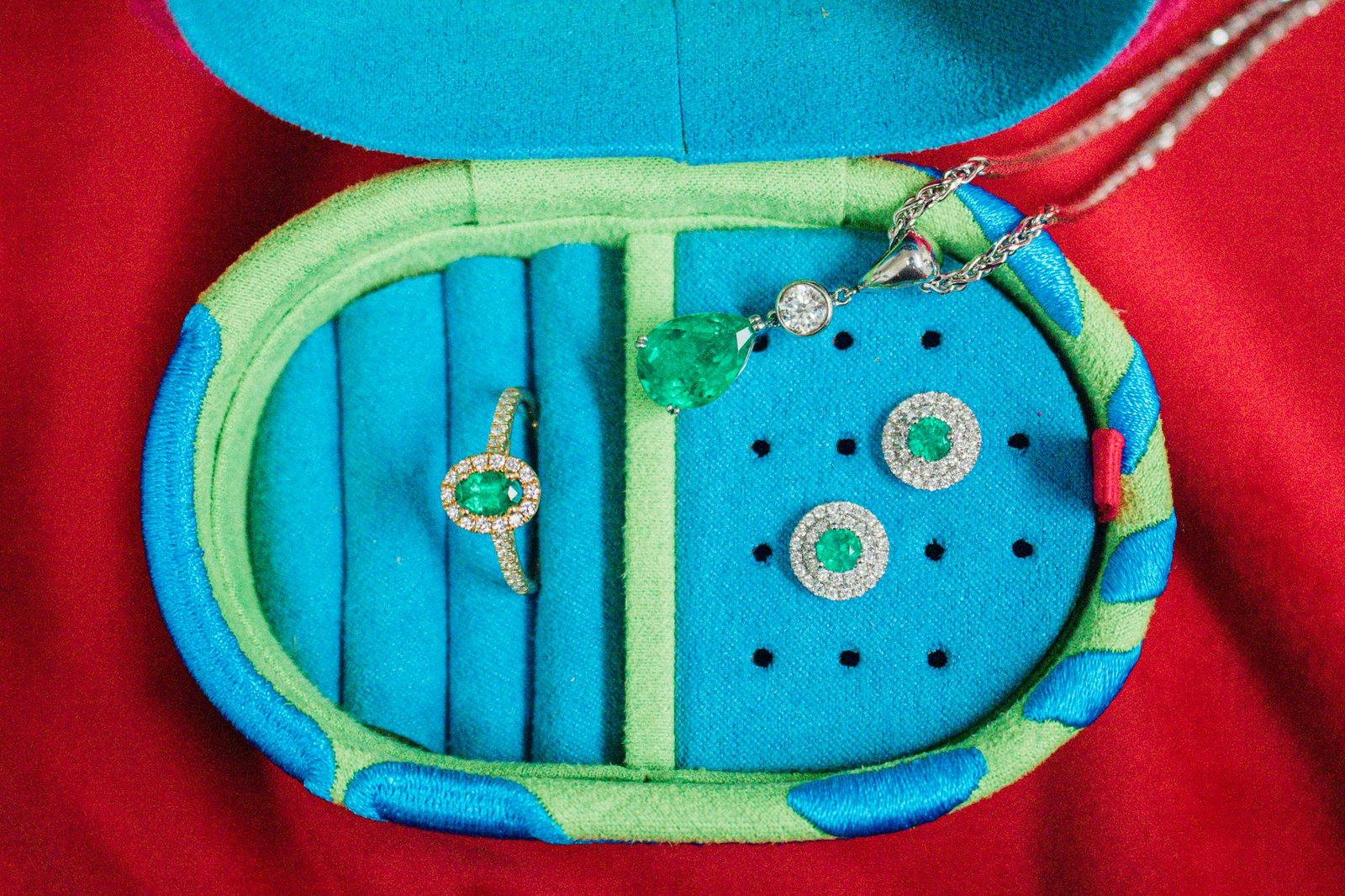
Our recommendation to anyone pursuing a gemstone ring set with a significant emerald is to resist the impulse to buy based on photography alone. Emeralds reward — and in some sense demand — direct viewing. The interplay of light through the jardin, the depth of colour saturation, and the liveliness of the stone are qualities that no image fully conveys. Where direct viewing is not immediately possible, working with a trusted Singapore boutique that offers detailed video, gemological documentation, and responsive expert communication is the responsible path forward.
How to Buy Gemstone Online Safely When Inclusions Are Involved
The digital gemstone marketplace has expanded enormously, and with it, the opportunity for both excellent purchases and costly mistakes. When you buy gemstone online — particularly a natural gemstone as nuanced as an emerald — the stakes of inadequate due diligence are meaningfully higher than with more standardised stones. Inclusions add a layer of complexity that makes expert intermediaries and documented certification non-negotiable.
Begin by insisting on a current, original laboratory report from GIA, Gübelin, SSEF, or AGL. Confirm whether the report addresses treatment status, since the vast majority of natural emeralds are oiled or resin-filled to improve clarity — a standard practice that must be disclosed and graded. A certificate that says “no indications of clarity enhancement” is extraordinarily rare and reflects a price premium that should be understood, not questioned. Conversely, a stone with significant resin filling should be priced and cared for accordingly.
Request high-resolution video under multiple lighting conditions, and look specifically at how inclusions interact with transmitted light versus reflected light. A stone that photographs beautifully but appears cloudy and lifeless in video is telling you something important. Finally, choose retailers who provide clear return policies, independent valuation options, and — above all — human expertise you can access directly. To speak with our gemologists before committing to a significant purchase is not a sign of uncertainty; it is the mark of a discerning buyer.
Frequently Asked Questions
Final Thoughts
An emerald’s jardin is not a confession of imperfection — it is a declaration of authenticity. Every veil, every needle, every microscopic crystal suspended within that vivid green depth is evidence of a journey that began hundreds of millions of years ago in the hydrothermal veins of the earth’s crust. No two jardins are alike, which means no two natural emeralds are alike. This irreducible individuality is precisely what makes the finest specimens so enduringly captivating and so genuinely valuable.
Understanding emerald inclusions transforms the way you evaluate, purchase, and ultimately cherish these remarkable natural gemstones. Whether you are comparing Colombian emerald inclusions for a collector’s piece, researching how synthetic emerald inclusions differ for authentication purposes, or simply trying to understand what an inclusions grade on a certificate means for everyday wear, knowledge is the greatest luxury you can bring to the process. It protects your investment, deepens your appreciation, and ensures that the stone you choose is one you will treasure without reservation.
Singapore’s position as a world-class gemstone destination means that buyers here have access to extraordinary stones, rigorous certification standards, and specialist expertise that is genuinely rare. Use that advantage. Ask questions, request documentation, and work with jewellers whose knowledge matches their inventory. The right emerald — jardin and all — is one of the most profoundly beautiful natural gemstones a collector can own.
Deepen Your Gemstone Knowledge with Yala Gems
From emerald inclusions to origin grading, our Knowledge Hub offers authoritative guides written by practising gemologists — crafted for collectors, buyers, and connoisseurs alike.