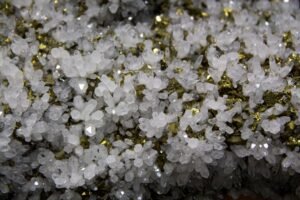

There are gemstones that seduce at first glance, and then there are gemstones that reward the patient, discerning eye. Chrysoberyl belongs firmly to the latter category — a mineral of quiet brilliance that has fascinated royalty, mystics, and serious collectors for centuries, yet remains relatively unknown to the casual jewellery buyer. That obscurity, paradoxically, is part of its appeal. To own a fine chrysoberyl gemstone is to possess something that speaks in a register most people simply cannot hear.
Distinct from both beryl and corundum despite the superficial similarity in name, chrysoberyl occupies its own mineralogical family — aluminium beryllate — and produces three of the most coveted phenomena in all of gemmology: the mesmerising silken ray of the cat’s eye, the colour-change miracle of alexandrite, and the warm, honeyed transparency of the finest faceted yellow-green specimens. Each variety tells a different story, commands a different price, and speaks to a different kind of collector soul.
At Yala Gems, we have long championed stones that reward knowledge. If you are approaching chrysoberyl for the first time — perhaps drawn by curiosity about its price per carat, its spiritual associations, or simply a jeweller’s passing recommendation — consider this your definitive introduction. And if you are already a seasoned collector, we hope what follows offers a perspective worthy of your expertise.
The Geological Story: Origins, Rarity, and Provenance
Chrysoberyl forms in granitic pegmatites and metamorphic schists, requiring a precise geological confluence of beryllium, aluminium, and oxygen under conditions that are, in geological terms, remarkably demanding. The result is a stone with a Mohs hardness of 8.5 — surpassed only by corundum and diamond — and a density that gives it a satisfying, almost weighty presence in the hand.
The most celebrated sources in the world have historically been concentrated in Sri Lanka, Brazil, and the Ural Mountains of Russia. Sri Lanka, in particular, has been producing gem-quality chrysoberyl for over two thousand years. The island’s alluvial deposits yield some of the finest chrysoberyl cat’s eye specimens ever recorded — stones of deep honey to greenish-yellow, their chatoyant ray so perfectly centred and sharply defined that the effect resembles a living eye caught in amber light.
Brazil, especially the state of Minas Gerais, rose to prominence in the twentieth century as a prolific source of both facetable chrysoberyl and alexandrite, including the extraordinary colour-change variety that became synonymous with the Russian imperial court. Meanwhile, deposits have also been identified in Myanmar, Zimbabwe, Tanzania, and India’s Odisha state — each origin leaving its own subtle signature in colour saturation and trace element composition that a skilled gemologist can often identify without laboratory instrumentation.
Provenance matters enormously in today’s collector market. A chrysoberyl cat’s eye of documented Sri Lankan origin commands a meaningful premium not merely for sentimental or marketing reasons, but because Sri Lankan material consistently demonstrates the most desirable colour range and the sharpest chatoyancy. When you buy a natural chrysoberyl through a reputable boutique, you are not simply purchasing a stone — you are acquiring a traceable chapter of geological history.
Understanding Quality: How to Evaluate a Chrysoberyl Stone

For faceted chrysoberyl — the transparent, non-phenomenal variety — quality evaluation follows the familiar framework of colour, clarity, cut, and carat weight, though the weighting of each criterion differs significantly from, say, evaluating a natural sapphire. The most prized body colours range from a vivid golden yellow through yellowish-green to a pure, saturated mint green, all with the high transparency and vitreous lustre that make chrysoberyl so pleasing under different light sources.
Clarity standards for chrysoberyl are high. Unlike emerald, which the trade accepts with significant inclusions, fine chrysoberyl is expected to be eye-clean. Needle inclusions, growth tubes, and fingerprint-like liquid inclusions do occur naturally but should be minimal in any stone commanding top-tier pricing. A well-cut chrysoberyl will demonstrate exceptional brilliance — its refractive index of approximately 1.745 to 1.763 produces a lively, almost lemon-bright scintillation distinct from the deeper fire of corundum.
For chrysoberyl cat’s eye, the evaluation criteria shift entirely. Here, the chatoyant ray — produced by dense, parallel inclusions of fine silk or hollow tubes that reflect light into a single bright band — takes absolute precedence. The ideal cat’s eye displays what gemologists call a “milk and honey” effect: one half of the cabochon appearing creamy and diffuse, the other a concentrated, rich honey-gold. The ray itself should be sharp, centred, and responsive — moving fluidly as the stone rotates beneath a single light source.
Treatment transparency is non-negotiable in our view. Unlike the routine heat treatment accepted for corundum — including most natural sapphire on the market — chrysoberyl is almost universally offered in untreated form. This is one of the stone’s most compelling differentiators. A reputable laboratory certificate from GIA, GRS, Gübelin, or SSEF should confirm both variety and the absence of artificial enhancement. Any seller unable or unwilling to provide such documentation warrants serious caution.
When evaluating chrysoberyl alexandrite specifically, the central quality criterion is the strength and completeness of its colour change — from a bluish-green under daylight or fluorescent illumination to a purplish-red under incandescent light. The finest alexandrite specimens — particularly those from the original Russian Ural deposits — can command prices that rival top-quality ruby and sapphire per carat. Brazilian material tends toward a less complete shift, often presenting a greyish intermediate tone, while Sri Lankan alexandrite frequently shows a more subtle change with exceptional clarity and larger crystal sizes.
Collector Appeal and Investment Value
Within the world of coloured gemstones, chrysoberyl occupies a fascinating middle ground: sufficiently rare to be genuinely scarce in fine qualities, yet not so obscure as to lack an established international market. The natural chrysoberyl price per carat reflects this positioning with remarkable precision. Fine faceted chrysoberyl in vivid yellow-green typically trades between SGD 80 and SGD 500 per carat at retail, depending on size, colour intensity, and provenance. A cat’s eye chrysoberyl of good quality — say, a 5-carat Sri Lankan specimen with sharp chatoyancy and a rich honey body colour — might command SGD 2,000 to SGD 8,000 per carat or more. Alexandrite, at the pinnacle of the chrysoberyl family, is in a different universe entirely: top Russian material with a strong colour change regularly achieves SGD 25,000 to SGD 80,000 per carat at international auction.
These price dynamics make chrysoberyl genuinely interesting from an investment standpoint. As global production of fine cat’s eye material from Sri Lankan alluvial deposits continues to decline — a structural reality, not a marketing narrative — scarcity is only intensifying. Affluent buyers in Singapore and across Southeast Asia are increasingly looking beyond equities and real estate for alternative stores of value, and natural, untreated, certified gemstones offer a compelling combination of portability, aesthetics, and historical appreciation.
Beyond the financial dimension, there is an emotional resonance to chrysoberyl that serious collectors understand instinctively. This is a stone with genuine character — one that changes under different lights, that reveals itself slowly, that rewards intimacy. The chrysoberyl cat’s eye price reflects not just mineral rarity but phenomenological rarity: chatoyancy of true quality requires not merely the right mineral, but the right inclusion pattern, the right crystal orientation, and the skilled hand of a lapidary who understands how to maximise the effect through precise cabochon geometry. That convergence of factors is, by any measure, rare.
Singapore as a Premier Destination for Chrysoberyl Collectors

Singapore has quietly established itself as one of Asia’s most sophisticated markets for fine coloured gemstones, and the city-state’s position as a regional hub — with strong trade connections to Sri Lanka, India, Thailand, and the broader Southeast Asian gem corridor — gives serious buyers here a distinct advantage. Whether you are searching for a chrysoberyl gemstone to add to a curated collection, commissioning a bespoke chrysoberyl ring, or simply beginning your education as a collector, Singapore’s boutique gem scene offers depth, expertise, and access that few cities can match.
The gifting culture that animates Singapore’s luxury retail calendar also aligns beautifully with chrysoberyl’s symbolic profile. During Chinese New Year, the stone’s golden-yellow to yellowish-green hues carry unmistakable resonance — colours traditionally associated with prosperity, abundance, and positive energy. For Deepavali celebrations, the cat’s eye variety holds particular significance in South Asian auspicious gem traditions, where it is associated with Ketu in Vedic astrology and believed to offer protection and clarity. These cultural layers make chrysoberyl an unusually versatile gifting choice across Singapore’s wonderfully diverse social landscape.
Singapore’s regulatory environment and the high professional standards of its established gem boutiques also provide meaningful reassurance for buyers. Unlike some regional markets where synthetic or misrepresented stones remain a genuine risk, Singapore’s consumer protection framework and the reputational stakes for established retailers create a more trustworthy environment. That said, due diligence — particularly the insistence on internationally recognised laboratory certification — remains essential regardless of where you buy gemstone online or in person.
How to Buy Chrysoberyl Safely Online and In-Person
The decision to buy gemstone online has become increasingly mainstream among serious collectors, and the chrysoberyl market is no exception. For a stone of this complexity — where phenomena like chatoyancy and colour change are so critical to value — certain verification steps are not optional luxuries but absolute requirements.
First and foremost, insist on a laboratory report from a recognised international institution. GIA (Gemological Institute of America), GRS (GemResearch Swisslab), Gübelin Gem Lab, and SSEF (Swiss Gemmological Institute) are the most widely respected in the fine coloured stone market. For cat’s eye chrysoberyl in particular, the report should confirm the chatoyancy phenomenon and, where possible, indicate a geographic origin opinion. Chrysoberyl is not a stone where a generic in-house certificate suffices.
When buying online, high-resolution video under both daylight-equivalent and incandescent lighting is essential — not as a luxury, but as a baseline standard. For alexandrite and cat’s eye material, video is arguably more informative than static photography, since the defining qualities of both varieties are fundamentally dynamic. Any reputable seller should provide this as a matter of course. If they do not, treat the omission as a red flag.
Pay close attention to how measurements and carat weight are presented. A chrysoberyl stone sold by weight but measured in dimensions that do not correspond to the stated carat weight may indicate density manipulation or inaccurate disclosure. For reference, chrysoberyl has a specific gravity of approximately 3.68 to 3.78 — a figure a knowledgeable seller should be comfortable discussing.
Finally, understand the return and authentication policy before any purchase. A boutique confident in its inventory will offer transparent return windows and encourage independent verification. Those that resist or deflect such requests are not operating at the standard that collectors of fine gemstones deserve.
Chrysoberyl Meaning: Spiritual and Symbolic Dimensions
The question of chrysoberyl meaning spiritual draws a surprisingly broad audience — from dedicated crystal practitioners to culturally curious gift-buyers and collectors who simply want to understand the full story behind a stone they have fallen for. The history here is genuinely rich, and far from trivial.
In ancient and medieval European traditions, chrysoberyl — particularly the cat’s eye variety — was regarded as a stone of profound protective power. The eye-like appearance of a fine cat’s eye was understood to be inherently apotropaic: capable of deflecting negative energy, the evil eye, and misfortune. Mediaeval texts occasionally reference it alongside other talismanic stones, and its use as a protective amulet predates any systematic gemmological understanding of its optical properties.
In Vedic astrology, chrysoberyl cat’s eye is the traditional gemstone prescribed for Ketu — the south node of the Moon — and is believed to confer clarity of thought, protection from unseen dangers, and liberation from karmic debts. This tradition remains very much alive in Singapore’s South Asian communities, where a high-quality cat’s eye chrysoberyl sourced from Sri Lanka, set in gold, and worn on the correct finger according to astrological prescription, is considered a serious spiritual investment as much as a material one.
More broadly, chrysoberyl is associated with discipline, self-control, and the cultivation of awareness — qualities that resonate across cultural traditions without being specific to any single one. For a gift that carries genuine symbolic weight alongside aesthetic beauty, few natural gemstones can match this depth of cross-cultural meaning.
Frequently Asked Questions
What exactly is a chrysoberyl gemstone, and how is it different from beryl?
Despite the similarity in name, chrysoberyl and beryl are entirely different mineral species. Beryl — which includes emerald, aquamarine, and morganite — is a beryllium aluminium cyclosilicate. Chrysoberyl is a beryllium aluminium oxide, with a different crystal structure, different physical properties, and a harder constitution (Mohs 8.5 versus beryl’s 7.5–8). The “chryso” prefix derives from the Greek word for gold, referencing the stone’s characteristic yellowish-green colour in its most common form.
How do I pronounce chrysoberyl correctly?
This is one of the most common points of hesitation among buyers new to the stone — and there is absolutely no shame in asking. The correct chrysoberyl pronunciation is KRIZ-oh-beh-ril, with the stress on the first syllable. The “ch” is hard, as in “crystal,” not soft as in “chair.” Once you have it, the word has a rather satisfying rhythm to it — fitting for a stone of such distinct character.
How is chrysoberyl alexandrite different from regular alexandrite?
This is a common source of confusion in the market, and clarifying it builds genuine trust. All alexandrite is chrysoberyl — the term “chrysoberyl alexandrite” simply specifies the mineralogical family. However, the market sometimes uses “alexandrite” loosely to describe colour-change synthetic corundum or synthetic spinel that mimics the effect. True alexandrite is always chrysoberyl, always a natural mineral (unless explicitly labelled as synthetic), and its colour change is caused by trace amounts of chromium — the same element responsible for the red of ruby. When purchasing, always confirm with a laboratory report that the stone is identified as “chrysoberyl — alexandrite variety,” not merely “colour-change stone.”
What is the typical chrysoberyl price per carat in Singapore?
Pricing varies considerably across the three main varieties. Faceted yellow-green chrysoberyl of good quality typically retails between SGD 80 and SGD 500 per carat for stones under five carats. Cat’s eye chrysoberyl of fine quality — particularly Sri Lankan origin with sharp chatoyancy — ranges from SGD 1,500 to SGD 10,000 or more per carat depending on size and phenomena intensity. Alexandrite of strong colour change commands the highest premiums, with fine material regularly exceeding SGD 20,000 per carat at established boutiques and international auction houses. The natural chrysoberyl price also reflects treatment status: untreated stones carry a meaningful premium over any enhanced material.
Is chrysoberyl a good choice for a ring, and how durable is it?
A chrysoberyl ring is an excellent choice for everyday wear — and this is one area where chrysoberyl genuinely outperforms many more famous gemstones. At Mohs 8.5, it is harder than tanzanite, spinel, tourmaline, and even tsavorite garnet. It has no cleavage planes that would make it vulnerable to impact fracture. Provided the setting is well-designed to protect the stone from severe blows — standard advice for any fine gemstone ring — chrysoberyl will wear beautifully over decades. The cat’s eye variety, as a cabochon, should be set with a protective bezel or high-wall prong to guard the dome from knocks, but is otherwise perfectly suited to daily wear.
Where can I buy a certified natural chrysoberyl in Singapore?
Singapore offers several high-quality options for purchasing a natural chrysoberyl, both in established boutiques along Orchard Road and through specialist gem dealers in the Little India and Arab Street areas. For those who prefer to buy gemstone online, reputable Singapore-based jewellers — including Yala Gems — offer high-resolution video, full gemological disclosure, and internationally certified stones with transparent provenance documentation. When evaluating any seller, confirm they stock certified natural gemstone material, provide independent laboratory reports, and have a transparent return policy. Singapore’s gem market is well-regulated, but the responsibility for due diligence always begins with the buyer.
A Final Word on Chrysoberyl
There is a particular pleasure in discovering a gemstone that has not yet been claimed by mass-market consciousness — one that exists in the quiet space between connoisseurship and accessibility, where knowledge still determines value. Chrysoberyl occupies precisely that space. Whether you are drawn to the cat’s eye’s hypnotic ray, the alexandrite’s miraculous colour transformation, or the luminous clarity of a fine faceted specimen, this is a natural gemstone that rewards the investment of attention far beyond what its relative obscurity might suggest.
For collectors in Singapore and across the region, the opportunity to acquire fine chrysoberyl — particularly certified, untreated Sri Lankan cat’s eye material — at a moment when supply is tightening and international collector interest is growing, is one that serious buyers are increasingly recognising. We would be honoured to be part of your journey with this extraordinary stone. Explore our curated chrysoberyl collection, or speak with our gemologists to discuss a bespoke commission tailored to your vision.