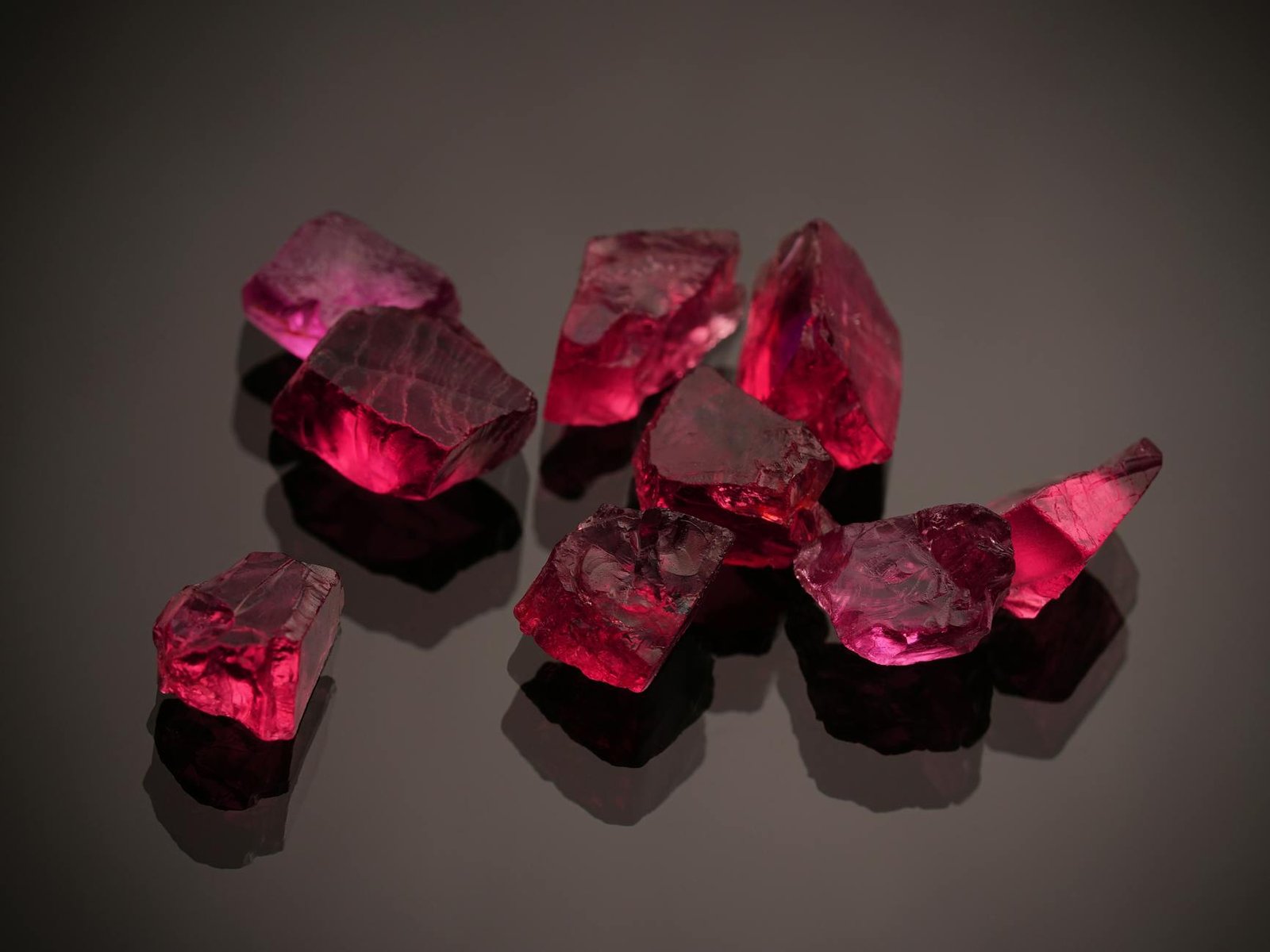
Ask any serious collector what separates a fine ruby from a truly extraordinary one, and the answer will almost always circle back to heat treatment — or rather, the glorious absence of it. An unheated ruby is a stone that has arrived at its colour through geology alone: millions of years of pressure, mineralogy, and geological fortune producing a red that no furnace could replicate with the same integrity. In a market saturated with treated stones, the natural gemstone that requires no enhancement commands not just a price premium, but a category of its own.
Yet for buyers navigating this space, three questions define every serious purchase: How can anyone be certain a ruby has never been heated? Which laboratory reports can be trusted to make that determination? And precisely how much more should an unheated stone cost? These are not simple questions. The science behind heat treatment detection is sophisticated, the certification landscape has nuances worth understanding, and the pricing dynamics shift considerably by origin and quality grade. This article goes deep on all three angles — equipping you to buy with clarity and confidence.
- Heat treatment in rubies is detected through microscopic inclusion analysis, UV fluorescence, and spectroscopic testing — no single method is conclusive on its own.
- Only a handful of internationally respected gemological laboratories have the expertise to issue credible “no heat” determinations on rubies.
- Unheated Burmese ruby price per carat can reach three to five times the value of an equivalent heated stone at fine quality grades.
- An unheated Mozambique ruby price, while lower than Burmese equivalents, still carries a meaningful premium over treated Mozambique material of similar weight.
- Certification is not optional for high-value unheated rubies — without a recognised lab report, the “no heat” claim is commercially worthless.
How Laboratories Detect Heat Treatment in Rubies
The detection of heat treatment is one of gemology’s most demanding disciplines. When a ruby is subjected to high-temperature heating — typically between 1,000°C and 1,800°C — the stone undergoes physical and chemical changes that skilled gemologists can identify, though not always with absolute ease. The challenge is that some of these changes are subtle, and a well-executed treatment on a clean stone can leave remarkably few traces.
The primary method involves examining inclusions under magnification. rutile silk — the fine needle-like inclusions so characteristic of natural rubies — is highly sensitive to heat. In an unheated stone, rutile needles appear sharp, intact, and geometrically precise. When a stone has been heated, these needles dissolve partially or entirely, leaving behind diffused halos, stress fractures called “discoid fractures,” or glassy pools of recrystallised material around what were once clean crystal inclusions. The presence of intact, undisturbed silk is one of the strongest indicators of an unheated ruby.
Spectroscopic analysis adds another layer of confidence. Raman spectroscopy and UV-Vis-NIR spectroscopy can identify modifications to the crystal lattice and detect residual flux material in fractures — a telltale sign of high-temperature flux healing treatments used to improve clarity. Photoluminescence spectroscopy is increasingly used at leading laboratories to detect trace element distributions altered by heat, offering evidence that operates at the atomic level. Together, these tools allow gemologists to build a case rather than rely on any single observation.
Experienced gemologists often note that the most deceptive rubies are those heated at lower temperatures — sometimes called “low-heat” treatment — which can partially preserve silk while still altering colour. These stones require the most rigorous multi-method examination, and even top laboratories occasionally classify them as “indeterminate” rather than committing to a firm no-heat conclusion. If a report reads “no indications of heating,” that phrasing carries significant weight precisely because it reflects scientific caution, not marketing language.
Which Certifications Actually Matter
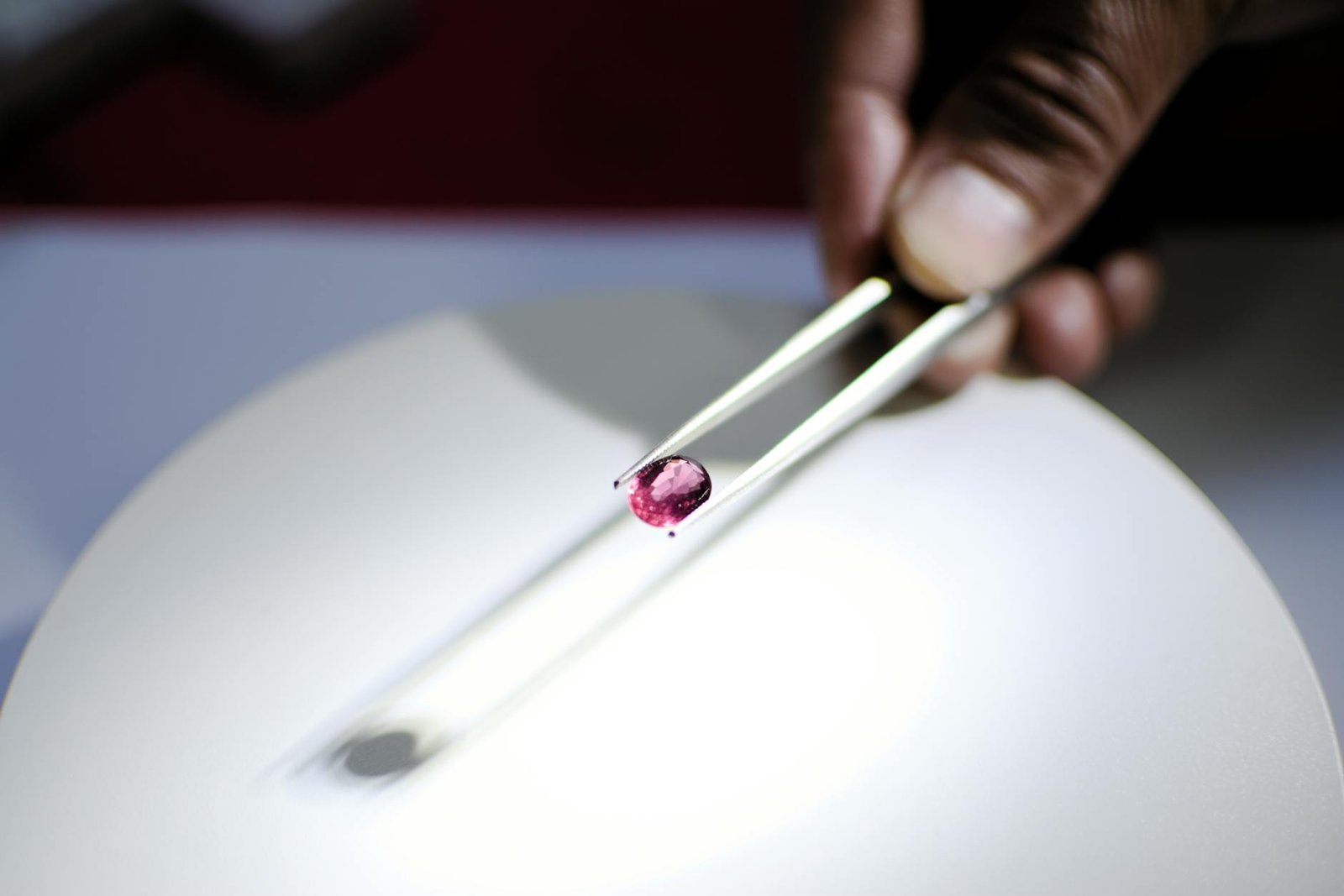
Not all gemological reports are created equal. When you are purchasing a natural gemstone at the price levels that unheated rubies command, the issuing laboratory is as important as the certificate itself. The market broadly recognises three institutions as the gold standard for ruby treatment determination: Gübelin Gem Lab in Lucerne, SSEF (Swiss Gemmological Institute) in Basel, and GRS (GemResearch Swisslab). These Swiss laboratories have invested decades in ruby research and maintain databases of inclusion characteristics from known origins — knowledge that informs both treatment and provenance assessments.
The GIA (Gemological Institute of America) is widely trusted and produces excellent ruby reports, particularly valued in the American market. However, for Burmese rubies at auction or in the collector market, a Gübelin or SSEF report with an explicit “no indications of heating” statement and — ideally — an origin determination of Myanmar (Burma) is considered the benchmark. GRS uses the language “no heat” directly on its reports, which has become commercially recognisable shorthand among collectors worldwide.
When you buy gemstone online or through a boutique, the specific laboratory matters for resale value too. A fine unheated Burmese ruby with a GRS “no heat” report and a Gübelin concurring opinion can attract meaningfully higher bids at auction than the same stone with only a lesser-known regional lab certificate. For buyers considering rubies as long-term holdings, investing in dual certification from two of the top-tier Swiss labs is a recognised strategy among sophisticated collectors.
At Yala Gems, our Singapore boutique sources rubies accompanied by reports from internationally recognised laboratories. If you are uncertain which certification is most appropriate for a specific stone or budget, our team is always available to provide guidance — simply speak with our gemologists directly.
Understanding the Unheated Ruby Price Premium
The price differential between heated and unheated rubies is one of the most dramatic in the entire coloured gemstone market. At fine quality grades, an unheated ruby does not merely cost more — it occupies an entirely different commercial tier. Understanding why requires understanding what the market is actually pricing: natural rarity, geological authenticity, and the confidence that comes from full disclosure.
For fine Burmese material, the unheated ruby price per carat at one carat can run from USD 5,000 to USD 15,000 per carat for commercially fine stones, while exceptional pigeon-blood colour unheated examples from Mogok have reached USD 30,000 to over USD 100,000 per carat at major auction houses. Comparable heated Burmese rubies of similar colour and clarity might trade at USD 1,500 to USD 5,000 per carat. The multiplier — often cited as three to five times — becomes even more pronounced above three carats, where fine unheated material is exceptionally rare.
Unheated Mozambique ruby price points are lower than Burmese equivalents but follow similar premium logic. A fine unheated Mozambique ruby of one carat might fetch USD 2,000 to USD 6,000 per carat, versus USD 800 to USD 2,000 for heated material of equivalent apparent quality. The premium exists because the unheated stone represents what nature produced without intervention — and because buyers increasingly understand that heat treatment, while industry-accepted, is still a modification of the natural gemstone.
“An unheated ruby is not simply a better ruby. It is a different category of object entirely — one where the collector is purchasing geological truth as much as optical beauty.”
Heated vs Unheated Ruby: What Buyers Need to Weigh
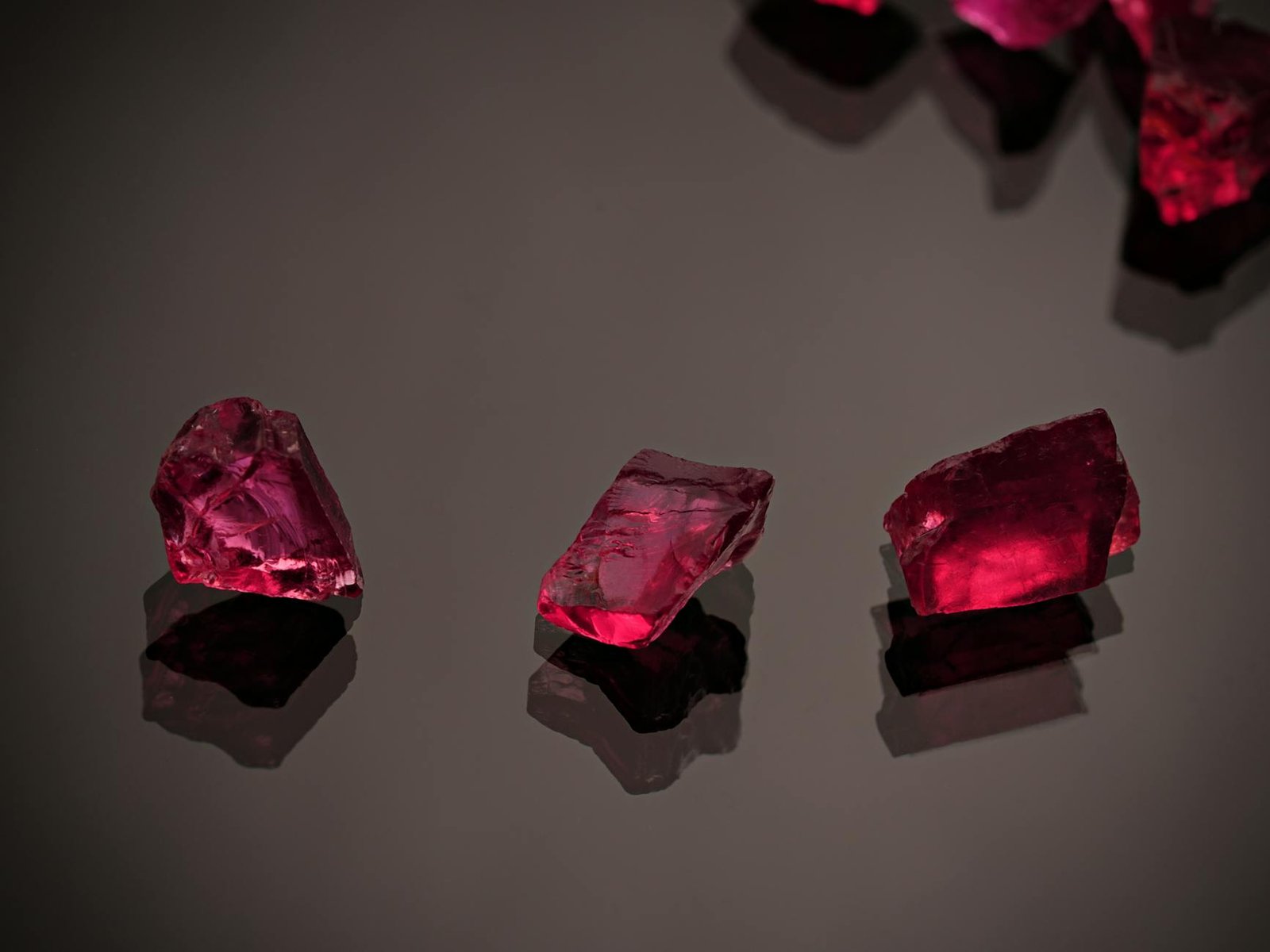
The unheated ruby vs heated ruby debate is not a moral argument about which stone is “authentic.” Heating is a centuries-old, fully disclosed practice widely accepted across the trade. The question is about what you are acquiring, and at what price, and for what purpose. A beautifully heated ruby with vivid colour and strong clarity is a magnificent natural gemstone — it simply cannot command the same premium as its unheated counterpart.
| Factor | Unheated Ruby | Heated Ruby |
|---|---|---|
| Treatment status | No heat applied — natural colour | High-temperature heating to improve colour and/or clarity |
| Rarity | Extremely rare at fine quality | More readily available |
| Price premium (fine grade) | 3–5× over heated equivalents | Baseline market price |
| Certification requirement | Essential — no heat statement required | Recommended but less critical to value |
| Auction performance | Consistently outperforms estimates | Predictable, stable pricing |
| Investment horizon | Strong long-term appreciation potential | Moderate, market-dependent |
| Inclusion character | Intact silk, natural fingerprints | Dissolved silk, possible flux residue |
For buyers focused on an unheated ruby ring as a piece of jewellery rather than a collection asset, the value calculation shifts toward aesthetic priorities. If colour and brilliance matter most and the investment dimension is secondary, a well-chosen heated ruby may offer significantly better value per visual dollar. However, if you intend to hold the stone long-term — or if you simply wish to own something that has never been altered — only an unheated, certified stone will satisfy that standard.
Singapore buyers in particular tend to research carefully before purchasing. The local luxury market is discerning, and the appetite for certified, fully disclosed natural gemstones has grown steadily. Whether you are exploring options to buy gemstone online or prefer an in-person consultation, understanding the heated versus unheated distinction before you engage a dealer will protect your interests considerably.
One practical consideration buyers often overlook: heat treatment can also affect a ruby’s durability profile. While heating itself does not weaken corundum, the flux-filling used in some treatments to heal fractures introduces a glass-like foreign substance into the stone’s fissures. This flux has a different hardness and thermal expansion coefficient than corundum — meaning fracture-filled rubies require more careful handling than unheated stones with no foreign material. For a piece intended for daily wear, particularly in a ring setting, understanding the extent of treatment matters beyond price alone.
For a broader understanding of why Burmese origin matters so profoundly to the ruby market — including historical context and colour grading — our pillar guide to Burmese rubies provides the fuller picture that informs every unheated stone valuation.
Frequently Asked Questions
Final Thoughts
The unheated ruby occupies a singular position in the natural gemstone world — not simply because it is rare, but because it is verifiable. Heat treatment detection science has advanced to the point where leading laboratories can make credible, defensible determinations, and the market rewards that certainty with pricing that reflects genuine geological scarcity. When a stone carries a “no heat” determination from Gübelin, SSEF, or GRS, it carries something beyond a colour grade: it carries a kind of geological biography that cannot be manufactured.
For buyers approaching this market, the path is clear. Prioritise certification from recognised institutions. Understand that the unheated Burmese ruby price per carat reflects real rarity, not marketing inflation. And take the time to understand how origin, treatment status, and quality grade interact — because all three variables shape value simultaneously. For the fuller context of why Burmese rubies sit at the apex of this conversation, our comprehensive Burmese ruby guide is the natural companion to everything covered here. The most rewarding purchases in this space always begin with the deepest knowledge.
Deepen Your Gemstone Knowledge
Explore expert editorial on natural gemstones, certification, and collector intelligence — curated by the team at Yala Gems.