Ask any serious collector whether origin matters when buying a ruby, and you will receive the same unhesitating answer: absolutely. Two rubies can sit side by side in a tray, both cut to similar proportions, both registering a vivid red on a colour grading chart, and yet one may command three to five times the price of the other. The difference, more often than not, comes down to a single word stamped on a laboratory certificate — Burma or Thailand. Understanding precisely why that word carries such financial weight is not an academic exercise. It is the foundation of every intelligent buying decision in the ruby market today.
Thai ruby gemstones have a long and genuinely distinguished history. The Chanthaburi and Trat regions of eastern Thailand were among the most prolific ruby-producing territories on earth from the 1960s through to the 1990s, and Thai stones remain in active circulation across global auction houses and dealer inventories. Yet they consistently trade at a measurable discount to their Burmese counterparts — even when cut weight, clarity, and surface colour appear comparable. This article examines that value differential with precision, exploring the geological reasons behind it, the colour science that underpins collector preference, the role of heat treatment disclosure, and what a buyer in Singapore should realistically expect to pay today.
- Thai rubies and Burmese rubies share the same mineral species (corundum) but differ profoundly in trace chemistry, colour character, and market premium.
- The higher iron content in Thai rubies produces a darker, more saturated red — often described as brownish or purplish — versus the luminous, fluorescent red associated with Mogok material.
- Unheated Burmese rubies typically command a 30–60% premium over comparable heated Thai stones at major auction benchmarks; the gap widens further for fine pigeon-blood material.
- Heat treatment rates differ significantly by origin: the vast majority of Thai rubies undergo high-temperature heating, whereas a meaningful proportion of Burmese stones can be found unheated or minimally heated.
- For Singapore buyers, origin certificates from GRS, Gübelin, or GIA are non-negotiable when comparing natural thailand ruby price against Burmese equivalents — verbal provenance claims hold no market value.
What Geology Tells Us: Trace Chemistry by Origin
Ruby is red corundum. That simple statement conceals an enormous amount of chemical variation. The red colour in all rubies derives from chromium substituting for aluminium within the crystal lattice, but the surrounding trace elements — particularly iron — determine how that chromium-driven colour ultimately appears to the eye and, crucially, how it behaves under light.
Burmese rubies from the Mogok Valley form within marble host rock, a calcium-rich environment that is notably low in iron. This low-iron chemistry has two profound consequences. First, it allows chromium to express itself with minimal interference, producing the intense, warm red that collectors prize. Second, and perhaps more importantly for value, low-iron rubies exhibit strong red fluorescence under ultraviolet light. In daylight, which contains UV components, this fluorescence effectively amplifies the apparent redness of the stone — a phenomenon sometimes described as an internal glow or fire that seems to come from within the gem itself.
Thai rubies, by contrast, form in basalt-hosted deposits. Basaltic environments are iron-rich, and that iron quenches UV fluorescence almost entirely. The result is a stone that can appear deeply saturated in colour — sometimes even more intensely red on a colorimeter — yet lacks the luminous, self-illuminating quality that defines the finest Burmese material. Under incandescent light, the visual gap between the two origins can narrow. Under natural daylight or UV-rich office lighting, the difference becomes immediately apparent to a trained eye.
This geological distinction is not a matter of opinion or collector prejudice. It is measurable chemistry, and it is precisely why origin determination by a qualified laboratory matters so much when assessing natural thailand ruby price against Mogok benchmarks. The geology is encoded in the stone itself, and modern spectroscopic analysis reads it with high accuracy.
Colour Character and the Fluorescence Premium
In the ruby trade, colour is assessed across three axes: hue, tone, and saturation. Burmese rubies from Mogok typically occupy a hue range described as pure red to slightly purplish red, a tone that sits in the medium to medium-dark range, and a saturation that gemologists characterise as vivid. Thai rubies frequently register a slightly darker tone and a hue that tilts toward brownish red or purplish red due to the iron masking effect. Neither colour profile is inherently ugly — many Thai stones are genuinely attractive gems — but the market hierarchy is unambiguous.
The fluorescence premium deserves particular attention because it explains a pricing anomaly that confuses many first-time buyers. A Thai ruby can measure a higher saturation percentage than a Burmese stone on objective equipment, yet still trade for significantly less. The reason is that saturation alone does not capture the lived visual experience of the gem. The warm, luminous quality of a Mogok ruby under natural light — that quality is what collectors are paying for, and it cannot be replicated by iron-laden basalt-origin material regardless of cutting quality or carat weight.
When comparing a Thai ruby gemstone to a Burmese stone of similar carat weight, experienced gemologists routinely assess fluorescence response as a secondary confirmation of origin. A strong red fluorescence under longwave UV is one of the most reliable indicators of marble-hosted (Burmese) origin. Thai basalt-origin rubies typically show weak to negligible fluorescence — a characteristic that, while analytically neutral, carries a significant negative premium in collector markets worldwide. If you are evaluating a natural gemstone described as Burmese without a laboratory certificate, requesting a UV response test from a qualified gemologist is an immediate, low-cost due diligence step.
Heat Treatment Rates and Their Impact on Value
The ruby market is, by some estimates, over 95% treated. Heat treatment — the controlled application of high temperatures to improve colour and clarity — has been standard practice in the trade for decades and is widely accepted by the industry when disclosed. What varies dramatically by origin, however, is both the frequency of treatment and the degree of enhancement required.
Thai rubies almost universally undergo heat treatment. The iron in the stone creates a colour that benefits substantially from thermal processing, and the basalt host rock typically produces material with significant inclusions that respond to heating. More significantly, Thai material historically underwent a process called flux healing or glass filling in some cases, where fractures were filled with lead glass to improve apparent clarity. While reputable dealers and certified stones exclude glass-filled material, buyers must remain vigilant — glass-filled Thai rubies circulate widely in lower market tiers and are occasionally misrepresented.
Burmese rubies, while also frequently heated, exist in meaningful quantities in an unheated state. An unheated Burmese ruby — confirmed by GRS, Gübelin, or GIA — commands the highest premiums in the ruby market, sometimes multiples of its heated equivalent. For a Thai ruby gemstone, an unheated example is far rarer and, while it would trade at a premium over heated Thai material, it still would not approach unheated Burmese pricing because the origin itself carries the primary premium.
This treatment dynamic has a direct and practical implication for anyone comparing thai ruby price per carat against Burmese equivalents. Two heated stones from different origins can show dramatically different prices at auction — and the origin certificate, not the treatment status alone, is the dominant pricing variable. If you are considering a purchase and want to understand exactly how treatment disclosure affects value for a specific stone, we encourage you to speak with our gemologists before making a commitment.
Price Per Carat: Realistic Market Benchmarks for Singapore Buyers
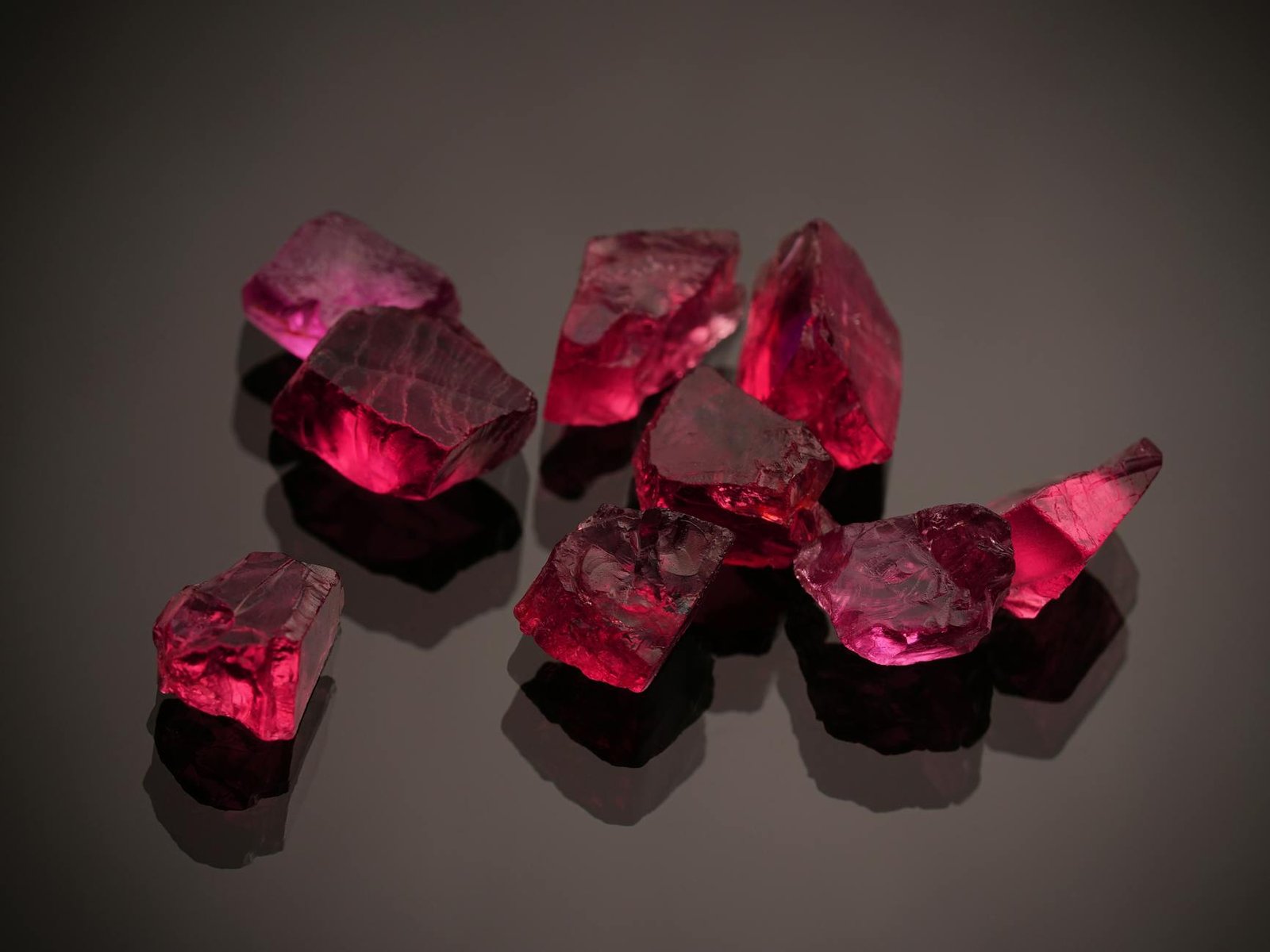
Providing meaningful price guidance for rubies is inherently difficult because the market is thin, private, and highly sensitive to individual stone characteristics. That said, certain directional benchmarks are well established enough to be genuinely useful for buyers comparing thai ruby stone price per carat against Burmese alternatives.
For heated Thai rubies in the 1–3 carat range with good colour and eye-clean clarity, retail prices in Singapore typically range from SGD 800 to SGD 3,500 per carat depending on colour quality. Fine, vivid-red Thai material in this size range with clean certificates can occasionally reach SGD 5,000 per carat at the higher end of the local retail market. These are honest, commercially available stones — attractive natural gemstones that represent genuine value for jewellery applications.
Comparable Burmese material — similarly heated, similar carat range, similar clarity — would typically command 30% to 60% more at the retail level, with the premium widening as stone size and colour quality increase. At auction, fine Burmese rubies in the 3–5 carat range have achieved USD 30,000 to USD 100,000 per carat in recent years. Thai rubies of equivalent weight rarely approach those figures. The gap is not a retail artefact — it reflects genuine wholesale and auction market pricing that flows through every tier of the trade.
Unheated Burmese rubies represent a different category entirely. Stones confirmed as unheated with strong pigeon-blood colour designations have cleared USD 1 million per carat at major international auction houses. For a more detailed examination of that market, our pillar article on Burmese Ruby: The World’s Most Coveted Red Gem provides an in-depth collector’s framework that is worth reading alongside this comparison.
| Characteristic | Thai Ruby (Basalt Origin) | Burmese Ruby (Marble Origin) |
|---|---|---|
| Host Rock | Basalt | Marble (metamorphic) |
| Iron Content | High | Low to negligible |
| UV Fluorescence | Weak to inert | Strong red (in finest stones) |
| Typical Hue | Brownish red / purplish red | Pure red / slightly purplish red |
| Heat Treatment Rate | Near universal | High, but unheated examples exist |
| Retail Price (1–3ct, heated, good colour) | SGD 800–5,000 per carat | SGD 1,500–12,000+ per carat |
| Fine Auction Benchmark (5ct+) | USD 5,000–20,000 per carat | USD 30,000–1,000,000+ per carat |
| Origin Certification Importance | High | Critical — directly drives premium |
“Origin is not simply provenance — it is chemistry, colour physics, and rarity encoded in a single word on a certificate. For rubies, that word is worth more per carat than almost any other variable in the market.”
Buying Thai Ruby in Singapore: What to Look For
Singapore occupies a unique position in the regional ruby trade. As a hub for high-net-worth buyers across Southeast Asia, the city attracts both fine Burmese material and substantial quantities of Thai-origin stones — many of which are genuinely beautiful and represent excellent value at their correct price point. The challenge for buyers is ensuring they are paying Thai prices for Thai stones, not Burmese premiums for misrepresented material.
When searching for thai ruby stone Singapore, the first non-negotiable is a current laboratory report from GRS, Gübelin, or GIA that specifies both origin and treatment status. Reports older than five to seven years should be treated with caution — laboratory methodology evolves, and older reports may not reflect current origin determination standards. A reputable seller of any natural gemstone will always welcome independent verification requests rather than resist them.
The second consideration is understanding what you are actually buying for. For jewellery applications — rings, pendants, earrings — a well-cut Thai ruby with vivid colour and a clean certificate can be an outstanding choice. The colour can be genuinely striking, and the price differential over comparable Burmese material allows significant budget to be allocated to the mounting, design, or companion stones. For investment-grade collection purposes, however, the Burmese premium is real and persistent, and buyers should factor it into their long-term value expectations from the outset.
At Yala Gems, every ruby in our inventory — whether Thai, Burmese, or from another origin — is presented with full laboratory documentation, transparent origin disclosure, and honest value positioning. We do not conflate origin premiums, and we do not sell stones without certificates. If you prefer to speak with our gemologists directly before making a decision, that conversation is always available and always without obligation.
Many buyers ask whether rubies are cheaper to buy in Thailand itself compared to Singapore. The answer requires nuance. Thailand — particularly Bangkok’s Silom district and the Chanthaburi gem market — offers access to a vast quantity of Thai-origin material at wholesale-adjacent prices. However, buyers without gemological training and trade relationships face real risks: undisclosed glass filling, misrepresented origins, and the absence of reliable post-purchase recourse. Singapore’s gem market, by contrast, operates under stronger consumer protection frameworks, with reputable dealers providing certified natural gemstone inventory and transparent pricing. For a buyer who cannot independently evaluate stone quality, the price differential often disappears once laboratory testing costs and risk factors are properly accounted for. The ability to buy gemstone online from a certified Singapore boutique with full provenance documentation frequently represents better overall value than an unsupported in-country purchase.
Frequently Asked Questions
Final Thoughts
The comparison between Thai and Burmese rubies is ultimately a lesson in how geology translates into market economics. Thai rubies are not inferior gemstones — they are different gemstones, shaped by different earth chemistry, expressing colour differently, and commanding prices that accurately reflect those differences. For a buyer who understands the distinction and prices accordingly, a fine Thai ruby gemstone can be an outstanding acquisition, particularly for jewellery where the visual impact at wearable distances is the primary consideration.
Where the analysis becomes genuinely critical is at the collector and investment level. Here, origin premium is real, measurable, and long-term. Burmese rubies — particularly unheated Mogok material — have demonstrated appreciation trajectories that Thai stones simply have not matched over the same periods. Our comprehensive pillar resource on Burmese Ruby: The World’s Most Coveted Red Gem examines that collector dimension in full detail and provides essential context for anyone weighing these two origins against each other with serious capital at stake.
Whichever origin you are considering, the principle remains constant: certified provenance, honest treatment disclosure, and expert guidance are the foundations of any intelligent ruby purchase. At Yala Gems, those foundations are what we build every transaction on.
Deepen Your Gemstone Knowledge
Explore origin guides, value frameworks, and collector insights across our full editorial library.