
A gemstone chosen for a wedding is never merely decorative. It carries the full weight of the moment — a promise made, a life joined, a story that will be retold across generations. Yet most couples enter the gemstone selection process focused almost entirely on aesthetics, unaware that every stone they are drawn to carries centuries of symbolic meaning, cultural resonance, and emotional language that can make their choice feel genuinely inevitable rather than arbitrary. Understanding that language transforms the buying process from a transaction into something far more personal.
Singapore’s multicultural wedding culture adds a particularly rich dimension to this conversation. Chinese, Malay, Indian, and Peranakan traditions each bring distinct gemstone preferences shaped by belief, ritual, and heritage — preferences that are alive and active in the choices couples make today. This guide moves beyond surface-level recommendations to explore the deeper symbolism behind the most beloved bridal gemstones, match each stone to the occasion it serves best, and give couples a clear, grounded framework for making a decision they will be proud of for a lifetime.
- Every major bridal gemstone carries specific symbolic meaning — understanding these meanings helps couples choose with intention, not just instinct.
- Different wedding occasions, from engagement to anniversary milestones, call for different stones with distinct emotional resonances.
- Singapore’s multicultural wedding traditions create unique gemstone preferences across Chinese, Malay, and Indian ceremonies that should inform your selection.
- Durability is a non-negotiable factor for everyday wear — not all beautiful stones are equally suited to a ring worn daily for decades.
- Working with a specialist who sources certified Natural gemstone pieces ensures you understand exactly what you are buying before you commit.
What Each Gemstone Truly Symbolises in Marriage
The symbolic vocabulary of gemstones is ancient, consistent, and surprisingly specific. Rubies have been associated with passionate, enduring love across South Asian, European, and East Asian cultures for over two thousand years. Their deep red colour — linked to the heart and to life-giving blood — made them the instinctive choice for lovers who wanted their commitment to carry heat and permanence. A ruby set in a wedding ring does not simply say “I love you.” It says “I love you fiercely, and I will not stop.”
Sapphires tell a different but equally powerful story. Their traditional symbolism is rooted in fidelity, wisdom, and celestial devotion — medieval clergy wore sapphires to represent the purity of heaven, and royal families across Europe adopted them as the definitive stone of serious, enduring partnership. A sapphire engagement ring in Singapore carries that long lineage of trust and intellectual bond. It is the stone for couples who build their love on depth of character rather than flash.
Emeralds occupy a third symbolic register entirely. Associated with Venus, the goddess of love, and with the renewal of nature, emeralds speak to growth, fertility, and the living, breathing quality of a long marriage. In ancient Rome, emeralds were gifted to newlyweds as an expression of hope for the future. Their colour — that distinctive, living green — is unlike any other stone, and it suits couples who see their relationship as something continuously evolving rather than fixed.
Beyond the classical three, other natural gemstone choices carry compelling meanings. Aquamarine symbolises clarity, courage, and safe passage — historically given to sailors’ wives, it now speaks to couples navigating life together through uncertain waters. Alexandrite, which shifts between green and red, is interpreted as representing the full spectrum of love — its joys and its challenges held in balance. Moonstone, with its ethereal glow, has long been associated with new beginnings and feminine intuition, making it a deeply personal choice for couples drawn to the poetic.
Matching Gemstone to Occasion: Which Stone for Which Milestone
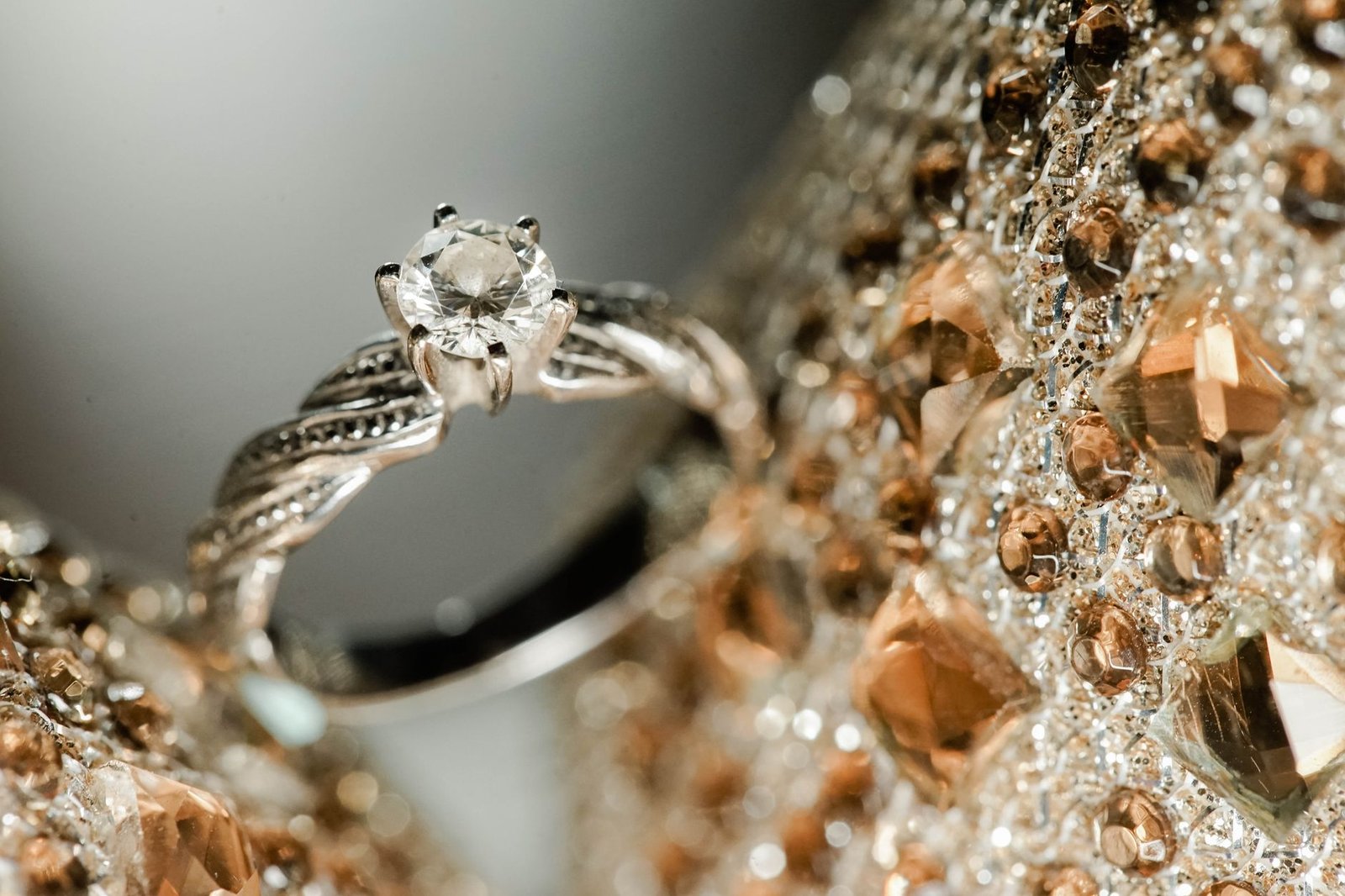
The engagement ring carries the greatest symbolic responsibility of any piece of bridal jewellery, and it is where the decision deserves the most careful thought. Rubies and sapphires dominate this category for good reason — both score 9 on the Mohs hardness scale, making them genuinely suited to daily wear over decades. An unheated, certified sapphire or ruby set in a well-designed engagement ring is not a compromise on diamonds. It is, for many couples, a more meaningful and more characterful choice. Our detailed breakdown of the options is explored fully in our pillar guide on the best gemstones for an engagement ring, which we recommend reading alongside this article.
The wedding band itself is a different occasion, and many couples choose to harmonise rather than duplicate. A bride who wears a sapphire engagement ring might choose a band set with pale blue aquamarines or white sapphires to complement rather than compete. Conversely, a couple who keeps the engagement ring minimal might use the wedding band as the moment to introduce rich colour and symbolism — a band of alternating rubies and diamonds, for instance, reads as a declaration of sustained passion.
Anniversary pieces follow a well-established gemstone calendar that has genuine cultural weight. The 5th anniversary is traditionally associated with sapphires, the 15th with rubies, the 20th with emeralds, and the 45th with alexandrite. These are not arbitrary assignments — they reflect a considered escalation from serene devotion (sapphire) through passionate commitment (ruby) to living, growing partnership (emerald). If you are buying gemstone Singapore anniversary jewellery, this calendar gives you a framework with real emotional logic behind it.
Eternity rings — given after the birth of a first child or at a significant anniversary — are a third distinct occasion with their own symbolic grammar. Stones that speak to continuity and protection are most resonant here: sapphires again, or deep blue Ceylon sapphires that seem to hold light indefinitely. Garnets, which symbolise devotion and constancy, are an underappreciated option for eternity pieces and offer remarkable colour depth at accessible Price points.
Hardness is only one dimension of durability. Couples should also consider a gemstone’s toughness — its resistance to chipping — and its stability under light and chemicals. Emeralds, for instance, score 7.5–8 on hardness but are naturally included, which can affect their structural resilience in a daily-wear ring. A well-cut, properly set emerald in a protective bezel or halo setting can absolutely serve as a wedding ring, but the setting design matters enormously. Always discuss wear-context with a qualified gemologist before finalising your choice.
Singapore Wedding Traditions and Their Gemstone Preferences
Singapore’s wedding culture is genuinely plural, and gemstone choices here are shaped by traditions that have no direct Western equivalent. For Chinese weddings, jade holds a position of profound cultural authority. Imperial-grade jadeite — vivid, translucent, and intensely green — is associated with purity, protection, and prosperity. It is often gifted by parents to the bride as a ceremonial object of deep familial significance, separate from the engagement ring. If you are looking to buy gemstone Singapore pieces for a Chinese wedding, jade pendants and bangles carry weight that no Western substitute can replicate. Yala Gems has worked with families navigating these traditions and understands the distinct standards applied to ceremonial jade pieces.
Indian wedding traditions, which span a vast range of regional and religious customs, have long favoured rubies and emeralds. In South Indian temple jewellery, rubies are omnipresent — their red is associated with the goddess Lakshmi and with marital fortune. North Indian bridal sets frequently incorporate emeralds in elaborate kundan and polki settings. For Singapore’s substantial Indian community, a natural gemstone engagement ring that honours these traditions while meeting contemporary design expectations is entirely achievable and increasingly sought after.
Malay wedding jewellery has its own rich metalworking and gemstone tradition, rooted in gold-dominant designs often set with rubies, garnets, and sometimes pale blue stones. The emphasis on yellow gold as a base metal means that warm-toned gemstones — rubies, orange sapphires, golden topazes — integrate naturally and harmoniously. Couples from Malay backgrounds exploring coloured gemstone engagement rings Singapore boutiques will find that these warm tones connect meaningfully to their heritage aesthetic.
Peranakan tradition, unique to Singapore and the Straits Settlements, produces some of the most extraordinary gemstone jewellery in Southeast Asia. The Peranakan kerosang — ornamental brooches — and other ceremonial pieces are typically set with diamonds, rubies, and jadeit in intricate gold filigree. A contemporary couple with Peranakan heritage might draw on this aesthetic by choosing a ring that combines these stones in a design language that honours the craft without replicating it literally.
How to Choose Your Wedding Gemstone: A Practical Framework for Couples

The first question to ask is not “which stone do we like?” but “what do we want this stone to say?” Spend time — genuinely, unhurried time — discussing the symbolic register that feels true to your relationship. Is it passionate intensity? Then ruby. Steadfast wisdom and fidelity? Sapphire. Creative growth and life together? Emerald. This conversation will often surface answers that surprise you and clarify the choice more effectively than any amount of browsing.
The second consideration is durability matched to lifestyle. A gemologist friend will always tell you: the most beautiful stone is the one still beautiful in thirty years. Couples who work with their hands, travel frequently, or live active lives should prioritise stones that score 8 or above on the Mohs scale. Rubies and sapphires are the clear leaders here. Emeralds and aquamarines are appropriate with protective settings. Softer stones like moonstone or opal, while symbolically beautiful, require more careful handling and may not suit a daily-wear ring for a highly active wearer.
Third, insist on Certification. A certified natural gemstone from a respected laboratory — GIA, Gübelin, or SSEF — gives you documented assurance of Origin, treatment status, and quality. This matters enormously for rubies and sapphires in particular, where the difference in value between heated and unheated stones, or between a genuine Burmese ruby and a synthetic, can be substantial. You should be able to buy gemstone online or in-store with full provenance documentation. Anything less is a risk not worth taking on a purchase of this significance.
Finally, consider the setting as part of the symbolic statement. A solitaire sapphire in a simple platinum four-claw setting speaks of clarity and confidence. A ruby surrounded by a halo of diamonds in yellow gold speaks of opulence and warmth. The metal, the setting style, and the stone together form a Complete sentence. Speak with our gemologists early in the process — before you have fixed your mind on a particular stone — and allow the conversation to include all these dimensions together.
“The right gemstone for a wedding ring is not the most expensive stone, or the most fashionable one. It is the stone whose meaning, when you understand it fully, makes you feel that it could only ever have been yours.”
Ruby, Sapphire, and Emerald for Bridal Wear: A Side-by-Side View
For couples weighing the three classical coloured gemstones against each other, the decision often comes down to a combination of symbolic preference and practical suitability. The table below provides a structured comparison across the criteria that matter most for bridal jewellery.
| Gemstone | Core Symbolism | Mohs Hardness | Best Setting Style | Cultural Resonance in Singapore | Typical Treatment Status |
|---|---|---|---|---|---|
| Ruby | Passionate love, vitality, devotion | 9 | Solitaire, halo, bezel | Strong — Chinese, Indian, Malay traditions | Usually heat-treated; unheated commands premium |
| Blue Sapphire | Fidelity, wisdom, celestial bond | 9 | Solitaire, three-stone, cluster | Strong — universal bridal appeal in Singapore | Often heat-treated; unheated highly valued |
| Emerald | Growth, renewal, fertility, hope | 7.5–8 | Bezel, halo (protective) | Moderate — South Asian bridal tradition | Almost universally oiled; minor oiling acceptable |
| Aquamarine | Clarity, courage, safe passage | 7.5–8 | Solitaire, east-west elongated | Growing — modern minimalist brides | Usually untreated or lightly heat-treated |
| Alexandrite | Duality, balance, transformative love | 8.5 | Solitaire, bezel | Niche but rising — collectors and connoisseurs | Natural stones rarely treated |
Many couples searching for alternative gemstones to diamonds for weddings are surprised to discover that sapphires and rubies are not alternative choices at all — they are the historically primary choices, predating the diamond engagement ring convention by centuries. The diamond solitaire as the default engagement ring is largely a twentieth-century marketing phenomenon. Choosing a sapphire or ruby engagement ring is not unconventional. It is, in many respects, a return to tradition — and one that carries far richer symbolic vocabulary than any colourless stone can offer.
Frequently Asked Questions
Final Thoughts
The gemstone at the centre of a wedding ring is not a detail. It is the first object language of a marriage — a choice that will be worn, admired, and explained hundreds of times over a lifetime. Making that choice with a genuine understanding of what each stone means, which occasion it serves best, and how it connects to your cultural heritage transforms a purchase into a statement of lasting intentionality.
If you are still weighing your options across the broader landscape of coloured gemstones for bridal jewellery, our comprehensive guide to the best gemstones for an engagement ring covers the full comparative framework in depth. For couples ready to move from research to decision, the most valuable next step is a private consultation with a specialist who understands both the gemological and the deeply personal dimensions of this choice.
Natural gemstone bridal jewellery, chosen well and certified properly, carries value that appreciates in every sense of the word — financially, emotionally, and symbolically. The stone you choose on your wedding day has the potential to become the most meaningful object your family will ever own.
Ready to Find Your Bridal Gemstone in Singapore?
Our gemologists specialise in helping couples navigate coloured gemstone choices with cultural sensitivity, certified provenance, and genuine expertise. Visit our boutique or begin your journey online.