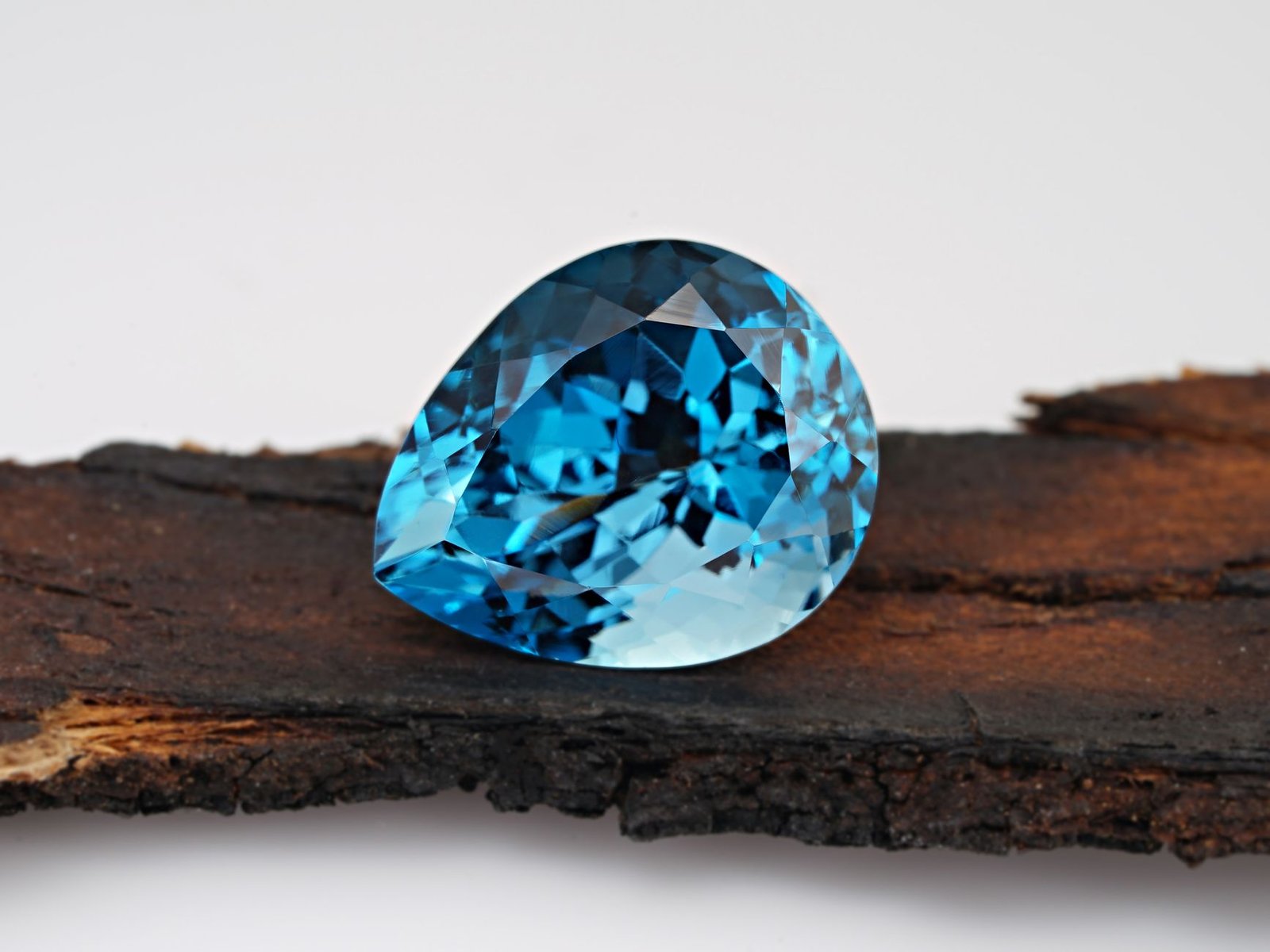
Not every blue sapphire is a royal blue sapphire. The distinction is precise, measurable, and — for serious buyers — worth understanding before any purchase decision is made. Royal blue occupies a narrow band of colour that sits above every other sapphire grade in prestige, price, and lasting desirability. It is the colour benchmark that laboratories, auction houses, and connoisseurs use to separate the exceptional from the merely beautiful.
Colour is the single most powerful driver of value in a Natural Gemstone. In sapphires, it accounts for more of the price-per-carat differential than clarity, cut, or even treatment status. This article goes beyond naming the colour and examines the mechanics behind it — how hue, tone, and saturation interact, what the benchmarks actually are, and why stones that hit that ideal simultaneously command premiums that can exceed ten times the price of a comparable blue sapphire one grade below.
- Royal blue sapphire colour is defined by a precise hue angle, tone range, and saturation level — all three must align simultaneously for a stone to qualify.
- The ideal royal blue hue is a pure, slightly violet-leaning blue at approximately 75–85° on the GIA hue circle, with tone between 75–85% and saturation at 5–6 on a 6-point vivid scale.
- Ceylon royal blue sapphire price carries a significant Origin premium over stones from other sources when colour is held equal — provenance amplifies value, it does not replace colour quality.
- Even minor shifts in tone — towards grey (extinction) or towards medium (brightness loss) — can drop a stone from the royal blue grade to fine or commercial blue.
- Certified natural royal blue sapphires with no heat treatment command the highest premiums, but excellent heated stones in royal blue can still represent exceptional value at a fraction of the unheated price.
The Three Axes of Sapphire Colour — Hue, Tone, and Saturation
Gemological colour grading is not a single judgement — it is three separate assessments made in sequence. Hue describes the dominant colour family and any secondary modifier. Tone measures the depth of colour on a scale from colourless to black. Saturation captures the intensity or vividness of that colour — how pure and strong it appears relative to grey or brown masking.
For a royal blue sapphire Gemstone to earn its grade, all three axes must sit within a defined range simultaneously. A stone with perfect hue but excessive tone appears inky and loses its luminosity. A stone with ideal tone but low saturation reads as a watery, washed-out blue. A stone with brilliant saturation but a strongly greenish hue modifier falls into the teal or cornflower category. The grade is earned only when nothing compromises the others.
Professional graders assess colour under standardised daylight-equivalent lighting, typically 6500K, and rotate the stone to evaluate face-up appearance as well as directional colour shift — a critical consideration in sapphires, which are doubly refractive and can show different hues along different crystal axes.
Defining the Royal Blue Hue Zone — Where Exactly Is the Boundary
 Gemstones on a soft blue background.” style=”width:100%;max-width:860px;height:auto;border-radius:6px;” class=”wp-image-8759″ srcset=”https://yalagems.com/wp-content/uploads/2026/06/royal-blue-sapphire-colour-grading-benchmarks-1781438578812-2.jpg 1880w, https://yalagems.com/wp-content/uploads/2026/06/royal-blue-sapphire-colour-grading-benchmarks-1781438578812-2-300×198.jpg 300w, https://yalagems.com/wp-content/uploads/2026/06/royal-blue-sapphire-colour-grading-benchmarks-1781438578812-2-1024×674.jpg 1024w, https://yalagems.com/wp-content/uploads/2026/06/royal-blue-sapphire-colour-grading-benchmarks-1781438578812-2-768×506.jpg 768w, https://yalagems.com/wp-content/uploads/2026/06/royal-blue-sapphire-colour-grading-benchmarks-1781438578812-2-1536×1011.jpg 1536w, https://yalagems.com/wp-content/uploads/2026/06/royal-blue-sapphire-colour-grading-benchmarks-1781438578812-2-1320×869.jpg 1320w, https://yalagems.com/wp-content/uploads/2026/06/royal-blue-sapphire-colour-grading-benchmarks-1781438578812-2-600×395.jpg 600w” sizes=”(max-width: 1880px) 100vw, 1880px” />
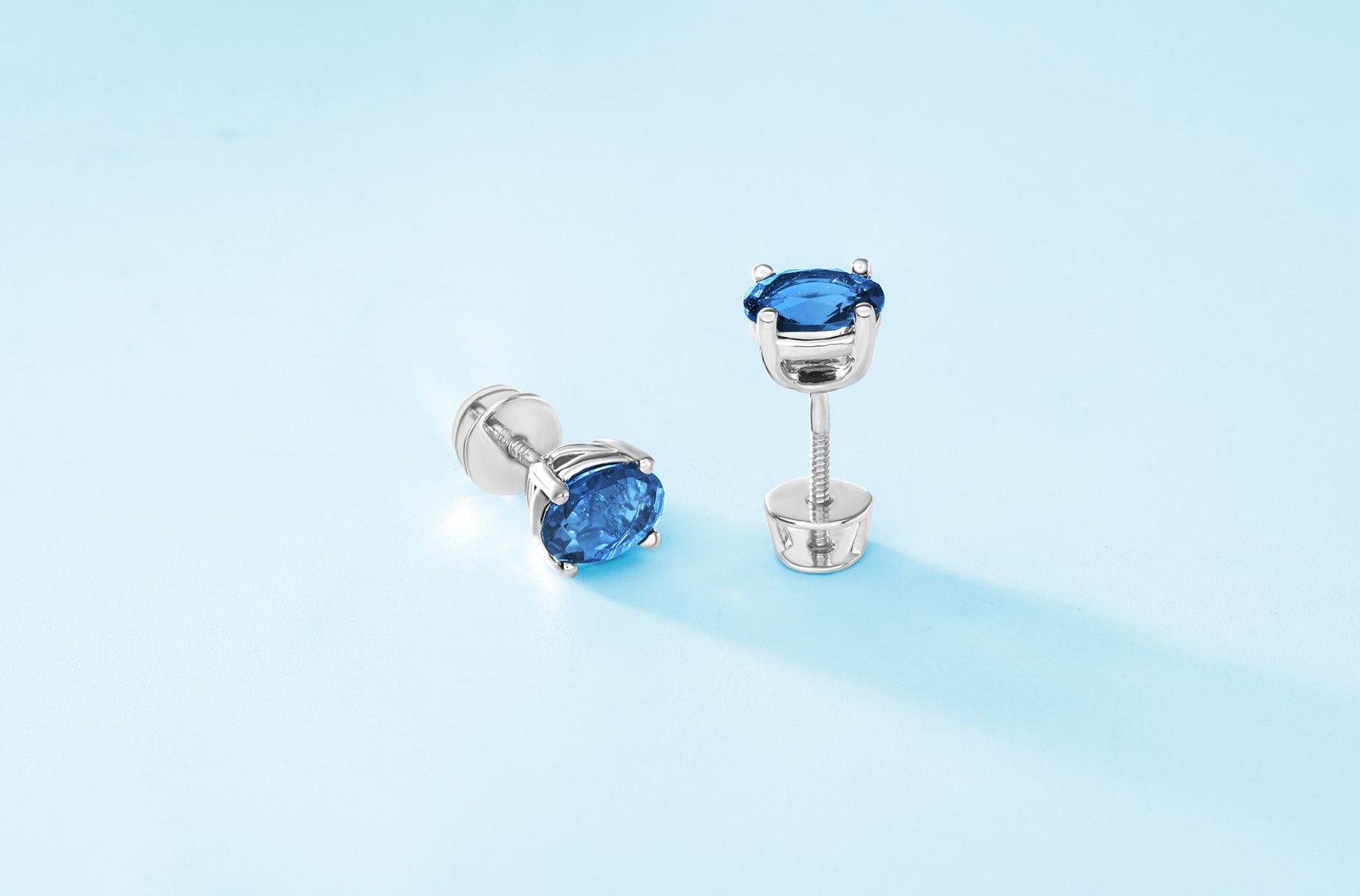
On the GIA hue circle, pure blue sits at approximately 240° in standard colour notation. Royal blue sapphires fall within a narrow zone centred just slightly towards violet — around 75–85° on GIA’s gem-specific notation where blue anchors at 75°B. The violet modifier typically reads as vB (slightly violet-blue) to vvB (very slightly violet-blue). This subtle violet undertone is actually desirable: it adds depth and richness that a purely neutral blue lacks, giving the stone a regal quality that flat, purely primary blue cannot achieve.
A greenish modifier, by contrast, pulls the stone away from royal blue regardless of how deep or saturated the colour is. Even a minor green component — assessed as gB or gvB — shifts the stone into a separate grade. This is why two sapphires of seemingly similar blue can carry dramatically different prices when examined by a trained gemologist. The hue modifier, invisible to most buyers at first glance, is immediately apparent to anyone grading systematically.
Ceylon, or Sri Lankan, sapphires have historically produced the most reliable expression of this violet-leaning pure blue. The island’s specific geological environment — a combination of metamorphic conditions, mineral chemistry, and trace element ratios — tends to produce stones in which iron and titanium interact cleanly, generating that characteristic velvety royal blue rather than the slightly inky or greenish variations more common in other deposits.
The violet modifier in a royal blue sapphire is not a flaw — it is a feature. Many buyers initially question a slight purple cast in a top-grade stone, but that modifier is precisely what distinguishes royal blue from a flat commercial blue. Under incandescent light, a true royal blue sapphire will intensify towards a rich, deep violet-blue rather than going grey or black. This behaviour under different lighting conditions is one of the most reliable on-the-ground tests of genuine royal blue colour quality.
Tone and Saturation Benchmarks — The Numbers Behind the Name
Tone in sapphires is graded on GIA’s 11-step scale from 0 (colourless) to 10 (black). Royal blue sapphire colour sits within the 75–85% tone range, which corresponds to grades 7 to 8.5 on this scale. Below this range, the stone appears too light — bright and pleasant, but lacking the depth that commands premium value. Above it, the stone begins to absorb too much light, appearing dark and opaque in all but ideal lighting conditions.
Saturation — the purity and strength of the colour — is assessed on GIA’s six-point scale: brownish/greyish, slightly brownish/greyish, moderately strong, strong, vivid, and vivid with slight brownish or greyish mask. Royal blue falls squarely within strong to vivid (grades 5–6), with the finest examples carrying a fully vivid saturation that shows no grey or brown extinction in the face-up position. Any visible grey masking across the crown of the stone — even a subtle haziness — immediately reduces the saturation grade and pushes the stone below royal blue classification.
Extinction deserves particular attention. Extinction is the dark, non-reflective areas visible in a cut sapphire when light is not returned to the eye efficiently. In deeply toned stones, extinction can consume 30–40% of the visible face-up surface. The finest royal blue sapphires show minimal extinction — their cut is optimised to maximise light return and allow the full colour to express itself evenly across the crown. This is one reason why cut quality, so often treated as secondary in coloured stones, plays a genuine role in whether a stone grades royal blue or falls just short.
Royal Blue Versus Other Sapphire Colour Grades — A Practical Comparison
Understanding royal blue is easier when it is placed in context alongside the other named colour grades used in the trade. Each grade occupies a distinct position across the hue, tone, and saturation axes. The following table illustrates where royal blue sits relative to the most commercially significant grades.
| Colour Grade | Hue Description | Tone Range (GIA Scale) | Saturation | Relative Price Position |
|---|---|---|---|---|
| Royal Blue | Pure blue, slight violet modifier (vB–vvB) | 75–85% | Strong to Vivid (5–6) | Highest premium grade |
| Cornflower Blue | Medium blue, no or very faint violet | 50–65% | Moderately Strong to Strong (4–5) | High — especially for Ceylon origin |
| Fine Blue | Blue with minor secondary modifiers | 65–75% | Strong (4–5) | Mid-tier commercial to fine |
| Deep/Dark Blue | Blue, often with greenish or inky cast | 85–95% | Strong but heavily masked by tone | Below fine — loses premium rapidly |
| Commercial Blue | Variable, often greenish or greyish | Variable | Greyish or brownish mask visible | Lowest — volume market pricing |
The gap between royal blue and cornflower blue in price-per-carat terms can be substantial — often 40–80% for heated stones of equivalent clarity and carat weight, and considerably more for unheated material where royal blue certification from a top laboratory moves pricing into an entirely different bracket. For context on how origin interacts with these colour grades to influence ceylon royal blue sapphire price, our Ceylon Sapphire buyer’s guide provides a comprehensive breakdown of provenance premiums.
“Royal blue is not simply a dark blue sapphire. It is a calibrated intersection of three colour variables that collectively produce a specific visual effect — one that has captivated collectors, monarchies, and fine jewellery houses for centuries, and that remains the defining benchmark of sapphire excellence today.”
How Laboratories Certify Royal Blue Colour — What the Grading Report Actually Says
When buyers encounter the phrase “royal blue” on a gemological certificate, it is important to understand that not all laboratories use the same criteria. GIA, Gübelin, and SSEF do not typically use the phrase “royal blue” as a formal grade on their reports — their colour descriptions use the hue-tone-saturation descriptive system. The phrase “royal blue” appears in the trade context and in some laboratory reports as a quality descriptor or colour origin statement, not a standardised grade code.
Gübelin and SSEF, both Swiss laboratories with deep expertise in coloured stones, do include colour quality references in their premium reports. When either laboratory describes a sapphire’s colour as “royal blue” in their quality assessment comments, this carries enormous market weight and directly influences natural royal blue sapphire price at auction and private sale. Buyers of significant stones should prioritise certificates from these three institutions when evaluating colour grade claims.
AGL (American Gemological Laboratories) uses a colour grade system that explicitly names “Royal Blue” as a quality tier, making their reports particularly straightforward for buyers navigating the colour grading conversation. Understanding which laboratory issued a certificate — and what their specific terminology means — is an essential step before committing to a purchase, particularly when royal blue sapphire price per carat is a key part of the value assessment.
At Yala Gems, every natural Gemstone in our collection is presented with its laboratory certificate. When clients ask about royal blue sapphire colour specifically, we walk them through the hue description, the tone and saturation language, and what those technical terms mean in terms of visual experience. A certificate is a starting point — seeing the stone under multiple light sources, with expert guidance, is how you truly understand why royal blue commands its premium. We encourage all buyers to speak with our gemologists before making any significant purchase.
Royal Blue Sapphire Price Per Carat — What Colour Grade Means for Value
Colour grade is the dominant variable in sapphire pricing, but it does not operate in isolation. Royal blue sapphire price per carat is determined by a matrix in which colour grade intersects with carat weight, clarity, treatment status, and origin to produce the final market value. Understanding each variable’s contribution allows buyers to make more precise comparisons when evaluating stones.
As a general market orientation, a heated Ceylon royal blue sapphire of one carat, eye-clean, well-cut, might trade between USD 800 and 2,500 per carat depending on colour quality within the royal blue range. An equivalent unheated stone with strong laboratory documentation can command USD 3,000 to 8,000 per carat or higher. Above three carats, prices escalate sharply — both because fine-quality rough above that size is genuinely scarce, and because the royal blue colour becomes proportionally harder to maintain without extinction or tone issues in larger stones.
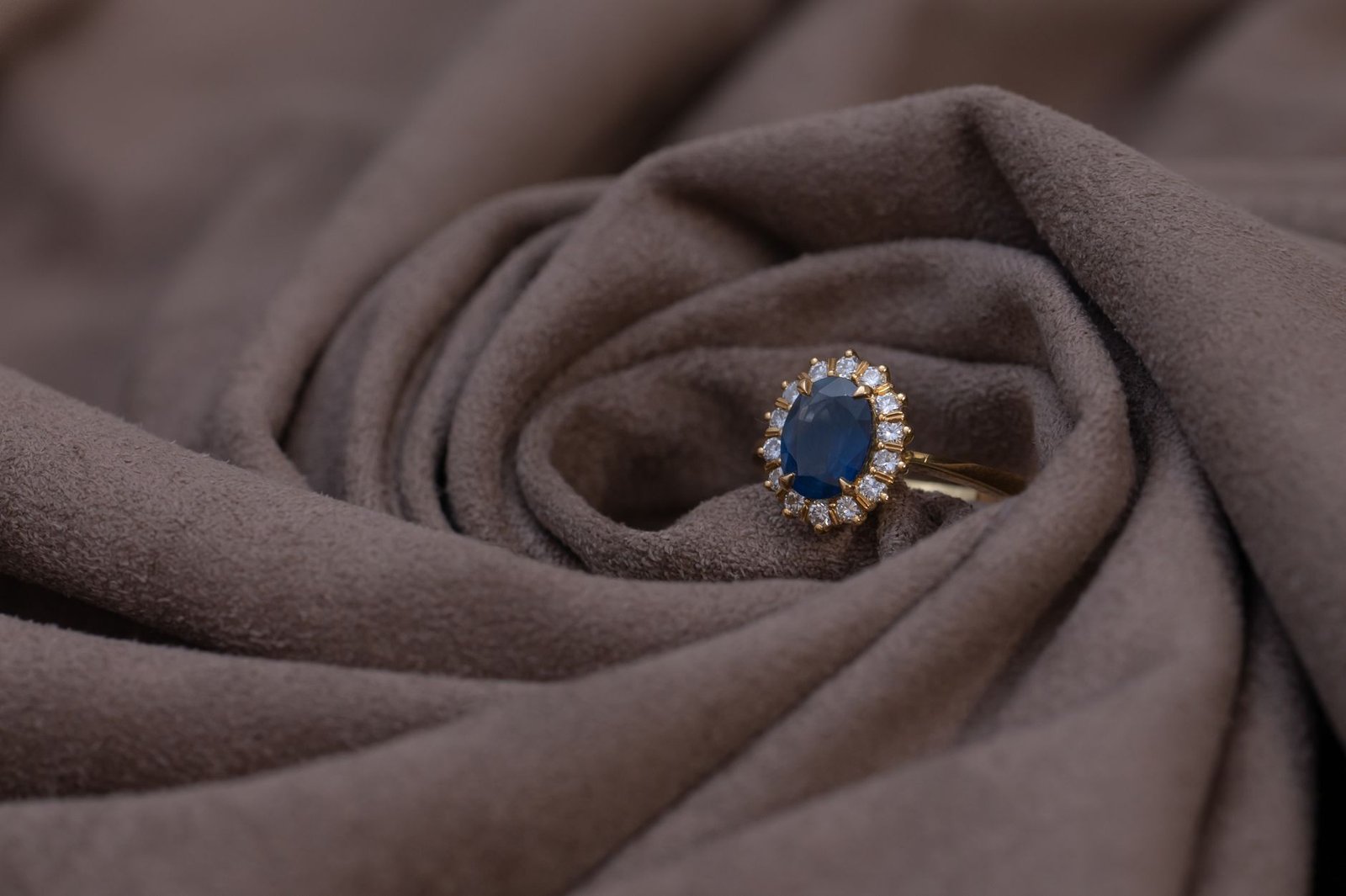
For buyers exploring a royal blue sapphire engagement ring, this pricing architecture is practically important. A two-carat royal blue sapphire with heat treatment from a reputable source, set in a well-designed ring, can be a genuinely exceptional acquisition at a fraction of the cost of an unheated equivalent. The colour to the eye can be identical — the treatment status and its premium are primarily concerns for investment-grade acquisitions and collectors seeking maximum long-term value.
Those looking to buy gemstone online should approach royal blue sapphire acquisitions with particular caution about colour photography. Screen rendering of blue gemstones is notoriously inconsistent — royal blue can appear cornflower on some displays, and over-saturated commercial blues can look deceptively fine in edited photography. Requesting video under multiple light sources and verified laboratory documentation is essential when buying any natural gemstone digitally.
Singapore buyers have the advantage of a sophisticated local gemstone singapore market, with access to certified stones and expert advice without the uncertainty of international online purchases. As a specialist gemstone singapore boutique, we see consistently that buyers who view stones in person before purchasing make more confident, better-value decisions — particularly at the royal blue grade where visual assessment is irreplaceable.
Frequently Asked Questions
Final Thoughts
Royal blue is not a marketing label — it is a measurable, defensible position within a precise matrix of hue, tone, and saturation. When all three variables align within the correct benchmarks simultaneously, the result is a stone that has commanded admiration across cultures and centuries. Understanding the mechanics of that colour grade transforms the buying experience from guesswork into genuine connoisseurship.
For buyers ready to go deeper into how origin, treatment, carat weight, and certification interact beyond colour alone, our Ceylon Sapphire buyer’s guide covers the full value architecture of these extraordinary stones. Colour is where the conversation starts — the pillar article is where it is completed.
Whether you are evaluating a single stone for a royal blue sapphire engagement ring or building a more considered collection of fine natural gemstones, the standard remains the same: colour first, documentation always, and personal viewing whenever possible. That approach does not change regardless of whether you buy gemstone online or in person.
Explore Royal Blue Sapphires at Yala Gems
Our curated collection of certified natural gemstones includes royal blue sapphires from Sri Lanka, presented with full laboratory documentation and expert colour consultation. Visit our Singapore boutique or connect with our team online.