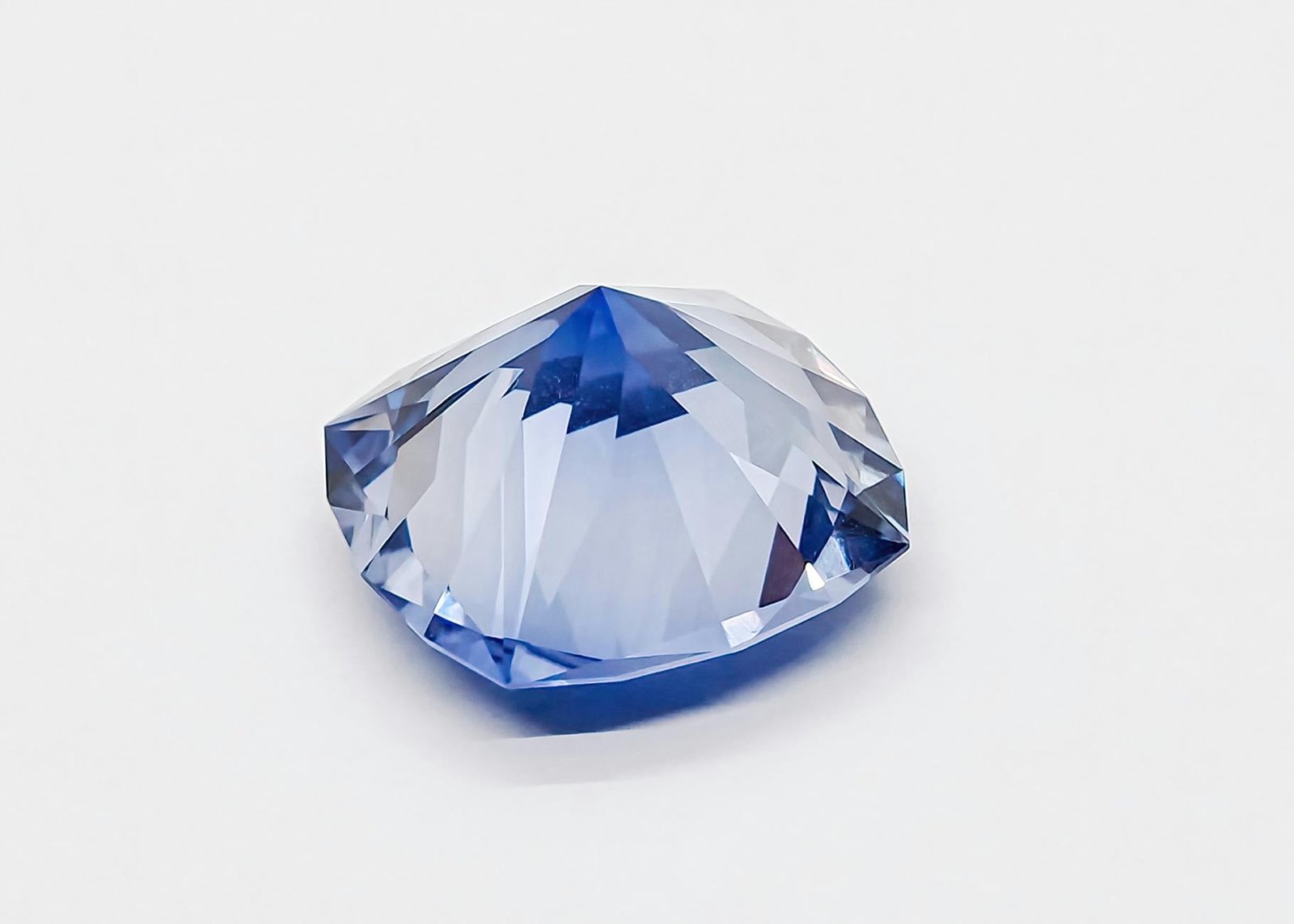
Few natural gemstone categories have demonstrated the kind of quiet, compounding appreciation that investment-grade sapphires have delivered over the past two decades. Unlike the equity markets, where volatility is measured in hours, sapphire price trends operate on longer cycles — shaped by origin scarcity, treatment disclosure standards, and the evolving sophistication of a global collector base. For the discerning buyer in Singapore, understanding exactly when and what to buy matters as much as the stone itself.
This guide focuses entirely on the market mechanics that determine sapphire value over time: how prices have moved by origin and quality tier, which stones trade with genuine liquidity, and how to read the signals that indicate a favourable entry point. If you are new to coloured stone investing, our broader pillar on best gemstones for investment provides the foundational framework — what follows goes considerably deeper on sapphire-specific dynamics.
- Unheated Ceylon and Kashmir sapphires have recorded consistent price appreciation of 8–15% annually at the top quality tier over the past decade, outpacing many traditional asset classes.
- Liquidity varies sharply by origin, treatment status, and certification — stones with GRS or Gübelin reports sell significantly faster and at stronger premiums than uncertified equivalents.
- The most favourable buying windows historically coincide with major auction house off-seasons and periods of broader equity market uncertainty, when motivated sellers enter the market.
- Kashmir sapphires command the highest price per carat of any blue sapphire origin, but their extreme scarcity limits available supply — Ceylon sapphires offer stronger liquidity for most investors.
- Treatment disclosure is the single greatest driver of price divergence in the sapphire market — an unheated natural gemstone can command three to five times the price of a heated equivalent of identical appearance.
How Origin Shapes Long-Term Price Performance
The sapphire market is not one market — it is a collection of origin-specific micro-markets, each with its own supply dynamics and collector demand. Kashmir, Ceylon, and Burma (Myanmar) represent the three most investment-relevant origins, and their price trajectories over the past fifteen years have diverged meaningfully. Understanding this divergence is the first step toward making an informed acquisition.
Kashmir sapphires, mined in a remote Himalayan valley where commercial extraction has been effectively dormant since the 1930s, exist in genuinely finite supply. Every stone that reaches the market today is either newly discovered through estate sales or repositioned from an existing collection. This structural scarcity has driven auction records repeatedly — per-carat prices for fine Kashmir material have increased by an estimated 300–400% since 2005, with top stones now regularly achieving USD 200,000 to over USD 500,000 per carat at major auction houses. For context on Kashmir versus Ceylon sapphire investment, the price differential at equivalent quality grades can be ten times or more.
Ceylon sapphires — originating from Sri Lanka’s Ratnapura region — offer a more accessible but still highly appreciating market. Fine unheated Ceylon material in the 3–10 carat range has seen consistent demand growth, supported by Sri Lanka’s reputation for consistent quality and the relative frequency with which certified stones come to market. Blue sapphire value appreciation for top Ceylon material has tracked at approximately 8–12% per annum over the past decade, making them the most practically liquid of the premium origins. At Yala Gems, Ceylon sapphires form the backbone of our investment-focused coloured stone offering, precisely because of this balance between quality, provenance confidence, and secondary market depth.
Burmese sapphires occupy an interesting middle position in terms of price trends. Fine Burmese blue sapphires — distinct from the country’s more famous rubies — are genuinely rare at investment grade, but the origin’s primary association with rubies means sapphire demand from that source is sometimes underpriced relative to Kashmir. Astute collectors have quietly accumulated Burmese sapphires at relative value for this reason. When the market fully re-prices Burmese sapphire scarcity, early buyers stand to benefit disproportionately.
The Treatment Premium: Why Heating Destroys Value Retention
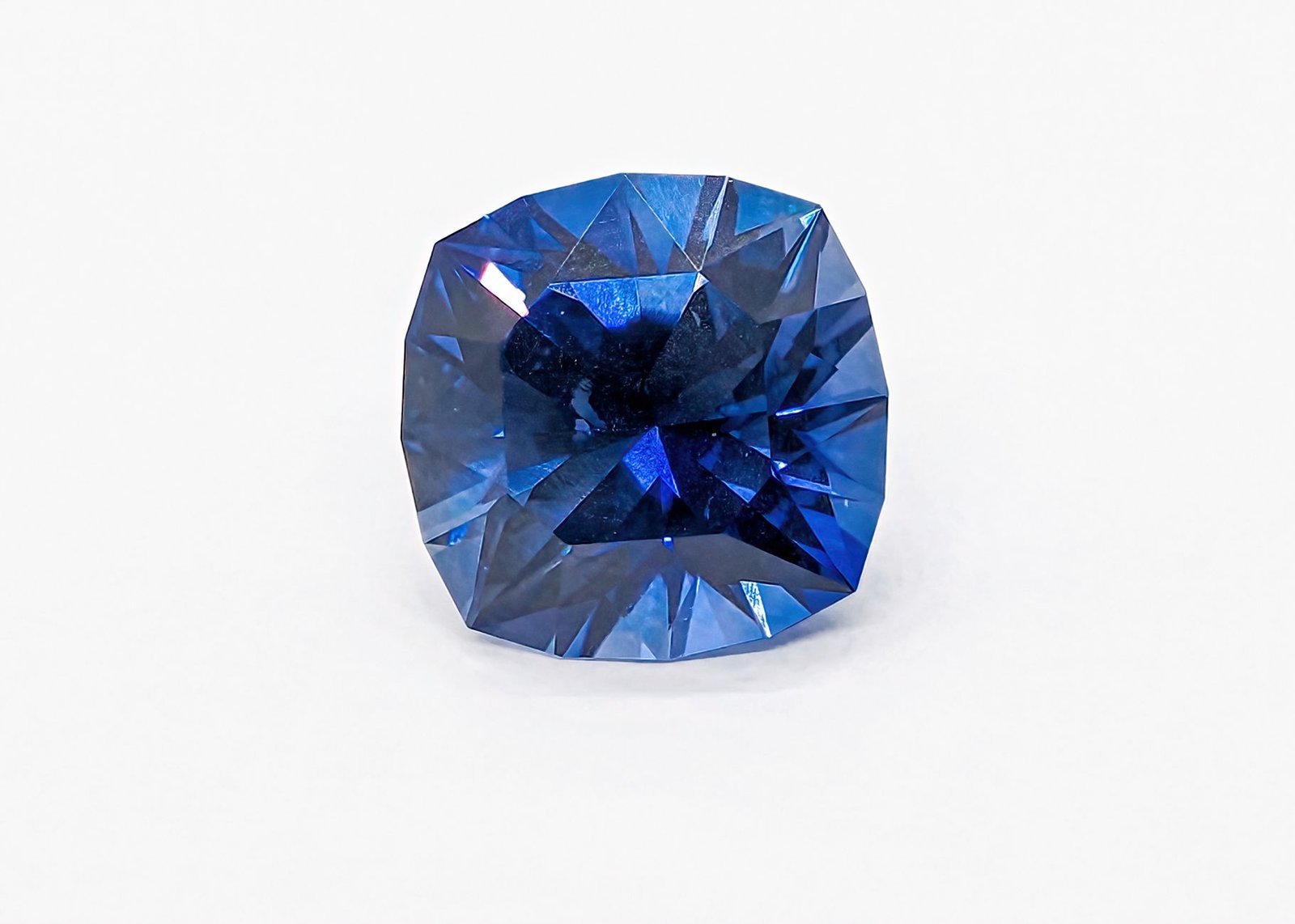
No single factor affects sapphire investment returns more decisively than heat treatment status. The vast majority of blue sapphires sold globally — some estimates suggest over 95% — have been heat-treated to improve colour and clarity. This treatment is permanent, widely accepted in commercial jewellery, and largely irrelevant to the everyday buyer. For the investor, however, it is the difference between an asset and a commodity.
An unheated sapphire price guide comparison makes the case starkly. A heated Ceylon blue sapphire of 5 carats with good colour might trade at USD 3,000–6,000 per carat. An unheated Ceylon blue sapphire of equivalent colour, clarity, and cut can command USD 15,000–30,000 per carat or more — and that premium has been expanding, not contracting, over time. As certification technology has improved and buyer education has risen, the market has become more efficient at pricing the natural gemstone premium accurately.
The mechanism behind this is straightforward: scarcity. Sapphires that achieve fine colour without any heat treatment represent nature’s rarest work. They cannot be manufactured in greater quantity. As global wealth grows and the collector base for investment-grade coloured stones expands — particularly across Southeast Asia and the Gulf — demand for these genuinely scarce natural gemstone specimens will continue to outpace supply. Any sapphire investment guide worth reading must place treatment status at the centre of its valuation framework.
“In the coloured stone market, treatment disclosure is not a technicality — it is the foundation upon which all serious valuation rests. An unheated sapphire with a credible laboratory report is a fundamentally different asset from its heated counterpart, regardless of visual similarity.”
Liquidity Realities: What Actually Sells and How Quickly
Investors accustomed to financial markets sometimes underestimate the importance of the resale ecosystem when it comes to physical gemstones. Sapphire liquidity is real, but it is not uniform — and understanding where it concentrates will save you from holding a beautiful stone that no serious buyer will touch without the right paperwork.
The most liquid investment sapphires share several characteristics consistently: they carry reports from internationally recognised laboratories (GRS, Gübelin, or AGL being the most respected for coloured stones in the Asian market), they are unheated or have fully disclosed and documented treatment status, they fall within commercially relevant size ranges (2–10 carats for most buyers, with 5+ carats commanding disproportionate premiums), and their origin is confirmed as Ceylon, Kashmir, or Burma. Stones meeting all four criteria can typically be repositioned through auction, private treaty, or dealer networks within three to six months at or above acquisition price in a healthy market.
Natural sapphire certification Singapore is not merely a local nicety — it is a global liquidity requirement. Buyers across Hong Kong, Geneva, and New York will not engage seriously with an investment-grade stone lacking a major lab report, regardless of the seller’s reputation. If you are considering acquiring loose sapphires for investment in Singapore without this documentation, the first conversation should be with a qualified gemologist, not a dealer. You are welcome to speak with our gemologists at Yala Gems before making any acquisition — we review certification regularly and can advise on which reports carry genuine weight in the current market.
| Origin | Typical Price Range (per carat, fine unheated) | Liquidity Level | 10-Year Price Trend | Best For |
|---|---|---|---|---|
| Kashmir | USD 50,000–500,000+ | Low–Medium (ultra-HNW market) | +300–400% | Long-term wealth preservation, trophy assets |
| Ceylon (Sri Lanka) | USD 8,000–35,000 | High | +80–120% | Balanced investment, resale flexibility |
| Burma (Myanmar) | USD 5,000–20,000 | Medium | +60–90% | Value accumulation, specialist collectors |
| Madagascar | USD 1,500–8,000 | Medium–High | +30–50% | Entry-level investment, colour-focused buyers |
| Heated (any origin) | USD 500–4,000 | High (commercial) | +10–20% | Jewellery, not investment |
Reading the Market: When to Buy and When to Wait
Timing a physical gemstone market differs fundamentally from timing equities or commodities. There are no real-time price feeds, no options chains, and no short-selling mechanisms. What exists instead are observable patterns — in auction results, in dealer inventory cycles, and in the relationship between broader economic sentiment and motivated seller behaviour. Recognising these patterns is what separates sophisticated sapphire investors from those who simply buy beautiful stones and hope.
Historically, the most advantageous buying windows for investment sapphires have emerged during two distinct conditions. The first is the post-major-auction period — roughly six to ten weeks after the Sotheby’s, Christie’s, or Bonhams Hong Kong sales — when the market has absorbed fresh price signals and private sellers who missed the auction window are more open to negotiation. The second is during periods of equity market stress, when high-net-worth individuals who hold gemstones as part of a diversified portfolio occasionally liquidate to meet other obligations, creating temporary oversupply at the private dealer level.
For buyers asking whether to buy gemstone online or through a specialist boutique, the answer for investment-grade sapphires is clear: physical inspection and direct gemologist consultation are non-negotiable. You can certainly begin your research and compare options when you buy gemstone online through reputable platforms, but the final acquisition decision for any stone above USD 10,000 per carat should involve hands-on review. Our Singapore boutique facilitates exactly this — private viewings with full gemological documentation, no pressure, and complete transparency on provenance and treatment history.
One underappreciated timing signal for sapphire buyers is the Sri Lankan government’s periodic changes to gemstone export regulations. When regulatory tightening is anticipated, supply to international markets temporarily contracts and prices firm. Conversely, periods of regulatory liberalisation can create brief windows of above-average supply at stable pricing — representing genuine entry opportunities for buyers who track the market closely. Those considering Ceylon sapphire investment should maintain awareness of Ratnapura mining and export conditions as part of their ongoing market intelligence.
Sapphires Versus Diamonds: An Honest Investment Comparison
The question of sapphire gemstone returns vs diamonds is one of the most common we encounter from first-time coloured stone investors. The honest answer is nuanced, and it depends entirely on which segment of each market you are comparing. Round white diamonds in the 1–3 carat range have experienced significant price pressure over the past three years, partly driven by the rapid improvement and market acceptance of laboratory-grown alternatives. That headwind does not exist for natural sapphires — no laboratory has successfully produced a gem-quality unheated Kashmir sapphire, and the very concept of a lab-grown investment stone is largely rejected by serious collectors.
Fine unheated blue sapphires have, on a like-for-like basis, outperformed white diamonds in total return terms over the past decade at the investment-grade tier. The key caveat is liquidity: the diamond market — particularly for certified stones in standardised grades — does offer faster and more predictable resale. For investors who prioritise capital preservation and are comfortable with a 3–7 year holding horizon, fine sapphires present a compelling case. For those requiring higher liquidity, a blended approach — holding both asset classes — is typically the more appropriate strategy. We explore this allocation question more thoroughly in our pillar resource on best gemstones for investment, where sapphires are contextualised alongside rubies, emeralds, and other coloured stone categories.
Frequently Asked Questions
Final Thoughts
The sapphire market rewards patience, specificity, and informed decision-making above all else. Price trends diverge sharply by origin, treatment status, and certification quality — and the investors who understand these distinctions are the ones who consistently acquire stones that hold and grow in value over time. Liquidity, while real for well-documented investment-grade material, requires the right paperwork and the right relationships to access efficiently.
For anyone building a meaningful position in blue sapphires — whether through a single exceptional Ceylon stone or a considered accumulation of certified unheated material — the foundation must be gemological rigour and market awareness in equal measure. Our broader resource on the best gemstones for investment situates sapphires within the wider coloured stone landscape; this guide equips you to act with precision within that framework. At Yala Gems, every stone we present for investment consideration is accompanied by full documentation, transparent pricing, and honest market context — because the most valuable thing we can offer a serious buyer is clarity.
Deepen Your Gemstone Investment Knowledge
Explore our curated editorial library covering price trends, origins, certifications, and collector strategies across the world’s finest natural gemstones.