When Mozambique emerged as a significant ruby source in the late 2000s, the fine gemstone trade paid close attention — and for good reason. The stones surfacing from the Montepuez deposit were not pale approximations of the world’s great rubies. They were saturated, vivid, and in the finest examples, genuinely spectacular. For collectors and engagement ring buyers who had always assumed Burma held an unchallenged monopoly on exceptional red, Mozambique offered a compelling alternative worth serious consideration.
Yet the comparison between Mozambique ruby and Burmese ruby is rarely straightforward. Origin prestige, colour nuance, inclusion character, and market pricing all diverge in ways that matter enormously to a discerning buyer. This article examines exactly those differences — not in broad strokes, but with the precision that serious gemstone purchases demand. Whether you are researching the natural mozambique ruby price, weighing origins for an investment purchase, or simply trying to understand what you are being offered, this is the analysis you need before committing.
- Mozambique rubies originate primarily from the Montepuez deposit in Cabo Delgado province, one of the most significant ruby discoveries of the 21st century.
- The finest Mozambique rubies display a rich, deeply saturated red — sometimes described as slightly more purplish than Burmese — with strong natural fluorescence that intensifies their visual impact.
- Burmese rubies retain a meaningful price premium over comparable Mozambique stones, though top-quality Mozambican material is rapidly closing that gap at auction.
- Inclusion profiles differ between the two origins: Mozambique rubies frequently show rutile silk and fluid inclusions characteristic of their metamorphic host rock, which can be used in origin determination.
- For buyers in Singapore, certified natural Mozambique rubies offer exceptional value per carat relative to Burmese equivalents — making them a strategically attractive choice for both collectors and jewellery commissions.
The Montepuez Deposit — What the Earth Reveals
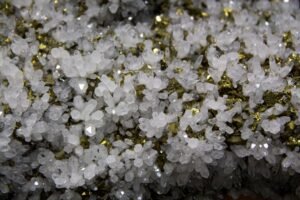
The Montepuez ruby deposit, located in Cabo Delgado province in northern Mozambique, was formally identified as a world-class source around 2009. What makes this deposit geologically remarkable is its scale — it is now considered one of the largest known ruby deposits on the planet. The rubies form within a complex of marble and amphibolite rocks, a metamorphic environment that is broadly comparable, though not identical, to the geological conditions that produce Burmese rubies in the Mogok Stone Tract.
The host rock at Montepuez is predominantly marble and reaction zones between marble and mafic rocks. This origin imparts distinct chemical fingerprints to the stones. Mozambique rubies typically carry higher iron content than their Burmese counterparts — a characteristic that has direct consequences for both colour and fluorescence, which we will examine shortly. Chromium, the trace element responsible for ruby’s red colour, is present in abundance, which explains the exceptional saturation seen in top-grade Mozambican material.
Geologically, the deposit also produces rubies across a wide colour range — from pale pinkish-red to deeply saturated material that challenges even experienced graders to distinguish from fine Burmese stones without laboratory analysis. This variability is significant for buyers, because not all Mozambique rubies are created equal. Careful origin certification from a recognised laboratory such as GRS, Gübelin, or SSEF remains essential when purchasing a natural gemstone at the fine end of the market.
Colour Profile — How Mozambique Red Differs From Mogok Red
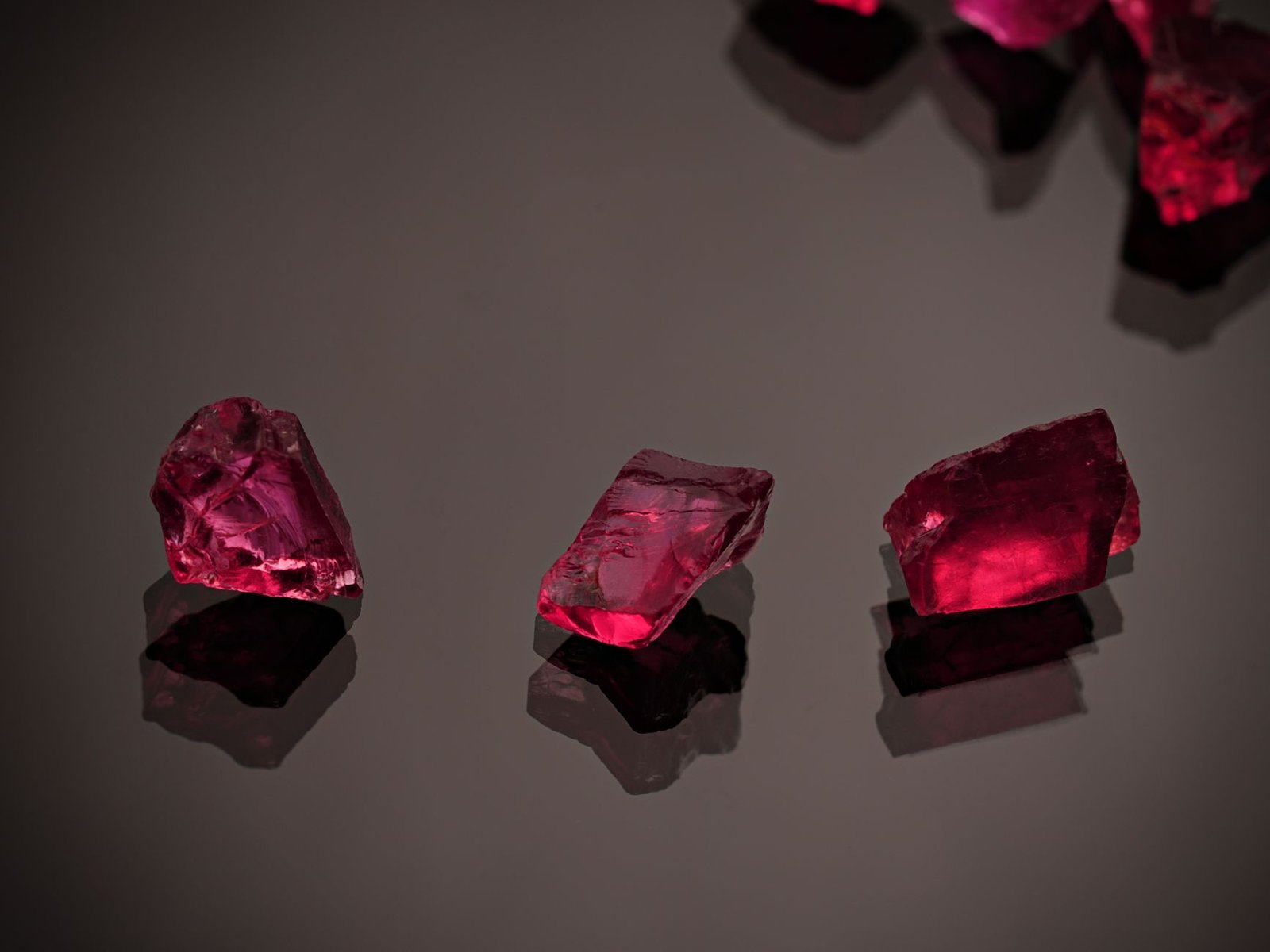
Colour is, ultimately, everything in ruby grading. The finest rubies — regardless of origin — are judged by their hue, tone, and saturation, with the legendary “pigeon blood” descriptor reserved for stones that exhibit a pure, vivid red with just a hint of blue. Mozambique rubies occupy a distinct position within this spectrum, and understanding precisely where requires some nuance.
Burmese rubies from Mogok are celebrated for a pure, slightly bluish-red hue that sits at the ideal point on the colour wheel for ruby. Their iron content is very low, which means chromium fluorescence is not suppressed — and under incandescent or UV-rich daylight, these stones appear to glow from within. Mozambique rubies, by contrast, tend toward a slightly more purplish-red or occasionally more orangey-red hue, depending on the specific parcel. The higher iron content characteristic of Mozambican material does reduce fluorescence somewhat, meaning the stones can appear marginally darker or less luminous under certain lighting conditions.
That said, this is a generalisation that top-quality material frequently defies. The finest Mozambique rubies — those with lower iron concentrations and high chromium — can produce fluorescence that approaches Burmese levels. Several stones from Montepuez have been certified with GRS “pigeon blood” colour grades, which is a meaningful acknowledgement that origin alone does not define colour quality. For a buyer focused on the visual experience of the stone rather than the certificate’s origin line, the very best Mozambique rubies are genuinely extraordinary.
Iron content is the single most important chemical variable separating Mozambique rubies from Burmese rubies under laboratory analysis. High iron suppresses chromium fluorescence — the optical phenomenon responsible for a ruby’s signature “glow.” When evaluating a Mozambique ruby stone, request a fluorescence assessment alongside the colour grade. A stone grading strong fluorescence under long-wave UV is demonstrably closer to Burmese optical character, and commands a corresponding price premium. At Yala Gems, we source Mozambique rubies specifically for their fluorescence response, not merely their certified colour grade.
Inclusion Character — Reading the Internal Landscape
Every ruby carries a record of its geological journey within its inclusions, and Mozambique rubies have a distinctive internal vocabulary. The most commonly observed inclusions in Montepuez material include short, stout rutile needles — less silky and fine-grained than the long, gossamer rutile silk associated with Burmese rubies — along with fluid inclusions, negative crystals, and mineral inclusions of apatite and zircon. Fingerprint inclusions following healed fractures are also frequently observed.
This inclusion profile matters for two reasons. First, it aids in origin determination — a qualified gemologist examining a ruby’s internal features can often distinguish Mozambican from Burmese origin even before laboratory testing, though definitive attribution requires spectroscopy and chemical analysis. Second, it has a direct bearing on clarity and, therefore, value. Mozambique rubies frequently show fewer of the intersecting silk networks that give some Burmese rubies their characteristic glow, but they can also present with larger individual inclusions that are more visually disruptive.
Heat treatment, which is standard practice across the ruby trade, affects inclusions in predictable ways — partially dissolving rutile silk, healing fractures, and altering fluid inclusions. An unheated Mozambique ruby with minor inclusions commands a substantially higher price than a treated stone of similar appearance. If you are considering a fine purchase, always ask whether the stone carries a “no heat” determination on its laboratory report. Our team is always available to speak with our gemologists if you need guidance interpreting a laboratory certificate before buying.
Value Comparison — Mozambique Ruby Price vs Burmese Ruby Price

The pricing relationship between Mozambique and Burmese rubies is one of the most actively discussed topics among collectors and dealers. The short answer is that Burmese rubies command a premium — sometimes substantial — over equivalent Mozambique material. The more nuanced answer is that this premium is shrinking at the top of the market, and at certain quality tiers, the gap is narrower than many buyers assume.
For fine quality rubies in the 1–3 carat range, a GRS-certified Burmese pigeon blood ruby may fetch USD 8,000–18,000 per carat or more at auction, depending on colour saturation and clarity. A comparable Mozambique ruby stone with a pigeon blood colour grade from the same laboratory might achieve USD 4,000–9,000 per carat — a meaningful discount that purely reflects origin prestige rather than visual quality. The natural mozambique ruby price per carat in dollars rises sharply for unheated material and for stones exceeding five carats, where clean, vivid examples become genuinely rare.
For buyers asking “are Mozambique rubies valuable?” — the answer is unambiguously yes, particularly for stones in the fine to exceptional range. Mozambique ruby prices have appreciated consistently since the deposit’s discovery, and major auction houses now regularly feature Montepuez material in their important jewellery sales. The origin carries increasing institutional credibility, and for collectors who want maximum visual impact per dollar spent, Mozambique represents arguably the most compelling value proposition in the ruby market today.
“The finest Mozambique rubies do not apologise for their origin. They demand to be evaluated on their own terms — and on those terms, the very best examples rival anything Mogok has produced in a generation.”
| Characteristic | Mozambique Ruby | Burmese Ruby (Mogok) |
|---|---|---|
| Primary Deposit | Montepuez, Cabo Delgado | Mogok Stone Tract, Myanmar |
| Host Rock | Marble and amphibolite | Marble (crystalline limestone) |
| Iron Content | Moderate to higher | Very low |
| Fluorescence | Moderate to strong (variable) | Strong to very strong |
| Typical Hue | Purplish-red to vivid red | Pure red to slightly bluish-red |
| Characteristic Inclusions | Short rutile needles, fluid inclusions, apatite | Long rutile silk, calcite, spinel crystals |
| Fine Quality Price (per carat, USD) | USD 4,000 – 9,000+ | USD 8,000 – 18,000+ |
| Origin Premium | Growing — moderate premium | Significant established premium |
| Availability of Unheated Material | Available, increasingly documented | Rare, commands very high premium |
For Singapore buyers specifically, the mozambique ruby price SGD equivalent makes fine Mozambican material particularly compelling. A 2-carat vivid red Mozambique ruby with minor inclusions and a respected laboratory certificate represents an accessible entry point into the fine ruby market — one that would require a substantially larger budget for equivalent Burmese material. If you are considering where to buy gemstone online or through a boutique, origin transparency and certification quality should be your first two filters, regardless of where you ultimately transact.
Our Knowledge Hub covers the broader context of ruby valuation in detail, and for those who want the full picture of how Burmese rubies are graded and why they command their pricing, our pillar article on Burmese ruby provides the authoritative framework against which Mozambique material should be understood.
When comparing the mozambique ruby vs burma ruby for investment purposes, consider the trajectory rather than the current snapshot. Burmese rubies have centuries of market history supporting their premium. Mozambique rubies have roughly fifteen years of serious auction presence — and prices have moved consistently upward. Collectors entering the natural gemstone market now with a long-horizon view may find that Mozambique’s relative discount today represents a structural opportunity, provided they acquire certified, fine-quality material from a reputable source. Whether you prefer to buy gemstone online or in person, always ensure the stone carries a current laboratory report from GRS, Gübelin, or SSEF. At Yala Gems, every ruby we offer — including our Mozambique ruby gemstone boutique Singapore selections — is accompanied by independent certification.
Frequently Asked Questions
Final Thoughts
Mozambique ruby has moved, in less than two decades, from a trade curiosity to a fixture of the world’s most prestigious auction sales. Its origin characteristics — a large-scale metamorphic deposit producing richly saturated stones with distinctive inclusion profiles — are now well understood by the gemological community, and the finest material holds its own in any comparison with the great rubies of Mogok. The colour profile, while subtly distinct from classic Burmese red, reaches extraordinary heights in top-quality examples, and the fluorescence of the best stones commands genuine admiration.
For buyers, the value proposition is clear: you can acquire a certified, vivid, natural Mozambique ruby at a meaningful discount to comparable Burmese material, with strong prospects for price appreciation as the origin’s reputation continues to mature. Understanding where Mozambique sits within the broader ruby hierarchy — which our Burmese ruby collector’s guide contextualises in full — gives you the framework to buy with confidence rather than compromise. Whether you choose to buy gemstone online or through a trusted boutique, origin knowledge is your most powerful tool as a buyer.
Explore Certified Mozambique Rubies at Yala Gems
Our gemstone Singapore specialists are available to guide you through our curated selection of certified natural Mozambique rubies — from fine loose stones to bespoke jewellery commissions. Every stone we offer is independently certified and personally vetted by our team.