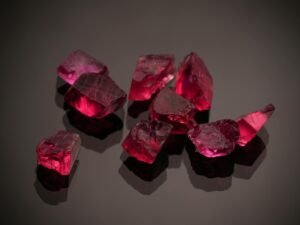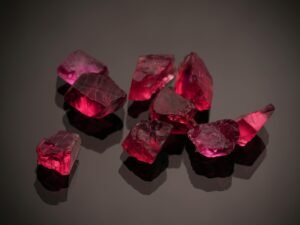
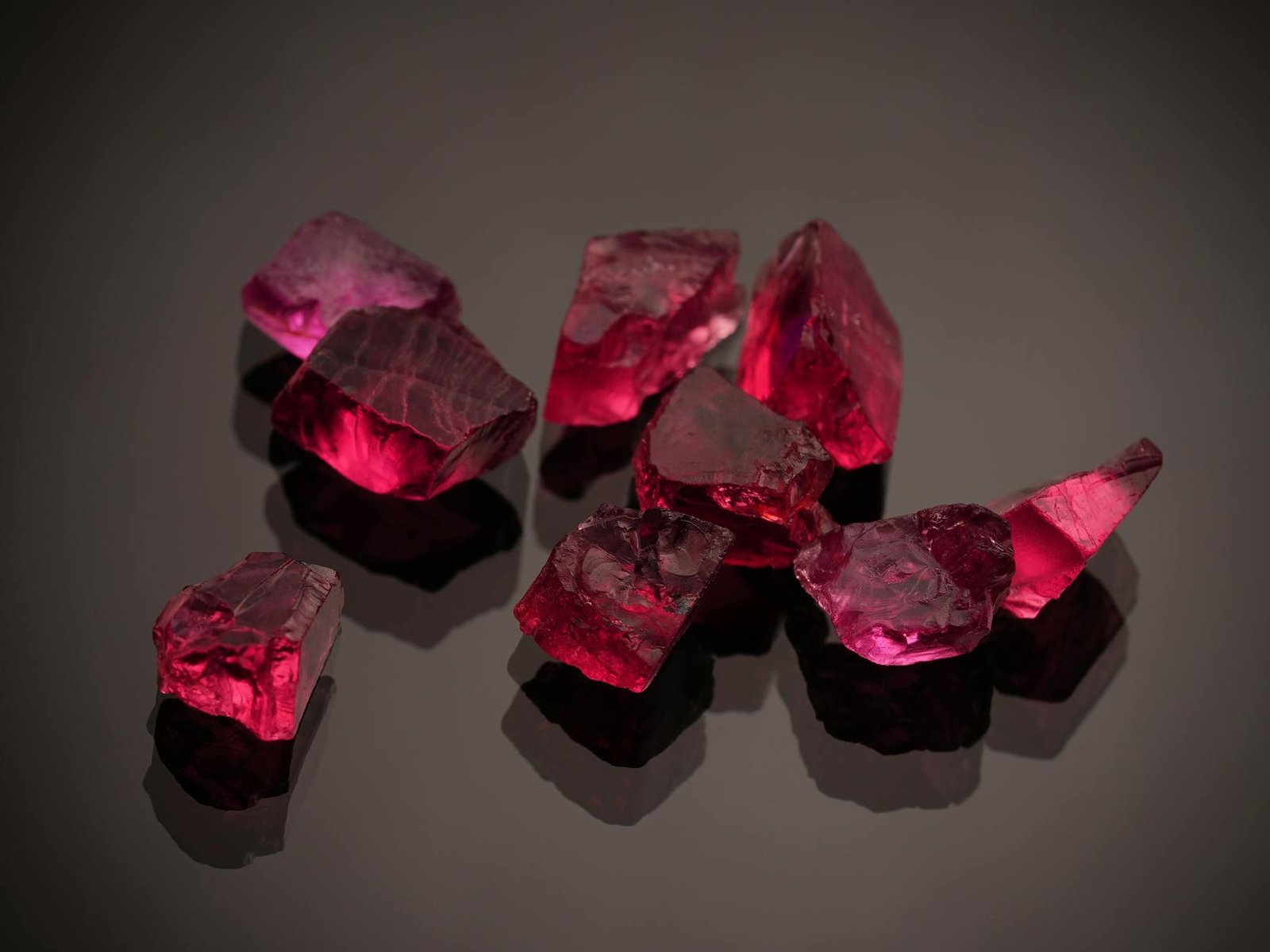
There is a colour that stops a room. Not the polite red of a rose or the theatrical crimson of a curtain — but something deeper, more alive, more ancient. It is the colour gemologists call pigeon blood: a saturated, luminous red with the faintest blue undertone, glowing as though lit from within. When you encounter a true pigeon blood ruby for the first time, the experience is less aesthetic appreciation and more visceral recognition. Something in you simply knows you are looking at one of nature’s most extraordinary achievements.
Among all natural gemstones, the pigeon blood ruby occupies a singular position. Rarer than diamonds of comparable size, more historically freighted than almost any other stone, and commanding prices at auction that rival the finest colourless gems on earth, the pigeon blood red ruby is not merely a jewel. It is a portable, wearable concentration of geological fortune. Each one represents millions of years of heat, pressure, and chemical precision — and the extraordinary luck of survival through mining, cutting, and trade.
At Yala Gems, we have spent years studying, sourcing, and presenting these remarkable stones to collectors and connoisseurs across Southeast Asia. This guide distils everything you need to know — from origin and grading to investment value and how to buy gemstone online with confidence. Whether you are considering your first pigeon blood engagement ring or adding a certified specimen to a serious collection, what follows will equip you to choose with clarity and genuine expertise.
- Pigeon blood is an internationally recognised colour grade for rubies, defined by vivid red saturation, medium-dark tone, and a characteristic blue fluorescent undertone.
- Burma (Mogok Valley) remains the most prestigious origin for pigeon blood rubies, though exceptional stones from Mozambique now command comparable respect and pricing.
- Colour is the single most critical quality factor — accounting for up to 80% of a pigeon blood ruby’s value — followed by clarity, cut, and carat weight.
- Certified, unheated pigeon blood rubies above one carat are among the fastest-appreciating natural gemstones in the collector market, often outperforming equivalent diamond investments.
- Singapore has established itself as a premier destination for fine gemstone acquisition in Asia, offering both regulatory trust and access to world-class inventory.
- Buying through a reputable specialist — whether in person or when you buy gemstone online — requires independent laboratory certification, ideally from GIA, Gübelin, or SSEF.
Origin and Provenance: Where Pigeon Blood Rubies Come From
The story of the pigeon blood ruby begins deep in the metamorphic marble beds of the Mogok Valley in upper Myanmar — a region so legendarily productive that its name has become synonymous with the finest rubies the earth has ever yielded. Mogok rubies owe their extraordinary colour to a precise convergence: high chromium content producing vivid red saturation, low iron content allowing that colour to fluoresce brilliantly under both natural and ultraviolet light, and a marble host rock that strips away elements which would otherwise muddy the tone. The result is a stone that appears to radiate its own warmth.
For centuries, Mogok was the undisputed sole source of pigeon blood material. That monopoly ended in the early 2000s when deposits in Mozambique’s Montepuez region began producing rubies of genuinely comparable colour. Mozambique rubies tend to carry slightly higher iron content, which moderates fluorescence, but the finest specimens still achieve pigeon blood classification and have been endorsed as such by the world’s leading gemmological laboratories. Today, a buyer evaluating pigeon blood ruby location as a value factor must understand that origin matters — but that certified colour quality, not geography alone, is the true determinant of exceptional value.
Smaller deposits in Vietnam’s Luc Yen region and Thailand’s Chanthaburi province have also produced pigeon blood material, though at considerably lower frequency. Each origin carries its own trace-element signature, which skilled gemmologists and advanced spectroscopic analysis can often identify — making origin certification from institutions such as Gübelin or SSEF a meaningful addition to any significant purchase.
Not all red rubies are pigeon blood rubies. The designation is a graded colour description, not a marketing term — and its application varies slightly between laboratories. GIA defines pigeon blood as rubies exhibiting vivid red to slightly purplish-red hue, medium-dark tone, and vivid saturation. Gübelin and SSEF apply their own nuanced criteria. When evaluating a pigeon blood ruby, always request the specific laboratory report that confirmed the designation, not merely a seller’s description. Our team at Yala Gems provides full certification documentation with every fine ruby we offer.
Quality Evaluation: What Separates Good from Extraordinary
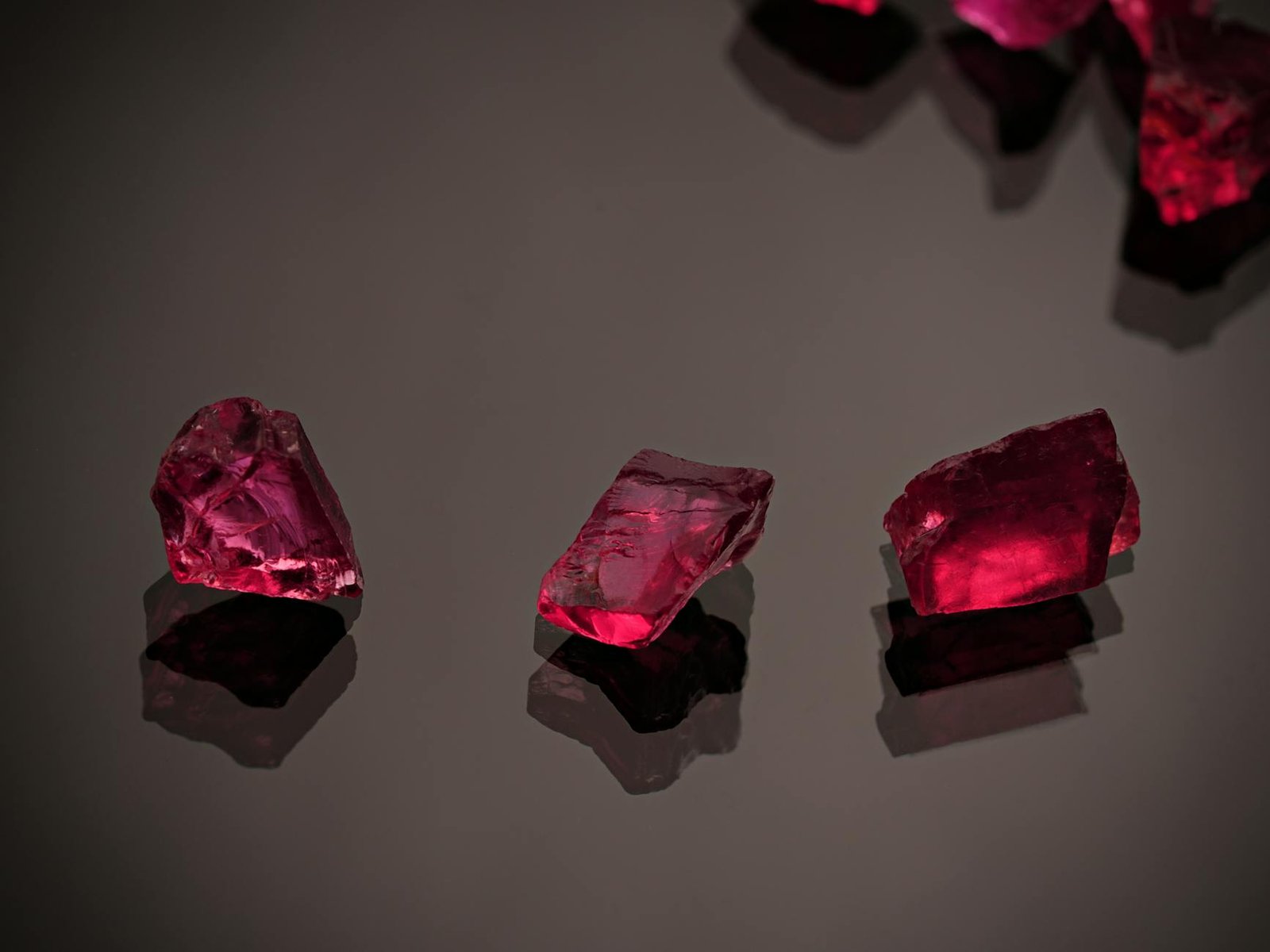
The classic four Cs apply to rubies as they do to all coloured gemstones, but their weighting is markedly different. Colour dominates the conversation to a degree that surprises buyers accustomed to diamond grading. In a pigeon blood ruby, colour can account for as much as 80% of the stone’s assessed value, and the difference between a vivid pigeon blood grade and a merely “strong red” designation can translate to a price premium of 300% or more per carat.
The ideal pigeon blood red ruby presents a hue that sits precisely between pure red and slightly purplish-red, with tone neither too light nor so dark it loses its luminosity. Saturation must be vivid and even. Undesirable secondary colours — brown, orange, or excessive purple — push a stone away from the classification regardless of its other qualities. Under strong lighting, the finest specimens exhibit a phenomenon collectors call “silk” or internal glow, a diffused luminescence that no photograph fully captures.
Clarity follows colour in importance. Unlike diamonds, rubies are almost universally included to some degree, and the trade accepts this. Minor needle-like rutile inclusions — “silk” in the traditional sense — can actually enhance a ruby’s glow by scattering light internally. What matters is that inclusions do not threaten the stone’s integrity or significantly interrupt the colour face-up. Eye-clean pigeon blood rubies above two carats are extraordinarily rare and priced accordingly.
Cut quality is often undervalued by first-time buyers. A ruby cut to maximise carat weight at the expense of proportion will window — show a pale, colourless zone through the table — destroying the very quality that makes the stone exceptional. Fine cutters in Bangkok and Colombo sacrifice weight to achieve the proportions that allow pigeon blood colour to saturate the stone fully. When reviewing pigeon blood ruby price factors, always assess cut quality as a multiplier, not an afterthought.
Heat Treatment, Enhancement, and Why Certification Matters
The vast majority of rubies on the global market — estimates range from 95% to 99% — have been heat-treated to improve colour and clarity. Heating is a well-established, accepted practice in the gemstone trade, and treated stones have genuine beauty and value. However, an unheated pigeon blood ruby of fine quality commands a substantial premium — sometimes two to five times the price of a comparable heated stone — because nature’s own colour is considered the ultimate achievement.
Detecting heat treatment requires advanced gemmological analysis. Reputable laboratories examine rutile silk patterns, fracture characteristics, and inclusion morphology under high magnification to determine thermal history. This is precisely why independent laboratory certification is non-negotiable for any serious pigeon blood ruby purchase. A certificate from GIA, Gübelin, or SSEF confirming both the pigeon blood colour grade and the absence of heat treatment transforms a beautiful stone into a documented, investable asset.
Synthetic rubies and composite stones (lead glass-filled rubies) also circulate in the market, particularly at lower price points. These require careful screening. If you intend to buy gemstone online, ensure the vendor provides not just a certificate number but the full laboratory report — and verify that number directly on the issuing laboratory’s online portal before completing any transaction.
“A pigeon blood ruby of one carat, unheated, with a GIA pigeon blood designation and Mogok origin, is not simply a jewel — it is a compressed archive of geological rarity, human craft, and irreplaceable natural colour. These are not stones you replace. They are stones you inherit.”
Investment and Collector Value: The Case for Pigeon Blood Rubies
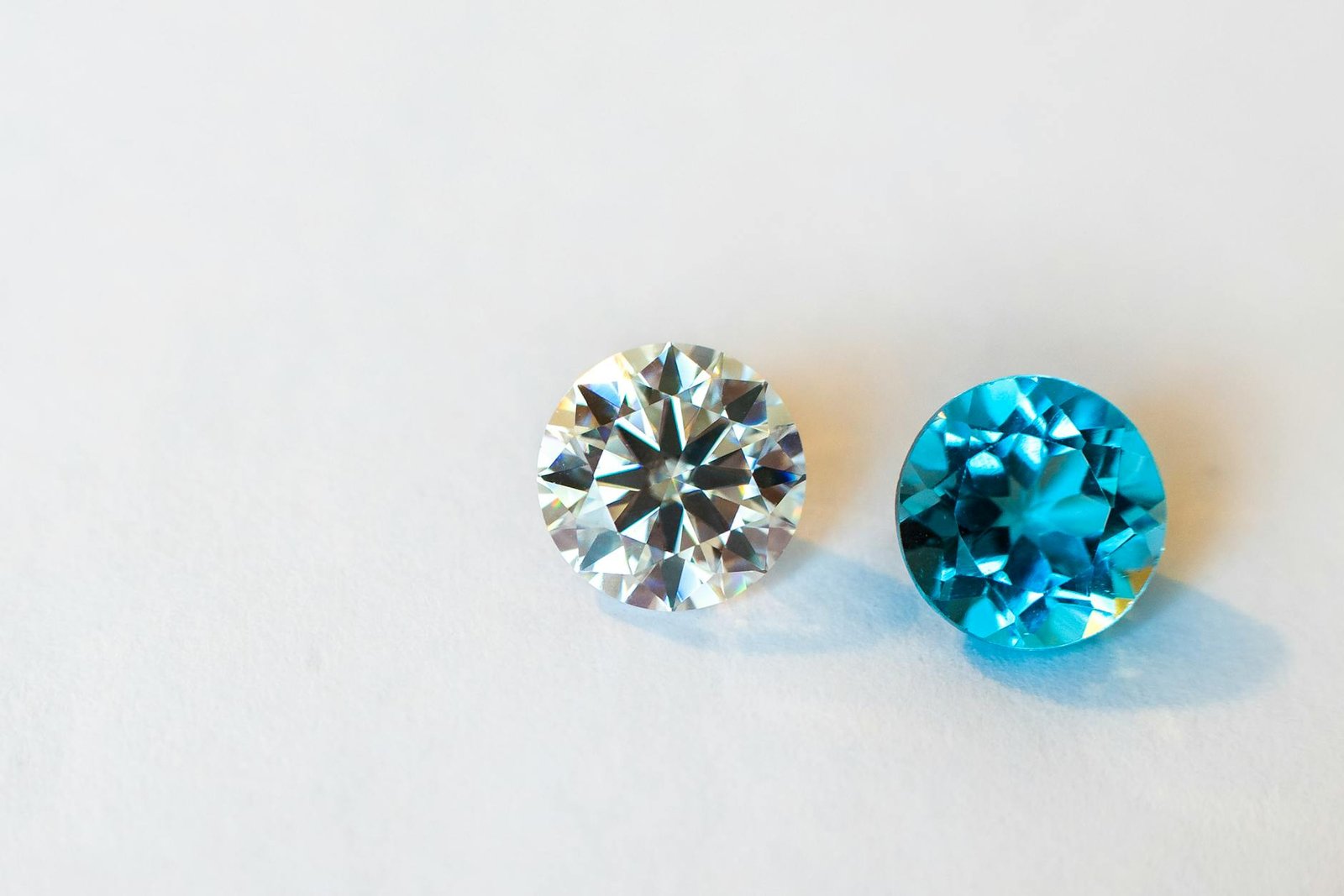
Fine rubies have outperformed many traditional asset classes over the past two decades, and pigeon blood specimens sit at the very apex of that performance. The 2015 Sotheby’s sale of the “Sunrise Ruby” — a Mogok pigeon blood stone of 25.59 carats — set a world record at over USD 30 million, or approximately USD 1.18 million per carat. While such exceptional stones are beyond most collectors’ reach, the underlying dynamic — extreme scarcity meeting sustained global demand — applies across the quality spectrum.
Several factors make pigeon blood rubies particularly compelling as collectible assets. Supply is structurally constrained: Mogok’s finest veins are reportedly diminishing in yield, and Mozambique’s output, while significant, is subject to geopolitical and logistical variables. Meanwhile, demand from collectors in China, the Middle East, and Southeast Asia continues to intensify. Fine natural gemstones are also genuinely portable stores of value, requiring no storage facility beyond a safe and no ongoing maintenance cost beyond insurance.
The pigeon blood engagement ring has simultaneously become one of the most sought-after alternatives to the traditional diamond solitaire among high-net-worth buyers. Coloured gemstone engagement rings — led by rubies and natural sapphire counterparts — have seen a dramatic increase in market share, driven by a desire for distinctiveness and meaning. A ruby’s historical symbolism (passion, protection, vitality) adds emotional resonance that pure financial metrics cannot capture. To speak with our gemologists about specific investment-grade pieces, we welcome enquiries at any time.
When comparing pigeon blood rubies to natural sapphire, emerald, or other coloured stone investments, rubies consistently show the most compressed supply relative to collector demand. The natural ruby market has no synthetic substitute that satisfies serious collectors — unlike the diamond market, where laboratory-grown stones have introduced price pressure at the consumer level. This structural distinction makes certified natural ruby, particularly at the pigeon blood grade, one of the most defensible positions in alternative asset allocation.
Singapore as a Premier Destination for Fine Rubies
Singapore occupies a unique position in the global fine gemstone market. Its combination of transparent regulation, sophisticated buyer culture, geographic proximity to the key ruby-producing regions of Southeast and South Asia, and concentration of internationally trained gemmologists makes it one of the most trusted environments in the world to acquire significant stones. For buyers seeking pigeon blood ruby Singapore options, the city-state offers access to inventory that would otherwise require travel to Zurich, New York, or Hong Kong.
The gemstone singapore market has matured considerably over the past decade. Buyers here are increasingly sophisticated, demanding full laboratory certification, provenance documentation, and ethical sourcing assurances as baseline requirements. This has elevated the quality standards of every serious dealer operating in the market, creating a competitive environment that ultimately benefits collectors. Singapore’s strong legal framework and consumer protections also make it a significantly safer environment for high-value transactions than many regional alternatives.
At Yala Gems, our Singapore boutique specialises in precisely the category where discernment matters most: certified natural gemstones of demonstrable rarity. Our pigeon blood ruby inventory is sourced directly from trusted relationships with miners, cutters, and estate collections, and every stone is accompanied by its full laboratory documentation. We believe the acquisition process should be as exceptional as the stone itself.
How to Buy a Pigeon Blood Ruby Online Safely
The digital gemstone market has expanded dramatically, and with it, the opportunities for both exceptional purchases and serious missteps. Learning how to buy gemstone online with confidence requires a clear framework — one that applies whether you are purchasing a gemstone ring for a milestone occasion or building a curated collection over time.
Begin with certification. Any pigeon blood ruby offered without a current report from GIA, Gübelin, SSEF, or an equivalently respected laboratory should be treated with significant caution, regardless of how compelling the seller’s description. Verify the certificate number directly on the issuing laboratory’s website. Check that the report explicitly states “pigeon blood” as a colour designation — not simply “vivid red” or “fine” — if that grade is what you are paying a premium for.
Second, assess the vendor’s transparency. A reputable specialist offering pigeon blood ruby ring for sale will provide high-resolution imagery under multiple lighting conditions, a detailed stone description including all treatment disclosures, a clear return and authentication policy, and direct access to a qualified gemmologist for questions. If any of these elements are absent or evasive, proceed with caution.
Third, understand what you are comparing when evaluating pigeon blood ruby ring price across different sources. Weight, colour grade, treatment status, origin documentation, metal quality, and maker reputation all influence price. A seemingly lower price often reflects an inferior colour grade, a treated stone, or a less prestigious origin. To buy gemstone online with true confidence, you need to compare equivalent certifications, not surface-level descriptions. Our team is always available to speak with our gemologists and walk you through a side-by-side evaluation of any stones you are considering.
| Factor | Pigeon Blood Ruby (Unheated) | Fine Ruby (Heated) | Commercial Ruby |
|---|---|---|---|
| Colour Grade | Vivid Red, pigeon blood designation | Strong to vivid red, no special designation | Medium red, often with secondary hues |
| Treatment | None (certified) | Heat treatment (accepted) | Heat and/or filling treatments |
| Laboratory Certification | GIA / Gübelin / SSEF mandatory | GIA or equivalent recommended | Often uncertified or minor lab |
| Price Range (1ct+) | USD 15,000–100,000+ per carat | USD 3,000–15,000 per carat | USD 100–2,000 per carat |
| Investment Potential | High — supply constrained, demand rising | Moderate — good liquidity, stable value | Low — highly substitutable |
| Ideal For | Serious collectors, investment buyers | Engagement rings, heirloom jewellery | Fashion jewellery, entry-level buyers |
Frequently Asked Questions
Final Thoughts
The pigeon blood ruby is not simply the finest variety of a beautiful gemstone. It is one of the most concentrated expressions of natural rarity on earth — a stone where colour, chemistry, geology, and human craft converge at a point so precise that even among rubies, true specimens are genuinely exceptional. Understanding what pigeon blood means, where these stones come from, and how to evaluate and acquire them responsibly is the foundation of any serious engagement with this category.
Whether you are drawn by the romance of a pigeon blood engagement ring, the intellectual satisfaction of building a certified gemstone collection, or the long-term case for natural ruby as an investable asset, the principles remain constant: prioritise certified natural gemstone quality over price alone, insist on independent laboratory documentation, and choose a vendor whose knowledge and transparency give you genuine confidence.
The finest pigeon blood rubies are not waiting to be discovered in volume. They surface rarely, move quickly among informed buyers, and seldom return to market. That scarcity is, ultimately, the very quality that makes them extraordinary. At our Singapore boutique, we remain committed to ensuring that when the right stone becomes available, the right collector is ready to receive it.
Deepen Your Gemstone Knowledge
Explore our full library of expert guides on rare natural gemstones, grading standards, and collector insights — curated by the specialists at Yala Gems.