Description
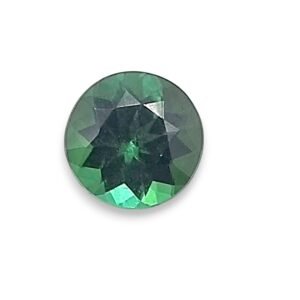
Green Tourmaline occupies a quietly distinguished place in the collector’s pantheon — prized for a chromatic range that moves from cool forest greens through warm, golden-tinged chartreuse, much as this 4.52-carat specimen demonstrates with its pleasing yellow-green modulation. Tourmaline’s complex boron silicate crystal structure is responsible for this versatility of colour, and stones of this weight that carry genuine transparency and even saturation are meaningfully harder to source than casual pricing might suggest. For the discerning buyer entering the fine coloured-stone market, this piece represents an accessible and educationally rich starting point.
| Name | Green Tourmaline 4.52 cts |
|---|
| color | Green, Yellow |
|---|
| Price | Less than $1000 |
|---|
Frequently Asked Questions
What determines the colour in Green Tourmaline, and how does the yellow component affect its value?
Green Tourmalines derive their colour primarily from trace amounts of iron and, in certain cases, chromium — with iron-dominant stones typically producing the yellow-to-olive-green tones seen in this specimen. A pure, vivid mid-green commands the highest premiums, while yellow-green stones are generally more accessible in price yet retain strong wearability and visual warmth. Collectors often appreciate yellow-green tourmalines for their versatility under different lighting conditions, as the secondary hue becomes more or less prominent depending on the light source.
Does Green Tourmaline exhibit any notable optical phenomena?
Tourmaline is strongly pleochroic, meaning it displays different colours when viewed along different crystallographic axes — a property that skilled cutters exploit to optimise the face-up appearance of the finished stone. In green tourmalines, this can manifest as a shift between a warmer yellow-green and a cooler, more saturated green depending on the viewing angle. While Green Tourmaline does not typically exhibit phenomena such as asterism or chatoyancy, its pleochroism alone makes it an optically engaging subject for anyone interested in crystal optics.
How durable is Green Tourmaline for everyday wear, and what care does it require?
Tourmaline registers 7 to 7.5 on the Mohs hardness scale, making it suitable for most jewellery applications, though it benefits from some protection against hard knocks given its perfect cleavage in one direction. Routine cleaning with warm water, mild soap, and a soft brush is entirely safe and sufficient to maintain its lustre. Ultrasonic and steam cleaners are best avoided, particularly if the stone has any natural inclusions or has been clarity-enhanced, as vibration and heat can stress the crystal.
Should a Green Tourmaline of this weight carry a gemological certificate, and does certification affect its collectability?
For a stone in the sub-1,000 price bracket, independent certification is not always standard practice, but obtaining a report from a recognised laboratory such as GIA, Gübelin, or SSEF adds meaningful provenance and confirms that the stone is untreated or discloses any enhancements transparently. Certification becomes especially important as a collector scales toward higher-value acquisitions, establishing a paper trail that supports resale and insurance valuation. Even at this accessible price point, requesting a basic gem identification report is a prudent habit that distinguishes a considered collection from an informal one.






Reviews
There are no reviews yet.