Description
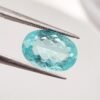
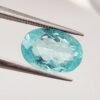
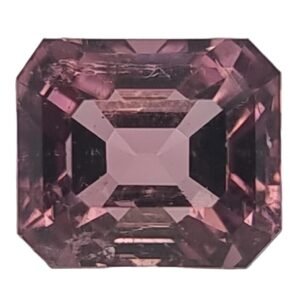
Among the rarest discoveries in the mineral world, Paraiba Tourmaline occupies a singular position — its electric blue saturation born not from ordinary trace elements, but from copper, a geological accident so uncommon that fine specimens routinely outprice diamonds of comparable weight. This 1.5-carat example carries the characteristic neon luminosity that collectors and gemologists have pursued since the first crystals emerged from a Brazilian hillside in the late 1980s, a provenance that fundamentally changed how the trade values coloured stones. To hold a copper-bearing tourmaline of this clarity and tone is to understand, immediately, why the finest examples are catalogued and treasured rather than simply worn.
| Name | 1.5 cts Paraiba Tourmaline |
|---|
| color | Blue |
|---|
Frequently Asked Questions
What gives Paraiba Tourmaline its distinctive blue colour, and how does it differ from other blue gemstones?
Paraiba Tourmaline derives its colour from trace amounts of copper and manganese within the elbaite tourmaline crystal structure — a combination virtually unparalleled in the gem kingdom. Unlike sapphires, which owe their blue to iron and titanium, copper-bearing tourmalines exhibit a self-luminous quality often described as neon or electric, appearing to radiate light from within rather than simply reflecting it. This optical behaviour remains consistent even under low ambient lighting, a trait that distinguishes Paraiba specimens from all other blue gemstones.
How should a collector assess the quality and value of a 1.5-carat Paraiba Tourmaline?
Value in Paraiba Tourmaline is governed primarily by the intensity and purity of colour saturation, with vivid blue stones commanding exponentially higher premiums than those trending toward green or grey secondary hues. At 1.5 carats, a fine copper-bearing specimen crosses an important threshold — stones above one carat are considered notable in this variety, as clean material of meaningful size is exceedingly scarce in the primary deposit regions of Paraíba and Rio Grande do Norte in Brazil, as well as later discoveries in Mozambique and Nigeria. Copper content, verified by laboratory spectroscopy, is the definitive quality marker and should be confirmed through certification before any serious acquisition.
Which gemological laboratories certify Paraiba Tourmaline, and why does certification matter for this variety specifically?
The most respected reports for Paraiba Tourmaline are issued by GIA (Gemological Institute of America) and Gübelin Gem Lab, both of which conduct copper-content analysis to confirm the stone’s classification as a genuine copper-bearing tourmaline. This distinction is critical because the commercial name ‘Paraiba’ has been subject to misuse, with non-copper tourmalines occasionally misrepresented in the trade. A laboratory report that explicitly confirms copper presence and geographic origin — where determinable — provides both authentication and a foundation for long-term valuation.
What care routine is appropriate for a Paraiba Tourmaline set in fine jewellery?
Tourmaline registers between 7 and 7.5 on the Mohs hardness scale, making it durable enough for regular wear but deserving of thoughtful handling to avoid surface abrasion from harder materials such as diamonds or sapphires stored in proximity. Cleaning is best performed with lukewarm water and a soft brush using mild, non-detergent soap, avoiding ultrasonic cleaners and steam, which can stress inclusions or affect certain treatments sometimes applied to lower-grade material. Periodic inspection of settings is advisable, as the value of a fine Paraiba warrants ensuring the stone is always held securely and protected from unnecessary impact.







Reviews
There are no reviews yet.