Description
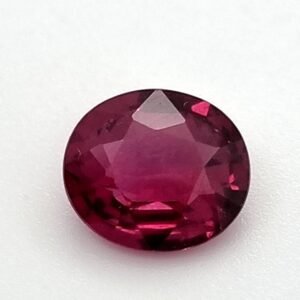
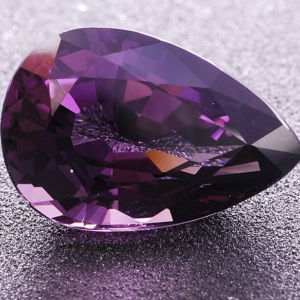
Peridot occupies a singular place in the gemstone canon as one of the few minerals that forms deep within the Earth’s mantle, carried to the surface by volcanic activity — a geological journey that lends it an almost elemental character. This 2.20-carat specimen presents the variety’s signature warm, grassy green, a hue born entirely from iron content within its olivine crystal structure rather than trace impurities, making every tone intrinsic to the stone itself. For the discerning collector, a well-proportioned peridot of this weight offers a compelling entry into one of antiquity’s most storied gemstones, prized since ancient Egypt on the island of Zabargad.
Frequently Asked Questions
What gives peridot its distinctive green colour, and how does iron content affect saturation?
Unlike most gemstones whose colour arises from trace elements, peridot derives its green entirely from iron that is fundamental to its chemical composition as a magnesium iron silicate. Higher iron concentrations typically shift the tone toward a deeper, more olive or golden-green, while lower iron content produces the vivid, pure lime-green considered most desirable by collectors. At 2.20 carats, the stone’s face-up colour saturation is best evaluated under diffused daylight or full-spectrum lighting to appreciate its true chromatic depth.
Does peridot exhibit any notable optical phenomena?
Peridot does not typically display phenomena such as asterism or chatoyancy, but it is notable for its strong double refraction — a birefringence high enough that sharp doubling of back facets is often visible to the naked eye when viewed through the table. This optical characteristic is a useful identifier and speaks to the stone’s distinct crystal structure within the orthorhombic system. Additionally, fine peridot can exhibit a subtle internal glow, sometimes described as a velvety or sleepy luminosity, which distinguishes high-clarity specimens.
How should a peridot of this weight be cared for over time?
Peridot rates 6.5 to 7 on the Mohs scale, placing it in a range where reasonable caution is warranted — it is susceptible to scratching from harder materials and should be stored separately from diamonds, sapphires, or other robust stones. The gem is also sensitive to rapid temperature changes and prolonged acid exposure, so ultrasonic and steam cleaners are best avoided; warm soapy water with a soft brush remains the safest cleaning method. For jewellery worn frequently, a protective bezel or low-profile setting is advisable to minimise impact risk at the girdle.
What factors influence the collector and investment value of a peridot at this carat weight?
For peridot, colour is the primary value driver — stones displaying a pure, medium-toned lime to vivid grass-green command the strongest premiums, while overly yellowish or brownish specimens trade at a significant discount. Origin plays a meaningful role, with peridot from the Suppat Valley in Pakistan’s Kohistan region consistently achieving higher valuations than material from Arizona or China due to its exceptional clarity and saturated colour. At 2.20 carats, the stone sits in a commercially appealing range; fine examples above two carats in eye-clean clarity with strong colour can attract serious collector interest, particularly when accompanied by a laboratory report from a recognised gemmological body such as GIA or Gübelin.




Reviews
There are no reviews yet.