Description
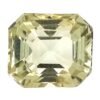
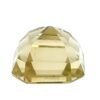
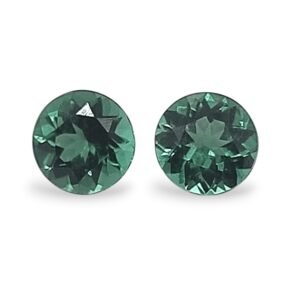
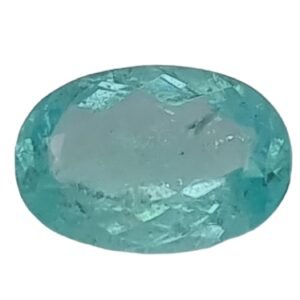
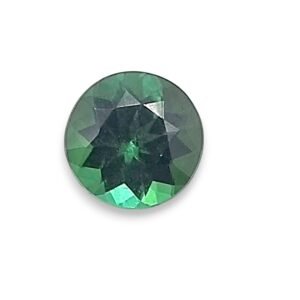
Yellow Tourmaline occupies a quietly distinguished corner of the collector’s world — prized for its warm, solar saturation that ranges from pale champagne to deep canary, driven by trace elements of manganese and iron within its complex boron silicate crystal structure. At 3.62 carats, this specimen sits at a weight where the colour depth becomes truly appreciable, allowing light to travel through the stone and return with a richness that smaller examples simply cannot deliver. Tourmaline’s exceptional refractive index and strong pleochroism reward careful orientation during cutting, and a well-faceted yellow example like this will shift subtly in character from morning light to candlelight.
| Name | Yellow Tourmaline 3.62 cts |
|---|
Frequently Asked Questions
What gives Yellow Tourmaline its distinctive colour, and how does this compare to other yellow gemstones?
Yellow Tourmaline derives its colour primarily from manganese and iron impurities within its trigonal crystal lattice, producing hues that tend toward warm, golden tones rather than the cooler, more acidic yellows seen in yellow sapphire or chrysoberyl. Unlike diamond or topaz, tourmaline exhibits strong pleochroism, meaning the stone can display subtly different colour intensities depending on the viewing angle — a characteristic that makes precise cutting orientation critical to the final face-up appearance. Collectors generally favour stones where the cutter has maximised the richest tone in the table position, as this is where the eye naturally dwells.
What should I understand about the optical properties and brilliance of this stone?
Tourmaline has a refractive index ranging from approximately 1.614 to 1.666, which is meaningfully higher than quartz but modestly lower than sapphire or spinel, resulting in a lively but softer brilliance that many collectors find more organic and less glassy than corundum. The stone’s vitreous lustre and typically good transparency allow it to perform beautifully under both natural daylight and artificial illumination, making it a versatile choice for wearable pieces. At 3.62 carats, the volume of the stone allows internal reflections to build in complexity, rewarding the eye with genuine depth rather than surface-level sparkle.
How should Yellow Tourmaline be cared for to preserve its appearance over time?
Tourmaline registers 7 to 7.5 on the Mohs hardness scale, making it durable enough for regular wear but deserving of mindful handling, particularly to avoid contact with harder materials such as sapphire, ruby, or diamond that could cause surface abrasion. Cleaning is best performed with warm water, a mild pH-neutral soap, and a soft brush, avoiding ultrasonic or steam cleaners as these can stress natural inclusions or fractures that may be present within the crystal. Storage in a fabric-lined, compartmentalised box ensures the stone is protected from contact abrasion and prolonged direct light exposure, which, while rarely problematic for tourmaline, is simply good practice for any fine gemstone.
Does Yellow Tourmaline hold collector or investment value, and is certification important for a stone of this weight?
Yellow Tourmaline at this weight occupies a niche but genuinely appreciating segment of the coloured gemstone market, driven by its relative rarity compared to the more commercially prevalent greens and pinks of the tourmaline family — fine yellow material from sources such as Malawi or Brazil commands growing attention among informed collectors. Certification from a respected laboratory such as GIA, Gübelin, or SSEF provides an independent assessment of colour, clarity, treatment status, and origin where determinable, all of which materially support long-term value retention and facilitate resale. For any coloured stone exceeding three carats, a laboratory report is considered standard practice within the serious collector community and should be regarded as a baseline expectation rather than an optional addition.






Reviews
There are no reviews yet.