Description
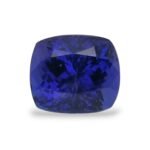
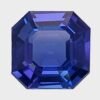
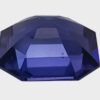
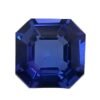
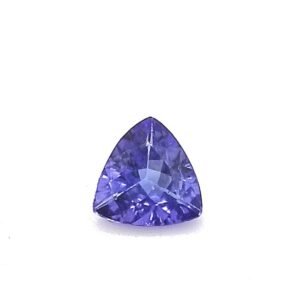
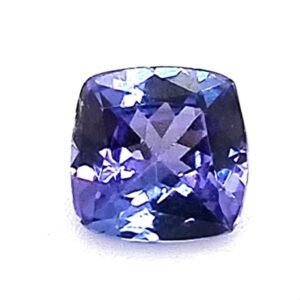
Found in only one place on Earth — the foothills of Mount Kilimanjaro in northern Tanzania — tanzanite remains among the most geologically singular gemstones known to collectors. This 4.31-carat specimen sits comfortably within the weight range where tanzanite’s characteristic trichroism reaches its full complexity, shifting between violet, blue, and a warm burgundy depending on the angle of observation and quality of light. Pieces of this calibre, exhibiting good depth of colour and clean clarity, represent the kind of deliberate acquisition that anchors a serious collection.
Frequently Asked Questions
What causes tanzanite’s colour, and why does it appear different under various lighting conditions?
Tanzanite’s colour originates from trace amounts of vanadium within the zoisite crystal structure, activated through heat — either natural geothermal processes or controlled treatment. As a trichroic gemstone, tanzanite transmits three distinct colours along its three optical axes: blue, violet, and red-brown, which the eye perceives as shifting hues depending on the direction of observation and the spectral quality of the light source. Incandescent light tends to draw out the warmer violet and burgundy tones, while daylight emphasises the cooler, deeply saturated blues.
How should tanzanite be cared for to preserve its colour and structural integrity over time?
Tanzanite measures 6 to 7 on the Mohs hardness scale, which means it requires more careful handling than harder stones such as sapphire or diamond — it is susceptible to abrasion and should not be stored loose alongside harder gems. Ultrasonic and steam cleaners should be avoided, as thermal shock can compromise both the stone’s clarity and its colour stability; a soft cloth and mild soapy water remain the safest cleaning method. Prolonged direct exposure to intense heat or harsh chemical environments should also be avoided to maintain the integrity of the colour over decades.
What should collectors look for when evaluating tanzanite’s colour saturation and quality?
The most prized tanzanites display a vivid, deeply saturated blue-violet with minimal grey or brown masking, a quality graders often describe as AAA or ‘top’ grade — the colour should appear rich even in diffuse lighting rather than only under a direct spotlight. In stones above 4 carats, such as this 4.31-carat example, the crystal mass is sufficient to allow full colour development through the depth of the stone, which is where smaller tanzanites often fall short. Eye-clean clarity combined with a well-executed cut that maximises the blue-violet face-up appearance are the two additional pillars of a well-graded specimen.
Does tanzanite hold investment merit, and what role does certification play for serious collectors?
Tanzanite’s single-source origin — a mining area estimated to be depleted within the next few decades — gives it a geological scarcity argument that few coloured gemstones can match, making well-documented, high-quality examples increasingly sought after in the secondary market. Certification from a respected laboratory such as GIA, Gübelin, or SSEF provides an independent record of the stone’s weight, colour grade, and any treatments, which is essential for establishing provenance and protecting value at resale. For collectors approaching tanzanite as both an aesthetic and tangible asset, pairing fine material with credible third-party documentation is considered standard practice.







Reviews
There are no reviews yet.