Description
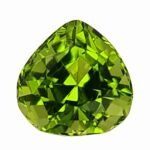
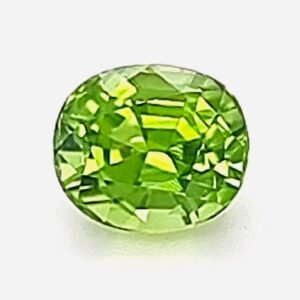
Peridot occupies a singular place in the gemstone world as one of the few minerals that forms in the Earth’s mantle rather than the crust, carried to the surface through volcanic activity and, occasionally, delivered via meteorite. This 3.56-carat specimen presents the variety’s characteristic lime-to-olive green — a hue derived entirely from iron, with no secondary chromophores at play, making colour consistency across lighting conditions a genuine hallmark of quality in this species. At this weight, the stone sits in a range where clarity and cut can be properly appreciated, offering the discerning collector a meaningful entry into one of antiquity’s most historically significant gems.
Frequently Asked Questions
What gives peridot its distinctive green colour, and how does it vary across specimens?
Peridot’s green is produced solely by iron within its crystal structure — a relatively rare case where a single element is entirely responsible for a gem’s colour, without any chromium or vanadium involvement. The saturation ranges from a pale yellowish-green in iron-poor stones to a rich, deeply saturated olive in high-iron specimens, with the most prized examples leaning toward a pure, vivid green with only the faintest yellow undertone. Stones sourced from Zabargad Island and the Himalayas of Pakistan tend to display the most sought-after mid-to-deep green saturation.
Does peridot display any notable optical phenomena?
Peridot does not typically exhibit phenomena such as asterism or colour change, but it is well regarded for its strong double refraction — one of the highest among transparent gemstones — which gives faceted stones a subtle depth and a characteristic softness to their internal reflections. Under magnification, well-formed lily-pad inclusions (fluid-filled discs) are a recognised internal feature of natural peridot and can actually help confirm authenticity. The gem also has a relatively high refractive index that, when well cut, produces a lively, warm lustre distinct from cooler-toned green stones.
What should a collector know about caring for peridot?
Peridot rates 6.5 to 7 on the Mohs hardness scale, which places it in a category that warrants some mindfulness during daily wear — it is better suited to pendants, earrings, and occasional-wear rings than rings subject to constant abrasion. The stone is sensitive to rapid temperature changes and prolonged acid exposure, so ultrasonic and steam cleaners should be avoided in favour of gentle cleaning with warm soapy water and a soft brush. Storing peridot separately from harder stones such as sapphire or diamond will prevent surface scratching over time.
How is the investment value and certification landscape for fine peridot evaluated?
Peridot remains relatively accessible compared to the top-tier precious stones, but fine specimens above 3 carats with strong colour saturation and good clarity are increasingly difficult to source, particularly from the historically significant Zabargad deposit, which has seen limited production in recent decades. Certification from recognised laboratories such as GIA or Gübelin is particularly valuable for larger or higher-quality stones, as it documents origin, natural status, and confirms the absence of treatments — peridot is generally not treated, which is itself a mark in its favour. As collector interest in untreated, well-documented gemstones continues to grow, fine peridot at meaningful carat weights holds a credible place in a diversified gem portfolio.








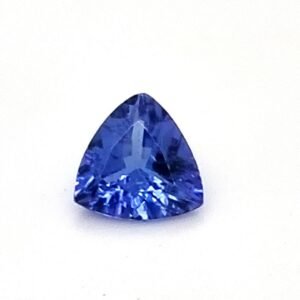 1.16 cts Tanzanite
Reviews
There are no reviews yet.