Description
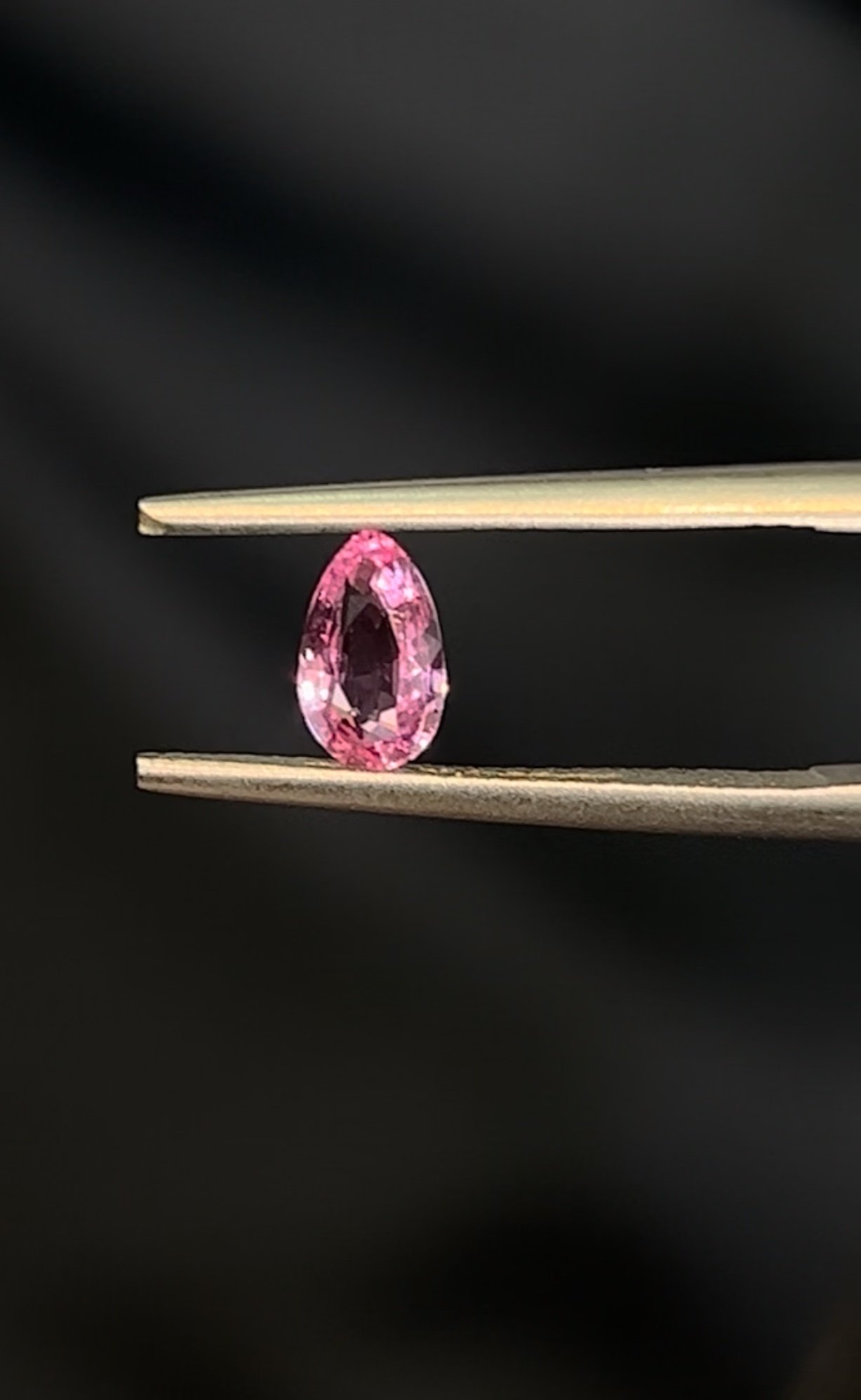
Few gemstones in existence command the reverence of a true Padparadscha sapphire — a colour so fleeting and so precise that even seasoned gemmologists pause in its presence. This 0.43 ct pear-shaped specimen radiates that elusive orangy-pink confluence entirely as nature intended, untouched by heat or any form of treatment, its delicate luminosity the product of geological chance alone. Certified by the Nanyang Gemological Institute, it arrives as both a wearable jewel and a quietly extraordinary testament to the earth’s rarest artistry.
| Name |
Natural Padparadcha Sapphire 0.43 ct |
| Weight |
0.43 ct |
| Shape |
Pear |
| Colour |
Orangy Pink |
| Treatment |
No Heat (Unheated) |
| Certificate |
Nanyang Gemological Institute |
Frequently Asked Questions
What exactly defines a Padparadscha sapphire, and why is the colour so rare?
A Padparadscha sapphire is distinguished by its precise simultaneous blend of pink and orange — a balance so specific that even a slight dominance of one hue over the other disqualifies the classification. The name itself is derived from the Sanskrit word for lotus blossom, reflecting the colour’s soft, dawn-lit character. This delicate equilibrium occurs only under exceptionally rare geological conditions, making true specimens among the most coveted and scarce of all coloured gemstones.
Why does it matter that this sapphire is unheated?
The vast majority of sapphires on the market undergo heat treatment to enhance or alter their colour, a process that is industry-standard but significantly reduces a stone’s collectability and intrinsic value. An unheated sapphire — one confirmed to bear no trace of thermal intervention — retains its colour in its entirely natural state, exactly as it formed within the earth. For a Padparadscha, where that colour is already a phenomenon of extraordinary rarity, the unheated designation elevates the stone into a category sought by the most discerning collectors worldwide.
What does the Nanyang Gemological Institute certification confirm?
The certificate issued by the Nanyang Gemological Institute provides independent, professional verification of this sapphire’s key attributes — including its natural origin, orangy-pink colour classification, and unheated status. Having a reputable third-party gemological report accompanying the stone offers complete transparency and peace of mind, and is particularly important for a gem as precisely defined as a Padparadscha, where the colour determination must be assessed by trained experts under standardised conditions.
Is a pear-shaped stone suitable for an engagement ring or fine jewellery setting?
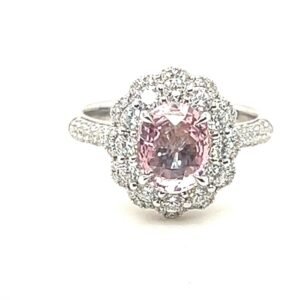
The pear silhouette is a timelessly elegant and highly versatile cut, equally at home as a solitaire centre stone, a pendant drop, or an accent within a bespoke fine jewellery design. Its tapered point and rounded base create a graceful elongation that flatters a range of settings, from delicate claw mounts to more architectural bezel designs. At 0.43 ct, this stone is ideally proportioned for a refined, understated jewel — one where the extraordinary colour, rather than the size, becomes the enduring focal point.




Reviews
There are no reviews yet.